





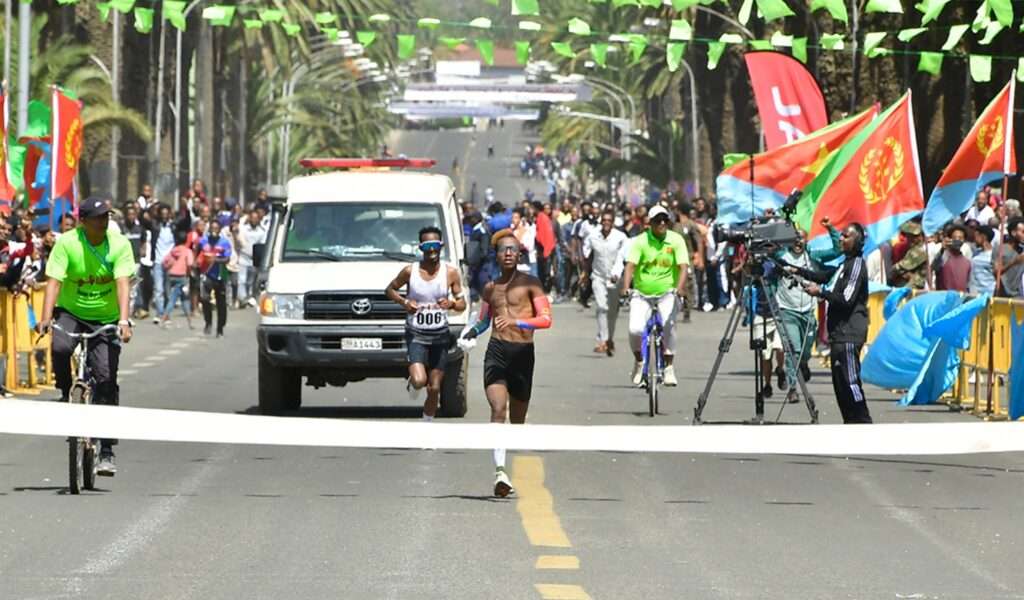
Eritrean distance runner Nahom Ermias has cemented his dominance on the regional athletics circuit by winning the Asmara Marathon 2026 for a third time. The growing international profile of the event signals a critical expansion of East Africa’s competitive sports infrastructure. The race is now fully recognized by global sporting bodies, allowing domestic athletes to compete on an internationally certified stage.
Ermias, representing the Gash Barka Region, completed the grueling course through the Eritrean capital in two hours, 16 minutes, and 22 seconds to claim the gold medal. Olympian Okbe Kibrom from the Central Region Club secured second place, while Okbai Tsegay of the Denden Club finished third. In a significant milestone for the seventh edition of the competition, organizers introduced a women’s half-marathon, decisively won by Olympian Nazareth Woldu in one hour, 16 minutes, and 11 seconds.
Global Recognition of the Asmara Marathon 2026
The day’s events also featured specialized Paralympic races across two distinct categories, alongside a massive three-kilometer public participation run. Athletes from Kenya, Uganda, Tanzania, and South Sudan actively competed on the streets of the capital. This robust regional turnout transformed the local race into a fiercely contested East African showdown.
Eritrea has systematically invested in long-distance running as a tool for national prestige and youth empowerment. The marathon was originally launched to promote domestic talent but has rapidly evolved into a highly competitive regional fixture. Previous victories by Ermias in 2023 and 2025 established him as a local sporting icon, but this latest race marked a definitive institutional turning point.
Securing formal international accreditation elevates the marathon from a local showcase to a globally recognized qualifying event. This institutional backing allows local athletes to register official times without the prohibitive costs of international travel to foreign meets. For the Eritrean economy, hosting accredited international sporting events presents a lucrative opportunity to attract regional tourism and draw corporate sponsorships into the domestic business sector.
Col. Solomon Seium, head of the national Olympic and Paralympic committees, noted that the official recognition of the route marks a new stage in the development of athletics in the country. Efrem Tekeste, President of the Athletics Federation of Eritrea, stated that all race records will now be permanently documented on the global athletics registry. According to an official statement, government officials personally awarded the top prizes, reinforcing the state’s deep involvement in competitive athletic development.
The integration of elite competitors from neighboring nations reflects a broader trend of East African countries utilizing sports diplomacy to shape regional politics and foster cross-border integration. By hosting recognized events domestically, African athletic federations significantly reduce the continent’s historical reliance on European racing circuits for official Olympic qualification times. Furthermore, the high-profile introduction of the women’s half-marathon directly supports the African Union’s Agenda 2063 mandate to accelerate female professional advancement and public health initiatives.
With the route now internationally certified, the Athletics Federation of Eritrea must rapidly expand the logistical capacity of future races to accommodate a projected surge in foreign registrants. Domestic coaches will need to adopt modern tech and AI driven performance analytics to ensure local runners can defend their titles against incoming continental challengers. The undeniable success of this event sets a new operational benchmark, challenging other African capitals to upgrade their own marathon infrastructures to secure similar global recognition.