




Global mining news is reshaping how continental resource markets operate, prompting Vuka Group’s Mining Review Africa to expand its editorial coverage beyond the continent’s borders. This strategic editorial shift reflects a rapidly evolving landscape where international supply chains directly dictate local extraction policies. African resource economies can no longer be viewed in isolation as global powers aggressively compete for critical minerals.
The publication, widely recognized as a premier source for continental industry intelligence, will now aggressively track international projects, global commodity markets, and foreign policy shifts. While maintaining its core dedication to domestic extraction, the expanded scope recognizes that regulatory decisions made in Washington or Beijing instantly ripple through local mining jurisdictions. Readers will receive enhanced reporting on overseas mergers, critical mineral acquisitions, and technological innovations impacting the entire value chain.
As reported by Vuka Group, this expansion addresses the increasingly interconnected nature of modern resource extraction and processing. Developments in distant jurisdictions routinely dictate investment flows, equipment supply chains, and commodity pricing models across the continent. Tracking these international movements provides African stakeholders with the comprehensive intelligence required to negotiate stronger terms with foreign multinational corporations.
Gerard Peter, Editor-in-Chief of Mining Review Africa, explained that readers are actively demanding greater context regarding international developments that influence the domestic resources sector. He noted that the industry is evolving on a global scale, making it impossible to separate local operations from international macroeconomic trends. Peter emphasized that this expanded coverage enables the delivery of a comprehensive worldview without diluting the publication’s strong continental focus.
How Global Mining News Impacts African Critical Minerals
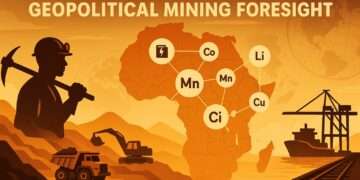
Africa currently holds an estimated 30 percent of the world’s critical mineral reserves, including massive deposits of cobalt, lithium, and copper. In 2026, these resources are deemed absolutely essential for the global energy transition, defense manufacturing, and the rapid expansion of AI infrastructure. Consequently, tracking international demand forecasts is now a mandatory practice for domestic policymakers seeking to maximize national revenue.
The stakes for securing accurate international intelligence are higher than ever, given the aggressive geopolitical posturing over critical minerals. Foreign state-backed entities, such as the China Mineral Resources Group, are actively coordinating overseas acquisitions to secure raw materials. Simultaneously, Western nations are deploying initiatives like the United States-backed Lobito Corridor project to diversify supply chains away from Asian refining monopolies.
By monitoring these shifting global politics, African governments can better leverage their vast resources to mandate local beneficiation and technology transfers. Exporting raw materials without processing captures less than one percent of the value generated by clean energy technologies, a structural deficit that regional leaders are desperately trying to reverse. State-mandated processing facilities require international partnerships, making global market intelligence an indispensable tool for securing equitable joint ventures.
A deep understanding of international tech advancements also allows domestic operators to implement cutting-edge efficiencies at local extraction sites. Innovations in direct lithium extraction, predictive exploration modelling, and blockchain traceability are fundamentally reshaping operational standards worldwide. Integrating these foreign advancements ensures that continental operations remain globally competitive while adhering to stringent new environmental and social governance standards.
Accurate international reporting directly shields the African business landscape from unforeseen macroeconomic shocks and sudden commodity price crashes. For instance, knowing when overseas central banks accumulate gold reserves or when global electric vehicle adoption rates fluctuate allows domestic firms to hedge their financial positions. This proactive financial strategy secures capital for infrastructure development and protects local jobs from cyclical market volatility.
According to 2026 outlook reports from the African Energy Chamber, the continent’s abundant reserves position it at the absolute heart of global supply chains. The institution emphasizes that securing equitable foreign investment requires a sophisticated understanding of international policy, particularly as Western defense budgets surge. This data underscores why leading publications must bridge the information gap between isolated local operations and complex international markets.
This editorial shift aligns seamlessly with the broader objectives of the African Continental Free Trade Area (AfCFTA) and Agenda 2063. By breaking down information silos, resource-rich nations can benchmark their foreign investment policies against global standards, ensuring they are not undercut by competing jurisdictions. Shared intelligence prevents foreign multinationals from playing neighbouring states against one another during complex concession negotiations.
Access to comprehensive market data empowers domestic financial institutions to fund early-stage exploration projects, traditionally considered high-risk by conservative lenders. Retaining capital within the continent reduces reliance on foreign debt and accelerates the transition toward fully industrialized, value-added economies. When local investors possess the same intelligence as international analysts, they can confidently back domestic sports, health, and infrastructure initiatives funded by mining dividends.
Furthermore, public transparency generated by robust investigative journalism helps regional opinion leaders hold state regulators accountable. When citizens understand the true global value of their national resources, they can participate in public AMA sessions to demand fair community development frameworks. This transparency ensures that the wealth generated from critical minerals funds essential services, while the influx of foreign investment safely modernizes regional travel networks.
Moving forward, the true test for industry publications will be their ability to synthesize complex international data into actionable intelligence for local operators. As foreign powers intensify their race to secure African minerals, domestic leaders will increasingly rely on real-time global monitoring to shape their strategic responses. The modernization of African resource extraction ultimately depends on mastering the international narratives that dictate the future of the global economy.