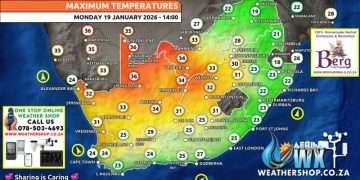





The political temperature in Pretoria is rising as sharply as the actual weather today, with the Government of National Unity (GNU) facing its first major environmental test of 2026. As the mid-summer sun beats down on the administrative capital, policymakers are no longer viewing climate patterns as a secondary concern. Instead, the current atmospheric conditions are directly influencing legislative agendas and regional stability. With temperatures hitting 26°C in Pretoria and soaring to 35°C in Upington, the intersection of climate and governance has become the headline story across the nation.
Climate Resilience: A New Priority for the GNU
Under the leadership of the Government of National Unity, South Africa is shifting its focus toward aggressive climate adaptation.1 The extreme weather today serves as a stark reminder of the “triple challenge” often cited by local analysts: poverty, inequality, and unemployment, all of which are exacerbated by environmental volatility.
President Cyril Ramaphosa’s recent appointment of new commissioners to the Presidential Climate Commission (PCC) marks a turning point for the 2026–2030 term.2 This body is now tasked with ensuring that the Just Energy Transition does not leave coal-dependent communities in Mpumalanga behind while the rest of the country moves toward renewables.
Regional Variations and Policy Shifts
The vast differences in weather today across South Africa’s provinces require a decentralized political approach. While the Western Cape enjoys a fine 24°C with extreme UV indexes, the northern regions are dealing with scattered thundershowers that threaten local infrastructure.
These regional disparities have forced the Department of Cooperative Governance and Traditional Affairs (COGTA) to rethink disaster management. The focus has moved from reactive relief to proactive “climate-proofing” of roads and housing, particularly in the vulnerable Eastern Cape and Limpopo provinces.
The Presidential Climate Commission and 2026 Local Elections
As South Africa prepares for the 2026 local government elections, environmental performance is becoming a key metric for voters. The weather today is not just a topic of conversation at the dinner table; it is a point of contention in municipal council chambers.
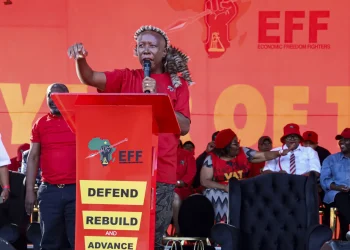
Opposition parties are increasingly using the lack of municipal resilience against heatwaves and flash floods as a political tool. They argue that the GNU’s national policies have yet to filter down to the local level, where service delivery remains hampered by aging drainage systems and insufficient water storage.
Modernizing Infrastructure with the SAWS Marine Website
To combat the unpredictability of the environment, the South African Weather Service (SAWS) has officially launched its high-resolution marine website and storm surge models. This technological leap is vital for the “Blue Economy,” ensuring that port operations and coastal trade remain resilient against the shifting weather today.
This move is part of a broader African trend where nations are seeking “sovereign data” to manage their resources. By providing accurate, real-time wave and wind forecasts, South Africa is positioning itself as a leader in maritime safety within the SADC region.
Conclusion: Governance in a Changing Climate
The impact of the weather today on South African politics cannot be overstated. From the halls of Parliament to the small-scale farms of the Free State, the ability to adapt to a 1.4°C global temperature rise has become the ultimate test of political competence.
As the GNU navigates these turbulent skies, the success of their tenure may well depend on their ability to turn climate science into actionable policy. For the average citizen, the weather today is a daily reality that demands more than just rhetoric—it requires a government that is as resilient as the people it serves.