




Solar Fury: Understanding the Surge of Geomagnetic Storms in 2026
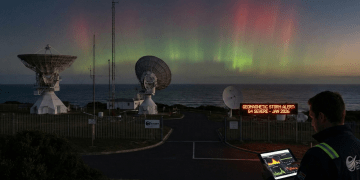
The opening weeks of 2026 have witnessed an extraordinary escalation in solar activity, culminating in some of the most powerful space weather events recorded in over two decades. Just this week, a massive X1.9-class solar flare erupted from the Sun, launching a high-speed cloud of plasma toward our planet. This event triggered intense geomagnetic storms 2026 observers say have reached G4 (Severe) levels, forcing satellite operators and power grid managers across the globe into a state of high alert.
As we navigate the peak of Solar Cycle 25, these solar tempests are becoming a regular feature of our daily lives. From the technological corridors of Nairobi to the power stations of the Western Cape, understanding the geomagnetic storms meaning and their ripple effects is now a critical priority for regional stability. This latest surge marks a historic moment in our Africa news updates 2026 coverage, as the South African National Space Agency (SANSA) continues to track the storm’s impact on local infrastructure.
What is the Geomagnetic Storms Meaning?
To understand the current crisis, one must first grasp the geomagnetic storms meaning in a scientific context. A geomagnetic storm is a major disturbance of Earth’s magnetosphere that occurs when energy from the solar wind is efficiently exchanged into the space environment surrounding our planet. These storms are primarily driven by Coronal Mass Ejections (CMEs)—massive bursts of solar plasma and magnetic fields that travel through space at millions of kilometers per hour.
When a CME reaches Earth, it slams into our magnetic shield. While this shield protects the surface from direct solar radiation, the impact causes the magnetic field to vibrate and fluctuate. These fluctuations are what scientists categorize as geomagnetic storms, and they are measured on a scale from G1 (Minor) to G5 (Extreme). The recent events of January 2026 reached G4, a level that has not been frequently seen since the famous “Halloween Storms” of 2003.
Critical Geomagnetic Storms Effects on Earth
The geomagnetic storms effects on earth are multifaceted, impacting everything from the high-tech sensors in our pockets to the massive transformers that power our cities. In a world increasingly dependent on digital connectivity, a severe solar storm is no longer just a scientific curiosity; it is a direct threat to modern civilization.
- Power Grid Instability and Surges
Perhaps the most significant of the geomagnetic storms effects on earth is the induction of ground currents. As the Earth’s magnetic field fluctuates, it creates “geomagnetically induced currents” (GICs) in long conductors like power lines and pipelines. These surges can overheat transformers, leading to widespread blackouts. In South Africa, where the power grid is already under significant pressure, SANSA monitors these levels closely to prevent catastrophic equipment failure. - Disruption of Satellite and GPS Navigation
The upper atmosphere expands when hit by solar energy, increasing the “drag” on satellites in Low Earth Orbit (LEO). This can cause satellites to lose altitude or even tumble out of orbit if they cannot perform corrective maneuvers. Furthermore, the ionization of the ionosphere interferes with GPS signals. For industries like commercial aviation, maritime shipping, and even precision agriculture in the African interior, this loss of accuracy can lead to significant operational risks. - Radio Communication Blackouts
High-frequency (HF) radio signals, which rely on the ionosphere to “bounce” around the globe, are often the first casualty of solar activity. During the peak of the recent geomagnetic storms 2026 events, transoceanic flights and emergency services in remote regions reported significant “dead zones” where communication was impossible for several hours.
The Direct Effects of Geomagnetic Storms on Humans
A common point of concern during these events is the effects of geomagnetic storms on humans. While the Earth’s atmosphere and magnetic field protect most of us from the most dangerous particles, there are specific scenarios where the risks become more pronounced
Radiation Risks in Aviation and Space
The effects of geomagnetic storms on humans are a primary concern for the aviation industry. During an S4-level (Severe) radiation storm, passengers and crew on high-altitude polar flights may be exposed to radiation levels equivalent to several chest X-rays. Consequently, many international airlines have begun rerouting flights to lower latitudes to ensure safety. For astronauts aboard the International Space Station, these storms require them to retreat to “safe rooms” within the station to avoid acute radiation poisoning.
Biological and Psychological Impacts
There is ongoing scientific debate regarding the subtle effects of geomagnetic storms on humans at ground level. Some researchers have pointed to correlations between geomagnetic activity and changes in heart rate variability, blood pressure, and even sleep cycles. While the evidence is not yet conclusive, many individuals report increased feelings of anxiety or “brain fog” during peak solar events. However, for the general public, the most tangible impact remains the potential disruption of the services they rely on.
Africa News Updates 2026: Regional Monitoring and Response
In the latest Africa news updates 2026, the South African National Space Agency (SANSA) confirmed that their Hermanus-based Space Weather Centre is operating 24/7 to mitigate the storm’s impact. Africa is uniquely positioned to monitor these events because of its network of ground-based instruments across the continent and Antarctica.
While the initial X1.9 flare occurred when it was nighttime in Africa—sparing the continent from the immediate radio blackouts felt in the Pacific—the subsequent CME impact has been felt through increased magnetic activity. SANSA’s “K-index” tracking showed severe disturbances that could lead to visible auroras as far north as the Cape provinces, a rare sight for the region.
“Our focus is on protecting the infrastructure that drives the African economy. By providing real-time data to power utilities and aviation authorities, we can ensure that the geomagnetic storms 2026 has brought do not lead to prolonged outages.” — SANSA Space Weather Report
Preparing for a Solar-Active Future
As we look toward the remainder of the year, the frequency of geomagnetic storms 2026 is expected to remain high. The Sun’s “Solar Maximum” phase means that we should prepare for more X-class flares and severe radiation events.
How to Stay Protected
Monitor Local Forecasts: Keep an eye on SANSA’s space weather portal for regional alerts tailored to the African continent.
Technology Safeguards: Businesses should ensure they have robust surge protection and backup systems for critical data centers.
Aviation Awareness: If you are a frequent traveler, be aware that flights may be delayed or rerouted during peak solar radiation periods.
The geomagnetic storms meaning extends beyond the laboratory; it is a reminder of our planet’s place in a dynamic and sometimes volatile solar system. By staying informed through reliable Africa news updates 2026, we can better navigate the challenges of living with an active star.