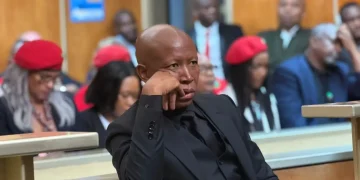





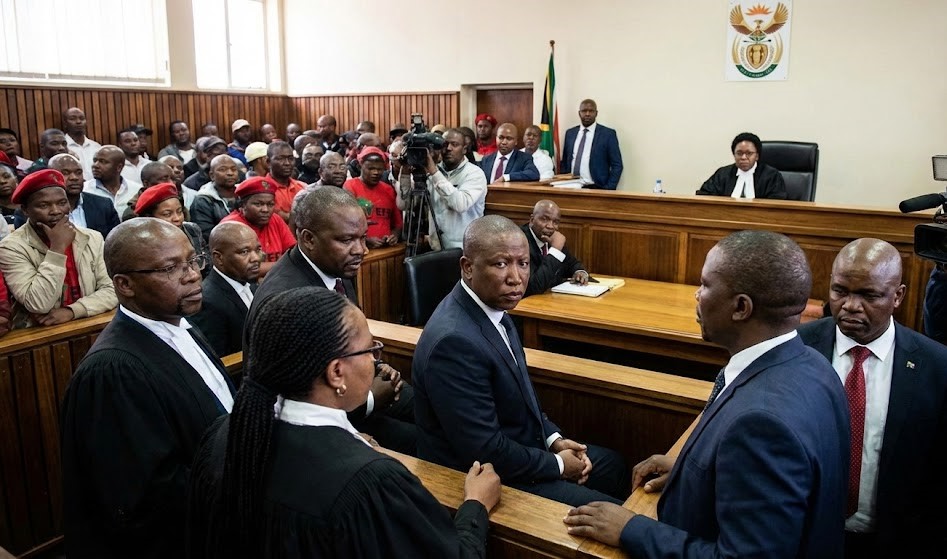
The political landscape in South Africa is bracing for a significant shift as the date for the julius malema sentencing approaches. On Friday, January 23, 2026, the leader of the Economic Freedom Fighters (EFF) is scheduled to appear before the East London Magistrate’s Court.
This appearance follows a conviction related to a 2018 incident involving the discharge of a firearm during a party rally. As the court prepares to deliver its judgment, the implications for both the individual and the party’s standing in Parliament are becoming a central focus of this Africa News Update 2026.
Legal Experts Weigh in on the Julius Malema Sentencing Outlook
The core of the legal drama surrounding the julius malema sentencing lies in the severity of the potential punishment. Under South African law, any Member of Parliament who receives a prison sentence exceeding 12 months without the option of a fine is disqualified from holding their seat.
Malema was convicted on several counts, including the unlawful possession of a firearm and ammunition, as well as reckless endangerment. These are not minor infractions; some of these charges carry a statutory minimum of 15 years in certain contexts.
Legal experts suggest that the court’s decision will hinge on several key factors. Ulrich Roux, a prominent legal analyst, noted that the magistrate must balance the personal circumstances of the accused against the gravity of the crime.
Aggravating Factors and the Question of Remorse
A critical element in the julius malema sentencing will be whether the EFF leader demonstrates genuine remorse. During the trial, Malema’s defense has frequently argued that the prosecution is a product of political targeting, specifically pointing toward organizations like AfriForum’s legal involvement in the case.
However, Roux warns that maintaining a narrative of political persecution instead of accepting the court’s findings could backfire. If the court perceives a lack of accountability, it may be less inclined toward leniency.
The court is expected to review a pre-sentencing report, likely compiled by social workers or correctional services officials. This report aims to provide a holistic view of the defendant, but its influence may be limited by the public nature of the offense.
The Political Future of the EFF
Beyond the courtroom, the julius malema sentencing has sparked an intense debate about the internal structure of the Economic Freedom Fighters. Political analysts are questioning how the party would function if its founding leader were removed from the legislative front.
Professor Ntsikelelo Breakfast, a well-known political analyst, suggests that the EFF operates under a “Vanguardist” model. In this system, decision-making and the party’s ideological identity are heavily concentrated in the persona of the leader.
If the julius malema sentencing results in a custodial term, the party may face a crisis of “political substitution.” Without Malema’s direct presence in Parliament, the strategic direction of the EFF—historically rooted in Marxism-Leninism and democratic centralism—could undergo a forced evolution.
Conflict in Parliament: Race and National Security
The tension surrounding Malema’s legal woes has already spilled over into the halls of government. Earlier this week, proceedings of an Ad Hoc Committee on national security were disrupted by a heated exchange regarding Malema’s absence.
The EFF explained that Malema was busy consulting his legal team ahead of the julius malema sentencing. This explanation was met with skepticism by the Democratic Alliance (DA), leading to a sharp confrontation between the EFF’s Leigh-Ann Mathys and the DA’s Glynnis Breytenbach.
The argument, which involved accusations of “white supremacy” and “playing the race card,” highlights the polarized atmosphere currently defining South African politics. This volatility is a key component of our ongoing Africa News Update 2026 coverage, as it reflects the deep-seated divisions within the country’s governance structures.
Regional Implications for Southern Africa
The outcome of the julius malema sentencing is being watched closely across the continent. South Africa is often viewed as a bellwether for democratic stability and the rule of law in the SADC region.
Should a major opposition figure be imprisoned, it will undoubtedly trigger discussions regarding the independence of the judiciary and the limits of political immunity.
- Public Safety: The court must decide if a lenient sentence sends the wrong message regarding firearm safety.
- Political Stability: Analysts worry about potential unrest among the EFF’s base if the sentence is perceived as too harsh.
- Judicial Integrity: The case serves as a test of the court’s ability to remain impartial under extreme political pressure.
What to Expect This Friday
As the East London Magistrate’s Court prepares for the final proceedings, the legal team for the defense is expected to present mitigating evidence to avoid a jail sentence. They will likely argue for a suspended sentence or a fine, which would allow Malema to retain his position as a Member of Parliament.
Conversely, the state may argue that as a public figure, Malema has a higher responsibility to uphold the law, and his actions in 2018 warrants a significant deterrent.
The julius malema sentencing is not just about a single firearm incident from years ago; it is a crossroads for South Africa’s third-largest political party. Whether the EFF emerges from this weekend with its leadership intact or enters a period of transition remains the most pressing question for the nation.
For more updates on this developing story and other regional headlines, stay tuned to our South African political news section.