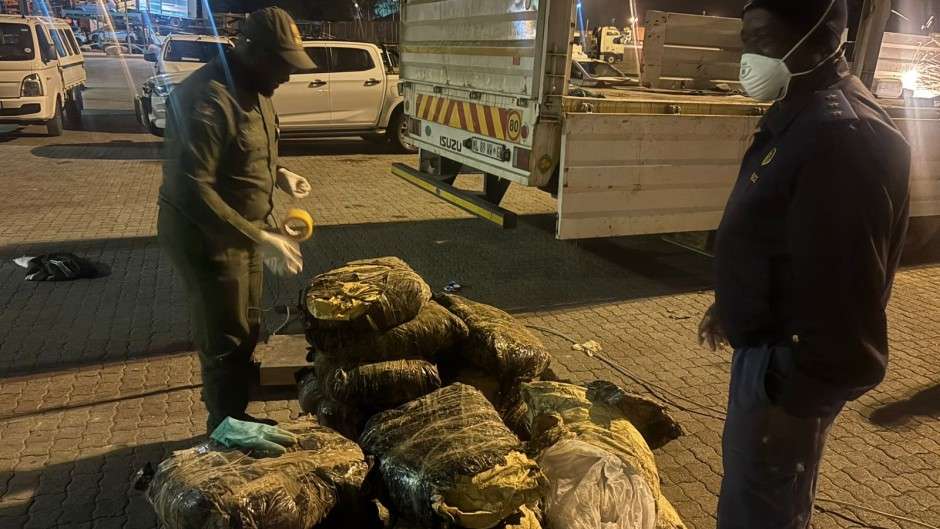





South African border authorities intercepted a commercial truck carrying nearly R1 billion worth of drug-manufacturing chemicals at the Beitbridge crossing. This record-breaking seizure exposes the sophisticated scale of transnational smuggling syndicates threatening regional security across the African continent. Neutralizing these illicit supply chains is absolutely essential for governments attempting to secure their domestic economies.
The Border Management Authority flagged the heavy-duty vehicle traveling from Malawi into South Africa during a targeted, intelligence-led operation on May 27. Following a non-intrusive digital cargo scan, officials dismantled the truck during a grueling eight-hour physical search to locate a sophisticated hidden compartment. The tactical teams eventually uncovered 713 kilograms of methaqualone, a primary chemical used to manufacture mandrax, leading to the immediate arrest of three Malawian nationals.
The Beitbridge port of entry serves as the primary commercial gateway connecting South Africa with Zimbabwe and the broader southern region. For decades, organized crime syndicates have exploited the intense logistical congestion at this chokepoint to mask illegal shipments within legitimate freight. Moving massive volumes of illicit narcotics through standard trade routes requires intricate coordination and frequent exploitation of systemic border vulnerabilities.
This R998.2 million interception represents a severe financial blow to the transnational gangs dominating the regional underworld. Starving these cartels of their primary revenue streams directly reduces gang warfare in urban townships and safeguards the broader business environment from criminal extortion. Furthermore, keeping millions of mandrax tablets off the streets prevents a massive, corresponding public health crisis among vulnerable youth populations.
Home Affairs Minister Leon Schreiber commended the operation as a monumental victory for border enforcement and the rule of law. A government statement published by Politicsweb highlighted his assertion that rigorous digital transformation is finally empowering the state to dismantle cross-border smuggling. Speaking on the broader security implications, BMA Commissioner Mike Masiapato explicitly told eNCA that South African borders will no longer serve as a safe transit corridor for organized crime.
Securing the Beitbridge Border Post for Continental Trade
The successful deployment of modern tech scanners provides a critical operational blueprint for modernizing customs enforcement across the continent. As African nations aggressively operationalize the AfCFTA, the ability to rapidly distinguish between legitimate commerce and illicit cargo is a mandatory requirement for economic integration. A detailed broadcast by EWN stressed that integrated collaboration between national police, intelligence units, and border guards is the only effective defense against these sophisticated cartels.
African policymakers managing regional politics must recognize that securing borders actively protects local economies and preserves legitimate jobs. The tactical intelligence sharing that enabled this bust should serve as a standard protocol for the African Union’s broader security architecture. Public opinion heavily relies on seeing corrupt officials and transnational smugglers brought to justice.
Community leaders participating in regional AMA discussions frequently cite porous borders as the primary enabler of urban decay. Tackling these massive shipments before they cross the Beitbridge checkpoint is the most effective method for cutting off street-level distributors. Securing international transit routes requires the same rigorous preparation and tactical execution seen in elite sports management.
Law enforcement agencies are currently working alongside international partners to trace the criminal network that originated this massive shipment in Malawi. Developing advanced AI predictive models to flag suspicious freight could soon become a standard practice at all major African ports without delaying ordinary travel. The immediate priority is ensuring successful legal prosecutions to permanently dismantle the syndicate that orchestrated this audacious operation.