




AfDB Injects $87 Million to Rebuild Sudan’s Collapsing Agrifood Systems
The African Development Bank Group and the United Nations World Food Programme have signed an $87 million agreement to deploy the Boosting Agrifood Systems Agricultural Resilience in Sudan (BOOST) project. This massive financial injection aims to rapidly restore domestic cereal production across a continent increasingly disrupted by armed conflict and climate-driven food shortages. The initiative arrives as more than 19 million Sudanese citizens face severe crisis levels of hunger, threatening the broader stability of the Horn of Africa.
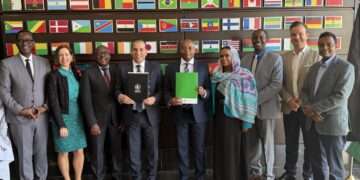
The four-year BOOST collaboration targets farming communities in Sennar and Blue Nile states, areas historically recognized as the nation’s primary breadbaskets. As reported by the African Development Bank during a recent ceremony in Nairobi, the project intends to help rural producers dramatically reduce post-harvest losses and strengthen direct linkages to local markets. WFP Sudan Country Director Abdallah Alwardat confirmed that the partnership will work directly with over 230,000 farming households to generate nearly one million metric tons of essential cereals and pulses.
This projected output is designed to satisfy the annual cereal consumption needs of nine million people and provide pulses for more than 15 million citizens over the program’s lifespan. The World Food Programme will implement the intervention by coordinating with regional agricultural research institutions to introduce modern, conflict-adapted farming techniques. Delivering this scale of production requires organizing smallholder groups for targeted agribusiness training, ensuring that rural families can transition from subsistence farming toward commercial viability.
Sudan’s agricultural productivity has suffered severe deterioration due to a combination of rudimentary farming practices, massive internal displacement, and the systematic destruction of rural infrastructure caused by ongoing civil conflict. Prior emergency initiatives, such as the Sudan Emergency Wheat Production Project, demonstrated that supplying farmers with climate-resilient seeds and fertilizers could quickly double local yields despite wartime disruptions. The success of those earlier interventions proved that localized food production offers a more sustainable, dignified solution than relying on continuous international humanitarian aid shipments.
Developing Agricultural Resilience in Sudan
Moving away from short-term relief toward structured agricultural resilience in Sudan is vital for shielding domestic economies from global supply chain shocks and soaring inflation. AfDB Country Manager for Sudan David Muthusi Mutuku stated that investing directly in farmers fundamentally accelerates the nation’s long-term economic recovery and institutional resilience. He emphasized that the Bank is backing practical, scalable solutions that strengthen rural business networks and help vulnerable communities withstand future macroeconomic or climatic shocks.
When local food systems collapse, the resulting inflation triggers catastrophic public health crises, primarily manifesting as acute malnutrition among children and displaced populations. Empowering farmers to sustain their agricultural schemes ensures that local markets remain stocked, which in turn preserves rural jobs that would otherwise vanish under conflict conditions. Alwardat noted that during recent field visits, farmers already participating in resilience programs explicitly stated they no longer required external food assistance, proving the efficacy of targeted agricultural investment.
The AfDB has steadily increased its financial footprint in Sudan, investing over $267 million in WFP-implemented resilience activities since early 2023 to combat the severe global grain crisis. Restoring domestic production networks prevents the catastrophic collapse of rural society and mitigates the massive internal displacement currently overwhelming the region’s urban centers. The intervention places a significant emphasis on equipping women and youth, actively preventing young people from being recruited into armed factions out of sheer economic desperation.
This decisive shift from passive aid to active production aligns perfectly with the African Union’s Agenda 2063, which prioritizes food sovereignty and the modernization of rural economies across the continent. Regional policymakers are observing the BOOST initiative as a replicable model for other African nations struggling to maintain food security amidst domestic politics instability and extreme weather events. By demonstrating that high-yield agriculture can survive in conflict zones, Sudan offers a crucial lesson in structural endurance for neighboring states in the Sahel and East Africa.
Integrating agricultural recovery with continental trade ambitions is essential for the long-term viability of the African Continental Free Trade Area. When nations stabilize their domestic food production, they reduce their reliance on expensive overseas imports, preserving foreign exchange reserves that can be redirected into critical national infrastructure. A resilient Sudanese agricultural sector will eventually resume exporting surplus commodities, re-establishing historical supply chains that support regional travel and cross-border commerce networks.
Regional opinion leaders and agricultural economists frequently stress during public AMA sessions that sustainable farming in volatile regions requires the rapid adoption of modern technology. To achieve the massive production targets set by the BOOST project, stakeholders must integrate advanced tech tools, such as mobile solar irrigation systems and digital market information applications. Furthermore, deploying AI driven weather forecasting can help smallholders optimize planting schedules, a vital adaptation as unpredictable climate patterns continue to threaten traditional harvest cycles.
The immediate challenge for the AfDB and WFP is navigating Sudan’s volatile security landscape to safely deliver certified seeds, fertilizers, and modern harvesting machinery to the targeted farming households. Rebuilding community infrastructure through agriculture also allows for the gradual return of social activities, including grassroots sports initiatives that help heal traumatized communities. International donors will closely monitor the operational rollout in Sennar and Blue Nile states to determine if this resilience-focused model can dictate how the global community funds future food security interventions.