CAIRO, Egypt — In a sweeping effort to modernize national utility infrastructure and secure long-term macroeconomic independence, the Arab Republic of Egypt is launching an expansive infrastructure upgrade. President Abdel Fattah El-Sisi met with Prime Minister Dr. Mostafa Madbouly and Minister of Electricity and Renewable Energy Eng. Mahmoud Ismat to fast-track the egypt national electricity grid expansion plan. This high-level executive consultation focused on accelerating the green transition, reducing fossil fuel consumption, and stabilizing power distribution channels ahead of peak summer demand cycles.
The comprehensive strategic review primarily focused on the rollout of the second phase of transmission and distribution network upgrades. Minister Ismat reported that this current phase comprises approximately 105 distinct critical projects designed to completely overhaul transmission capacity. These infrastructural modifications remain vital to absorb massive upcoming solar and wind capacities while safeguarding the egypt national electricity grid against potential blackouts or unexpected system destabilization.
This massive state-backed deployment significantly alters the regional business environment, offering domestic and international developers a highly predictable and secure playground for clean energy investment. The intentional modernization of public infrastructure directly impacts domestic politics by ensuring stable utility services for expanding urban zones and major agricultural reclamation zones. Resolving chronic power shortages allows commercial hubs to run continuous operations, which effectively protects localized corporate structures and prevents sudden supply chain drops.
A major element of the state’s updated master plan is the ambitious goal of increasing the share of renewable energy in the country’s power mix to 45 percent over the next two years. To achieve this, the Ministry of Electricity is aggressively expanding both grid-connected and standalone battery energy storage systems (BESS). These advanced storage technologies allow the egypt national electricity grid to balance intermittent solar and wind outputs with baseline customer demands, creating unprecedented flexibility across the national grid.
The technical teams have already celebrated the successful grid connection of the first phase of the massive Obelisk Solar Power Plant earlier this year. This initial operational tier delivers 500 megawatts of clean photovoltaic capacity, backed by an associated 200 megawatt-hour grid-connected energy storage facility. Minister Ismat confirmed that the plant’s second phase, which adds another 500 megawatts of generation capacity, is on schedule to enter active service within the coming weeks.
Transforming State Energy Logistics via the Egypt National Electricity Grid
Beyond localized solar fields, the government is highlighting the development of the landmark Energy Valley initiative in Upper Egypt. This project stands as one of the world’s largest integrated clean energy facilities, boasting a massive solar generation capacity of 1.7 gigawatts alternating current. The project will be fully built within the Minya Governorate and supported by an enormous 4 gigawatt-hour battery energy storage network distributed geographically across Minya, Qena, and Alexandria.
President El-Sisi strongly emphasized that the continuous integration of these massive clean energy payloads must run alongside the systematic localization of manufacturing. Establishing domestic production lines for wind turbines, solar cells, and energy storage assemblies constitutes a primary pillar for safeguarding national security. Building these industrial manufacturing clusters will generate thousands of high-value technical jobs across the country, transforming Egypt into a premier regional exporter of clean power technology.

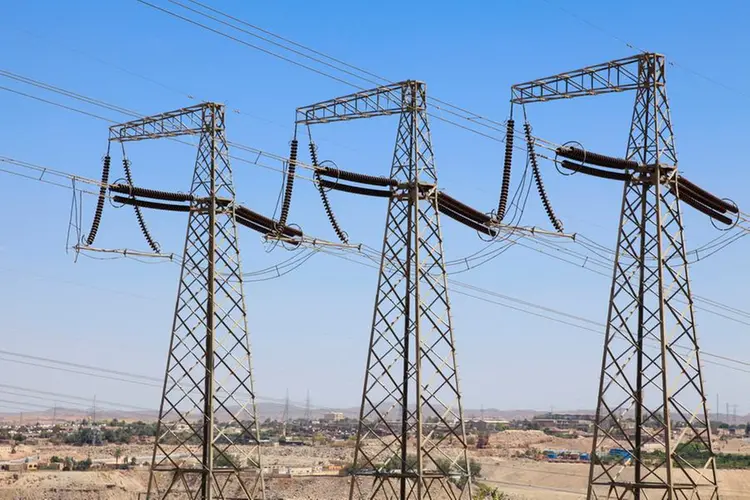
Furthermore, the President directed all state institutions to execute these capital-intensive wind and solar projects using local currency financing structures. This fiscal framework shields the domestic treasury from foreign exchange shocks and preserves thin hard currency reserves for essential imports. As public departments coordinate with international development corporations, ensuring absolute adherence to strict implementation timetables remains a non-negotiable metric to protect the egypt national electricity grid from capacity shortfalls.
The integration of these highly complex clean energy systems depends heavily on modern information networks and advanced automated communication systems. Public departments are deploying decentralized tracking databases and real-time telemetry monitors to manage power load balances across provincial boundaries seamlessly. This technological modernization opens up immense possibilities for the local tech sector, as software engineering groups design custom applications to maximize transmission line efficiency.
As these sophisticated digital controls become widely integrated into public utilities, engineering teams intend to execute predictive modeling programs to analyze load distributions. Incorporating automated data collection and advanced ai resource scheduling engines helps prevent line overloads during extreme heatwaves. Local technology commentators sharing their opinion online note that using machine learning to balance generation spikes drastically lowers operational running costs and reduces mechanical wear.
Ultimately, the successful execution of this energy transition has a direct, positive impact on community health outcomes by systematically lowering urban carbon emissions. Replacing aging diesel and heavy oil plants with clean solar arrays improves air quality index metrics and lowers respiratory illness risks across industrial governorates. This comprehensive modernization proves that investing in a robust egypt national electricity grid serves as the ultimate anchor for sustainable economic evolution and societal well-being. For comprehensive technical timelines and state updates, researchers can track the official communique from the Presidency of the Arab Republic of Egypt portal or follow regional energy reports.