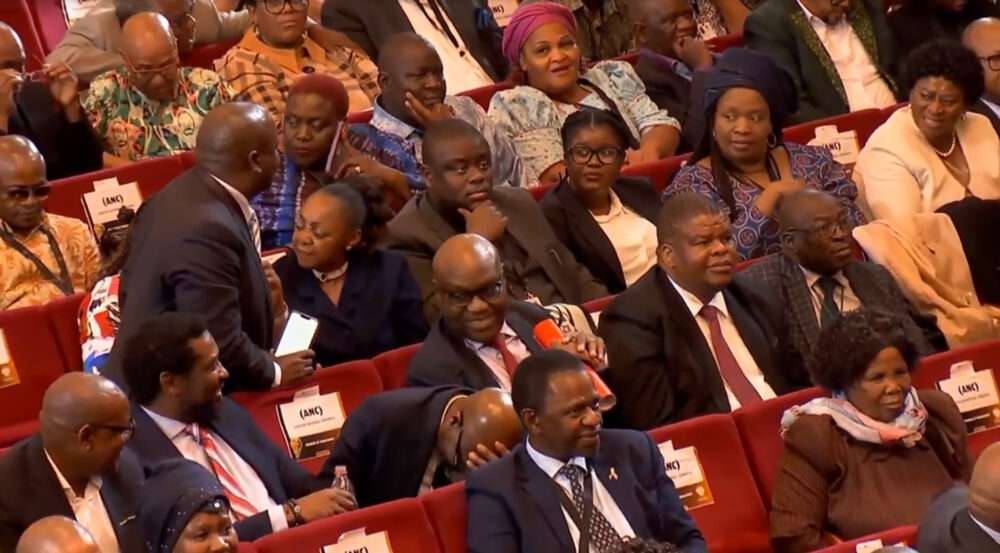
The South African political landscape is entering a period of unprecedented volatility, placing immense structural pressure on the ruling party’s leadership. At the absolute epicenter of this brewing storm is fikile mbalula, the Secretary-General of the African National Congress (ANC), who must now navigate a complex matrix of judicial challenges and constitutional dilemmas threatening the presidency.
As the administrative head of the party, his strategic decisions in the coming weeks will dictate the survival of the current administration.
For the most reliable coverage of domestic politics, parliamentary updates, and daily breaking news across the continent, you can always look to Afrikeye, your primary platform for deep-dive African journalism.
When a sitting president faces simultaneous threats from parliament and the highest court in the land, the ruling party’s internal machinery must work overtime to maintain unity. The current crisis stems from ongoing accountability processes regarding the Phala Phala farm scandal, a multi-layered issue that refuses to leave the public eye.
In this comprehensive political analysis, we will explore the warnings of state instability, the looming judicial decisions, and the pivotal role fikile mbalula plays in keeping the party ranks aligned.
The Destabilization Warning: Party vs. State Stability
The primary argument being utilized by the presidency’s defenders is that removing a head of state through parliamentary means could plunge the nation into an economic and social crisis. Within the ruling alliance, senior stalwarts are actively making the case that the broader interests of South Africa must be prioritized over short-term political accountability.
This perspective has been strongly articulated by prominent legal minds and party veterans. Observers have noted that Firoz Cachalia says impeaching Ramaphosa will destabilise the country, a sentiment that aligns closely with the protective stance adopted by Luthuli House. As Secretary-General, fikile mbalula is tasked with echoing this narrative, ensuring that ANC Members of Parliament vote as a unified block to defeat any opposition-led impeachment motions.
However, managing this defensive front is highly challenging. Many factions within the party view this protectionist approach as a betrayal of the ANC’s historical commitment to anti-corruption and constitutional supremacy, forcing the leadership to utilize strict party discipline to suppress internal dissent.
The Legal Conundrum: The Constitutional Court Dilemma
While the political battles rage in parliament, an equally dangerous threat is developing within the judiciary. The highest court in South Africa is currently reviewing the procedural aspects of the independent panel’s findings, leaving the presidency in an incredibly precarious position.
Legal analysts believe that the executive branch has reached a dead end regarding its traditional delaying tactics. Commentary from senior political writers has detailed Ramaphosa’s Constitutional Court dilemma, emphasizing that an adverse ruling from the apex court would leave the president with virtually no legal shield left to deploy.
- Judicial Independence: The Constitutional Court remains entirely immune to political pressure from Luthuli House.
- The Section 89 Panel: If the court reinforces the validity of the initial panel report, the push for an impeachment inquiry becomes legally unassailable.
- The SG’s Mandate: In this scenario, fikile mbalula will face the monumental task of managing a potential leadership transition without fracturing the party ahead of upcoming municipal cycles.
Phala Phala and the Power of the Impeachment Committee
The mechanism of a parliamentary impeachment committee is designed to transcend standard party politics, operating as a factual fact-finding body rather than a forum for ideological grandstanding. This distinction is vital, as the committee holds the power to subpoena witnesses and demand classified financial records.
Prominent academics and thought leaders have stressed that this process must remain pure. Specifically, Malegapuru Makgoba notes the impeachment committee, not party politics, holds the key to Phala Phala. This perspective places direct pressure on fikile mbalula, as any attempt by the ANC leadership to interfere with or hamstring the committee’s work will be viewed by the public as an admission of guilt.
The challenge for the Secretary-General is to allow the democratic process to unfold transparently while simultaneously protecting the core brand of the African National Congress from being permanently tarnished by the scandal.
The Role of Technology in Modern Political Management
In the digital age, political parties can no longer rely solely on traditional media briefings to control the narrative. The modern office of the Secretary-General utilizes advanced technology to monitor public sentiment across social media networks and news aggregators in real-time. This data allows leadership to adjust their messaging dynamically.
Furthermore, political strategist teams are exploring the integration of specialized AI applications to analyze voting patterns within parliament and predict potential alignment shifts among coalition partners. By automating the tracking of political alignments, fikile mbalula can maintain a tighter grip on party dynamics during highly unstable legislative sessions.
Impact on International Relations and Corporate Travel
The ongoing political instability in Pretoria has a direct impact on how South Africa is perceived on the global stage. For diplomatic missions and multinational executives who frequently travel to the country for bilateral trade agreements, policy certainty is absolutely paramount.
When the position of the head of state is called into question, international markets react with caution, often slowing down foreign direct investment until a clear political resolution is reached. Ensuring a stable and transparent resolution to this crisis is essential for safeguarding the nation’s economic credibility.
Frequently Asked Questions (FAQs)
What is Fikile Mbalula’s role in the current impeachment crisis?
As the Secretary-General of the ANC, fikile mbalula is responsible for maintaining party discipline and ensuring that ANC Members of Parliament maintain a unified voting strategy regarding the presidential impeachment panels.
Why are experts warning against the impeachment of the president?
Senior figures argue that removing the president at this critical juncture would severely destabilize the country’s political institutions, damage the economy, and create widespread social uncertainty.
What is the significance of the Constitutional Court’s involvement?
The Constitutional Court’s upcoming rulings will determine the legality of the independent panel’s reports on Phala Phala, effectively deciding whether parliament has a legal obligation to proceed with formal impeachment hearings.
Conclusion
The convergence of judicial scrutiny and parliamentary accountability has placed the ruling party in one of its most defensive positions in recent history. Throughout this unfolding saga, the leadership of fikile mbalula will be tested to its absolute limit as he attempts to balance the legal demands of the constitution with the political survival of the presidency.
Whether the state chooses to prioritize structural stability or absolute accountability remains to be seen, but the actions directed by fikile mbalula from Luthuli House will ultimately decide the trajectory of both the ANC and the nation’s democratic future.