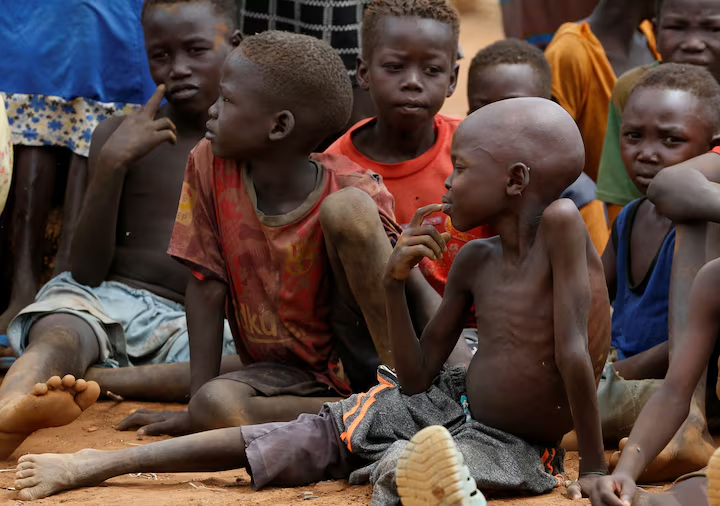
Sudan is facing one of the worst humanitarian emergencies in its history, with thousands of malnourished children in Sudan suffering due to ongoing conflict and famine. As families flee atrocities in El Fasher, Médecins Sans Frontières (MSF) teams are treating children and adults in Tawila — where rates of acute malnutrition have reached alarming levels. The crisis highlights urgent ways to help Sudan malnutrition victims and save lives amid the country’s protracted war.
Worsening Malnutrition and Starvation Across Sudan
The situation in El Fasher, besieged for more than 500 days, has become catastrophic. MSF reports that over 70% of children under five arriving in Tawila are acutely malnourished, with 35% suffering from severe acute malnutrition. Among adults, 60% show signs of malnutrition, while pregnant and breastfeeding women are severely affected.
In desperate circumstances, families have resorted to eating animal feed to survive. One displaced woman said, “We were so hungry we began eating ambaz (animal feed). At first, it was free, then it became too costly to buy.”
Such testimonies reveal the devastating reality of child hunger in Sudan. Blocked humanitarian access, destroyed markets, and skyrocketing food prices — such as millet costing US$208 and sugar at US$54 per kilogram — have left many on the brink of famine.
The Urgent Need to Help Sudan’s Malnourished Population
Across the country, ways to help Sudan malnutrition victims are limited by violence and restricted access. Those attempting to deliver food to El Fasher were reportedly shot by armed groups. Many survivors remain stranded or held for ransom, unable to escape or receive assistance.
MSF’s Emergency Coordinator, Myriam Laaroussi, urged:
“We call on all warring parties to allow humanitarian organisations safe and unimpeded access to increase services and help reduce this crisis.”
Rising Child Hunger in Sudan’s Other Regions
Beyond El Fasher, MSF teams are treating malnutrition cases in Blue Nile, Khartoum, and other regions. Among 6,500 pregnant women seen this year in Tawila, half were acutely malnourished, and many children are born underweight due to severe food shortages.
In Khartoum state, over 700,000 returnees have resettled in war-torn neighborhoods with limited access to food and healthcare. Poor sanitation and unsafe water have triggered a cholera outbreak, compounding the child hunger Sudan crisis. Between July and September, MSF treated 1,950 severely malnourished children at Damazin Teaching Hospital — tragically, 100 children died due to cholera and acute malnutrition.

How to Aid Sudan Effectively
The true scale of the disaster may be even greater than reported. The most critical ways to help Sudan malnutrition efforts include:
- Allowing safe humanitarian access.
- Increasing international funding for food and healthcare.
- Supporting aid groups like MSF providing on-ground treatment.
- Raising awareness about how to aid Sudan and supporting advocacy for peace.
Hospitals such as Al-Buluk and Al-Banjadeed in Khartoum continue to report dangerously high malnutrition rates among children, proving that immediate global response is vital.
To explore more humanitarian efforts and African resilience stories, visit Travel Afrikeye.
This story was first reported by Médecins Sans Frontières (MSF). Read the full article here.