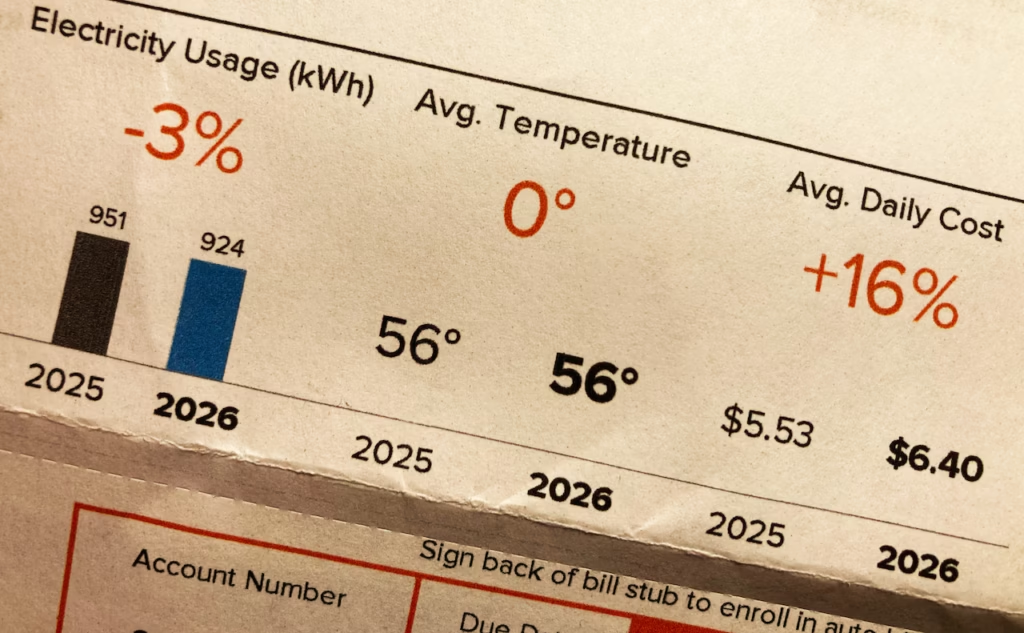
Global energy markets are fluctuating, and Pennsylvania residents are about to feel the immediate sting of rising electricity pricing. Starting June 1, the Pennsylvania Public Utility Commission has confirmed that default supply rates will increase for regulated utilities across the state. This abrupt shift threatens to squeeze household budgets just as peak summer temperatures begin to drive up air-conditioning demand. For the broader business sector, balancing these overhead costs will quickly become a severe operational challenge.
Regulators have issued stark warnings about the incoming tariff adjustments. As PennLive reported, some regions are facing electric rates increasing by as much as 20 percent, a massive jump driven by rising wholesale capacity costs and grid maintenance requirements. Customers who rely on the standard “Price to Compare” default service—meaning those who have not locked in a contract with a competitive supplier—will bear the absolute brunt of these market fluctuations.
The impact of these rate hikes will vary drastically depending on the specific service territory and the individual provider. CBS News Pittsburgh noted that the June 1 electric bill increase will see West Penn Power customers experiencing a significant 10.3 percent surge, while Duquesne Light customers will see a more modest rise of nearly 3 percent. These regional disparities highlight the complex, fragmented nature of domestic energy politics, where local infrastructure constraints directly dictate consumer costs.
Navigating the Summer Spike in Electricity Pricing
Consumer advocates are urgently advising residents to audit their energy usage before the heavy summer billing cycles officially begin. WTAE highlighted that as Pennsylvania electric bills and rates increase, the combination of higher per-kilowatt-hour charges and extended heatwaves could result in unprecedented monthly expenses. Small, proactive adjustments—such as routinely maintaining HVAC systems, upgrading to smart thermostats, and shifting heavy appliance usage to cooler, off-peak hours—are now essential financial survival tactics for working families.
Furthermore, the commercial sector is bracing for a substantial financial hit. Industrial facilities and massive data centers, which require continuous, heavy power loads, are increasingly relying on advanced tech to actively monitor their consumption patterns. By integrating sophisticated AI software to accurately predict peak demand periods, these corporations can dynamically adjust their operations to minimize exposure to the most expensive grid tariffs.
As energy markets remain highly volatile, securing long-term fixed-rate contracts may offer consumers the most reliable protection against future supply shocks. The ability of both households and commercial enterprises to adapt to this new era of expensive power will heavily dictate regional economic stability throughout the upcoming summer months.
For travel stories and guides across Africa, visit travel.afrikeye.com.