MOKHOTLONG, Lesotho — In a monumental advancement for Southern Africa’s cross-border logistics and utility networks, South Africa and Lesotho have officially commissioned a major structural asset, hitting an essential benchmark for Phase II of the Lesotho Highlands Water Project (LHWP). The multi-billion-rand megastructure serves as a vital replacement for pre-existing low-level infrastructure that is destined to be fully submerged once the sprawling Polihali Dam basin is impounded.
This binational enterprise highlights a treaty-based sovereign partnership formally ratified on October 24, 1986, engineered specifically to enhance regional integration between South Africa and the landlocked, mountainous territory of Lesotho. By actively pooling engineering expertise, financial reserves, and labor forces, both states are working in unison to address long-term water security, clean energy production, and cross-border macroeconomic development.
The strategic importance of this development extends far beyond localized transit, directly influencing sub-continental politics and reinforcing diplomatic solidarity across the Southern African Development Community (SADC). Acting as the largest of three highly elevated transit routes greenlit under the current LHWP phase—alongside the upcoming Khubelu and Mabunyane crossings—this structural asset was commissioned to maintain uninterrupted community access across the future Polihali Reservoir. Once the main concrete-faced rockfill dam reaches full operational supply capacity, the regional water storage volume will scale dynamically from 780 million cubic metres per annum to an unprecedented 1,270 million cubic metres, reinforcing water availability for South Africa’s economic engines while generating critical domestic hydropower for Lesotho.
Strengthening Transboundary Infrastructure via the Senqu Bridge
As a premier architectural feature of Phase II, the newly completed senqu bridge represents a historic engineering breakthrough, standing proudly as the first authentic extradosed cable-stayed bridge ever constructed in Lesotho. Combining the structural principles of a prestressed concrete box girder system with an integrated cable-stayed design, the 825-meter-long crossing stands roughly 90 meters above the valley floor to maintain a seamless link along the A1 national highway.
This critical route connects the remote northeastern district of Mokhotlong directly to the capital city of Maseru. Construction crews initiated foundational work in 2023, pushing through extreme mountain winters and complex high-altitude geological formations to finalize structural assembly in February 2026, before opening the lanes to commercial motorists the following month.
The specialized construction methodology relied heavily on an incremental launching technique, where the bridge deck was constructed in precise 50-meter segments and cast from opposite ends of the gorge simultaneously to minimize environmental disruption to the river ecosystem below. The massive deck is securely anchored by 17 vertical piers ranging in operational height from 15 meters to 90 meters.
Due to the sheer scale of the upcoming reservoir impoundment, 15 of these 17 concrete pillars will eventually be submerged beneath the rising tides, enduring water depths reaching up to 85 meters at full containment capacity. To guarantee long-term safety, specialized engineering consultants integrated an automated structural health monitoring system designed to continuously evaluate real-time stress distributions across the deck, internal prestressing cables, and submerged piers.
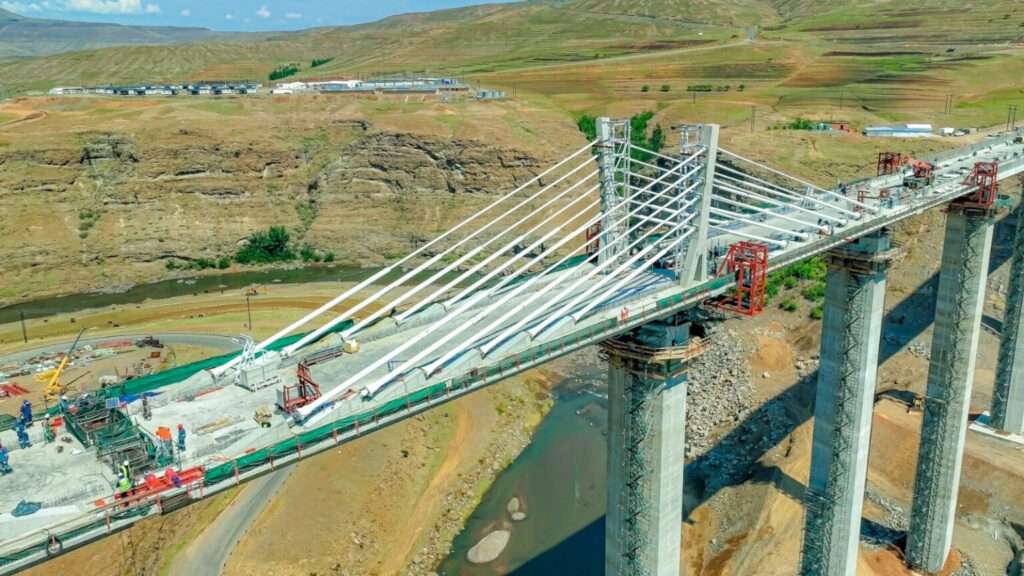
Building this iconic mountain crossing required an intense allocation of raw industrial materials, including the placement of over 10,000 tonnes of structural steel and the calculated excavation of 150,000 cubic metres of rock from the surrounding landscape. In the broader regional business landscape, this major infrastructure spend has served as an immediate economic stimulant for localized supply chains and domestic procurement systems. According to official Engineering News reporting, the construction contract was executed by a collaborative joint venture involving international and local contractors, pushing technical capacity and introducing modern digital tech monitoring systems to the regional workforce.
Beyond the long-term utility benefits, the engineering project delivered highly impactful socio-economic outcomes by generating approximately 250,000 person-days of employment for a peak workforce of 1,200 individuals. This localized recruitment process provided thousands of sustainable jobs for Basotho nationals, providing specialized training pathways for young civil engineers and technical specialists. Public opinion across adjacent highland communities remains overwhelmingly positive, as the completion of the bridge successfully averts the threat of geographical isolation that the rising reservoir waters would have otherwise caused for rural populations.
To commemorate this significant milestone, an official ribbon-cutting ceremony was held on April 22, 2026, drawing high-level leadership from both partner nations. The gathering featured South African President Cyril Ramaphosa alongside Lesotho’s constitutional monarch, King Letsie III, and Prime Minister Samuel Matekane. According to the official launch briefing released by the state, the leaders unveiled a commemorative plaque celebrating 40 years of continuous bilateral development under the LHWP banner. As the remaining phases of the Polihali Dam construction proceed toward their target completion dates, this engineering triumph stands as an enduring symbol of African self-reliance, technical excellence, and shared prosperity.