According to official communications released via the APO Group network, global energy giant ExxonMobil and NBA Africa are systematically utilizing youth basketball to scale STEM education in Angola. The initiative highlights a growing continental strategy where private business funding accelerates critical human capital development. This approach directly supports the African Union’s mandate to equip the next generation with the technical skills required for robust economic diversification.
Scaling STEM Education in Angola
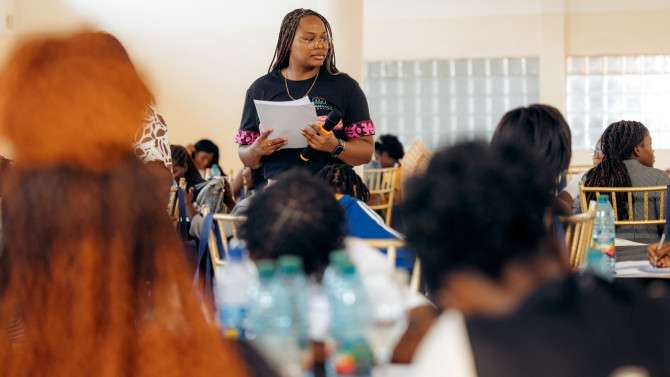
The third season of this joint youth league hosted 100 teenagers at the Instituto Politécnico Industrial de Luanda earlier this month. The interactive sports session actively integrated traditional basketball court drills with practical, hands-on demonstrations in science, technology, engineering, and mathematics. Project managers designed the unique curriculum to ensure that physical athletic development runs parallel to rigorous academic engagement.
The broader league officially launched its current season in May, representing a significant logistical expansion across the nation. The programme now operates across 40 distinct educational facilities within the heavily populated Luanda and Icolo e Bengo provinces. Project coordinators successfully added 10 new schools this year, a strategic move designed to deepen the footprint of STEM education in Angola across seven vital municipalities including Cacuaco, Cazenga, and Talatona.
By bringing these resources directly to municipal educational centres, the initiative bypasses common infrastructural bottlenecks that frequently delay the rollout of specialized technical curriculums.

The demographic and economic stakes for this educational expansion remain incredibly high for the Southern African nation. Angola has historically relied heavily on its petroleum exports, but achieving structural economic transformation requires a completely new generation of engineers, data analysts, and technicians. Organisers report the hybrid curriculum has already reached over 50,000 young Angolans since its initial inception. Blending athletics with tech learning provides a highly scalable, engaging model to keep adolescents actively participating in formal schooling.
Using the basketball court as a dynamic classroom bridges the gap between theoretical mathematics and real-world application. Coaches and educators utilize the game to teach complex biometric data, the physics of trajectory, and real-time statistical analysis. This methodology proves highly effective in demystifying subjects that students often find historically intimidating.
The Angolan Ministry of Education, which currently shapes national politics on youth development, views the multi-stakeholder collaboration as absolutely vital for building the country’s future modern workforce. Executives from NBA Africa and ExxonMobil maintain that corporate partnerships are essential to finance and properly scale practical learning environments. Local implementation partner ADPP relies heavily on the physical training aspect as a direct, culturally resonant vehicle for teaching broader life skills like discipline, teamwork, and leadership under pressure.
This targeted Angolan rollout closely mirrors similar sports diplomacy and educational integration efforts seen recently in emerging markets like Senegal and Rwanda. Using deep cultural touchstones like basketball to drive technical literacy aligns seamlessly with Agenda 2063 targets for comprehensive continental youth empowerment. Furthermore, as the African Continental Free Trade Area (AfCFTA) matures, member states must rapidly develop highly skilled, digitally literate workforces to remain regionally competitive.
Other African governments are increasingly monitoring these specific public-private frameworks to supplement their own heavily strained state-funded academic curriculums. Initiatives fundamentally advancing STEM education in Angola offer a reliable blueprint for other resource-rich African nations attempting to definitively pivot toward modern, knowledge-based economies. Rather than siloing sports and academics, integrating them capitalizes on youth passion to deliver complex educational outcomes efficiently.
The league schedule will intensify rapidly as critical playoff fixtures run through early July. The tournament officially concludes next month with a comprehensive, multi-day science camp running concurrently alongside the highly anticipated championship games. Continental educational planners will watch closely to see whether the Angolan state formally absorbs this private partnership model into its long-term, formalized strategy for STEM education in Angola.