The onset of the intense summer season across the southern plains of the United States frequently brings extreme weather volatility capable of disrupting entire municipal infrastructures. Residents across Texas experienced a dramatic shift in atmospheric conditions as a rare summer cold front barreled southward to break an extended stretch of triple-digit heat. This rare weather anomaly triggered widespread meteorological warnings as clashing air masses collided over vulnerable metropolitan centers.
Prior to the arrival of the unsettled boundary, a massive ridge of high pressure blanketed the region, driving heat index values up to an oppressive 105 degrees. This extreme thermal energy created highly unstable atmospheric conditions, turning localized humidity into a volatile fuel source for incoming storm cells. Such dangerous thermal environments place immense operational strain on regional electricity grids and public utilities, directly affecting the local business environment and commercial distribution networks.
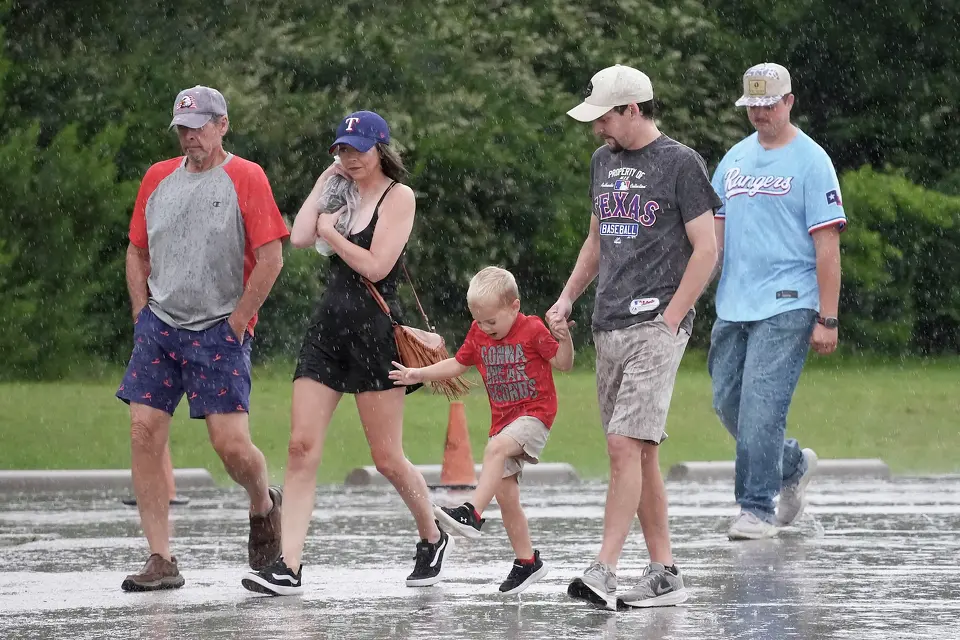
As the weekend progressed, tracking models from the National Weather Service confirmed that a weak cold front was sinking past the Red River valley, threatening to spark scattered severe thunderstorms. The approaching boundary slowed down considerably as it collided with the intense thermal cap, providing a distinct focus line for violent convective development. Outdoor enthusiasts and commuters were forced to drastically alter their travel schedules as a prominent cold front brings Sunday storms directly into the heart of the Dallas-Fort Worth metroplex.
Further to the west, the tracking parameters documented a similarly explosive scenario as multiple outflow boundaries collided over the central South Plains late in the evening. Torrential downpours, intense lightning displays, and heavy pockets of hail slammed into the eastern corridors of Lubbock before marching steadily southward. Local emergency management agencies urged residents to prepare for highly volatile storms tonight then serious heat as the sweeping system briefly suppressed the regional climate baseline.
The convective instability quickly trickled down into the lower portions of the state, causing widespread meteorological disruptions across the Hill Country. Forecasters noted that moisture drawing up from the Gulf Coast interacted intensely with the frontal boundary, increasing the risk of localized flash flooding along main expressways. Commuters faced hazardous driving conditions as radar confirmed that strong thunderstorms return to Central Texas with severe intensity, dropping up to three inches of rain in a few hours.
Essential Safety Frameworks for a Severe Summer Cold Front
Once the primary boundary of the cold front stalled near the Interstate 10 corridor, it acted as a persistent focus for continuous convective activity across the coastal plains. This stationary positioning meant that multiple rounds of heavy, soaking rains saturated low-lying fields and overwhelmed municipal drainage channels. Local administrative boards had to reallocate municipal budgets to fund emergency response teams, which highlighted the role of resource management in regional politics.
The high-velocity straight-line winds generated by the cell collisions reached up to 76 miles per hour near Tahoka, causing widespread structural damage to commercial properties and grocery stores. Fallen tree limbs and shattered debris downed primary power poles, leading to widespread electrical outages that temporarily paralyzed local manufacturing facilities. These sudden operational pauses disrupted industrial productivity and disrupted shifts for thousands of individuals holding local utility jobs.
To track these complex atmospheric patterns with absolute precision, regional weather tracking centers rely heavily on advanced analytical software models and synchronized data registries. Modern meteorologists use specialized remote sensing tools to measure rapid drops in barometric pressure and evaluate shifting wind shear vectors. Incorporating this automated data collection infrastructure within the digital tech sector provides civic leaders with the empirical insights required to broadcast early evacuation orders.
Furthermore, the processing of complex global radar imagery and satellite telemetry is being enhanced through the deployment of sophisticated machine learning algorithms. By executing predictive simulations within data frameworks, state agencies can map potential flash flood zones before heavy downpours begin. The successful deployment of this advanced ai infrastructure allows emergency dispatchers to route rescue vehicles away from flooded underpasses, significantly improving disaster response times.
Independent climate scientists publishing their expert opinion pieces note that while a summer cold front provides a welcome reprieve from triple-digit heat, the accompanying severe weather hazards require long-term infrastructure planning. Ensuring that public drainage pipes are cleared and reinforcing roof structures on public buildings remains crucial to mitigate compounding economic losses. This proactive preparation shields vulnerable rural populations from severe financial stress and helps protect community assets against unpredictable localized weather disruptions.
Beyond the immediate property damage, the rapid temperature drops from the upper 90s down into the low 60s introduce significant challenges for vulnerable demographics. Sudden climate changes can trigger acute respiratory issues among children and elderly residents, placing additional strain on local emergency rooms. Public safety experts stress that checking on isolated neighbors during a severe cold front is a vital civic responsibility to safeguard sub-regional community health.
Looking ahead, the brief cooling relief delivered by the stalled system is projected to diminish rapidly as a broad ridge of high pressure returns by midweek. Temperatures are expected to climb back into the mid-90s, with unusually high relative humidity pushing peak heat index values past 100 degrees once again. This cyclical return to scorching conditions emphasizes that a summer cold front is merely a temporary break within a broader pattern of intensifying global thermal trends.