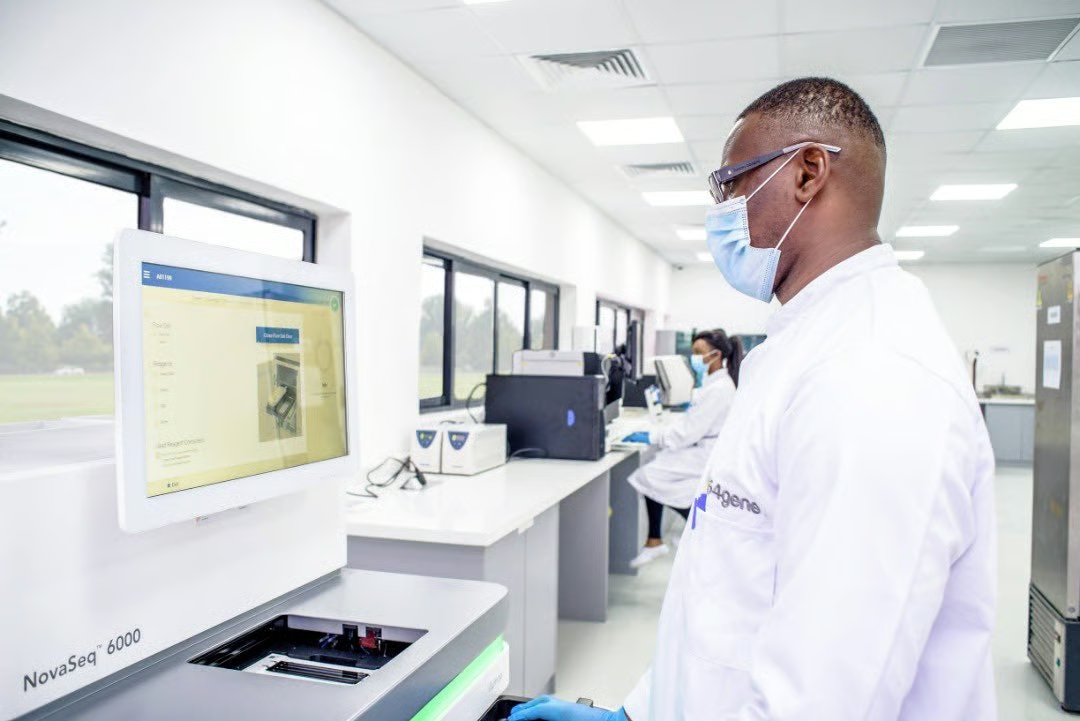
South Africa is building one of the continent’s strongest foundations in pharmaceutical infrastructure Africa, addressing a long-standing gap where the continent carries 25% of the global disease burden but produces only a small share of the medicines it uses. At North-West University (NWU), the Preclinical Drug Development Platform (PCDDP) is emerging as a vital engine for pharmaceutical innovation research, ensuring African discoveries move from ideas to real therapeutic impact.
Strengthening Africa’s Drug Research Ecosystem
Prof. Rose Hayeshi, director of the PCDDP, describes its mission with precision.
“The PCDDP is a national facility focusing on preclinical studies for medicines and vaccines,” she says. “The preclinical studies are conducted in laboratory rodents to ensure that new medicines, vaccines and phytomedicines in development are safe and efficacious.”
In Africa, promising discoveries often fail to advance due to limited drug research infrastructure. The PCDDP fills this critical gap, acting as the bridge between scientific discovery and final medicines reaching hospitals and pharmacies.
Drug development begins long before products reach the market. Prof. Hayeshi explains:
“There are two main areas in the development of new medicines. The discovery phase, when scientists create new molecules, and the development phase, when these molecules are tested in animals and humans.”
This development phase starts with preclinical research — the “critical bridge” — and it is here that the PCDDP has become indispensable.
Rooted in Africa’s Health Priorities
The platform focuses on diseases that deeply affect African populations, including tuberculosis, HIV, malaria, and emerging viral threats. “The platform partners with local scientists who are developing new medicines and vaccines to treat and prevent diseases affecting African populations,” she notes.
By generating trusted data on safety and efficacy, the PCDDP determines which African innovations advance to clinical trials. This capability strengthens pharmaceutical infrastructure Africa and brings African health challenges to the forefront of global medical research.
Facilities and Accreditations Strengthening Global Credibility
PCDDP’s infrastructure is rare across the continent. It operates a state-of-the-art vivarium with strict environmental controls, ensuring accuracy and reproducibility.
Its accreditations set it apart globally:
- SANAS certification for OECD Good Laboratory Practice (GLP) toxicology studies—one of only two such facilities in South Africa.
- AAALAC accreditation—placing it among only three facilities on the entire continent meeting this global benchmark for animal care.
These credentials ensure that data produced at PCDDP can support downstream clinical trials, an essential requirement for trusted pharmaceutical innovation research.
Building the Full Drug Development Pipeline
NWU’s long-term vision aligns with South Africa’s goals for medical self-reliance. The newly established NWU Desmond Tutu School of Medicine positions the institution to support drug discovery, preclinical studies, and future clinical research—completing the full development chain.
“The NWU already has expertise in drug discovery,” Prof. Hayeshi says. “Therefore, the NWU would have expertise in the complete drug development value chain from discovery, preclinical and clinical study capabilities.”
This integrated framework strengthens the continent’s drug research infrastructure and prepares South Africa for future health emergencies.
Training Africa’s Next Scientists
Beyond research output, PCDDP plays a crucial role in training MSc and PhD students in Pharmaceutical Sciences. This ensures that expertise in pharmaceutical infrastructure Africa is not limited to a few institutions but grows into a national resource with long-term impact.
South Africa’s health future relies on new vaccines, innovative medicines, and a strong research pipeline. At NWU, that future is being built steadily, scientifically, and with deep commitment to Africa’s real health needs.
Prof. Hayeshi’s message is clear: meaningful medicine development requires infrastructure, talent, accreditation, and social responsibility. The PCDDP is showing that South Africa can deliver all four.
Explore more African development insights at our travel and discovery platform: Afrikeye Travel
This story was first reported by North-West University. Read the full article here.