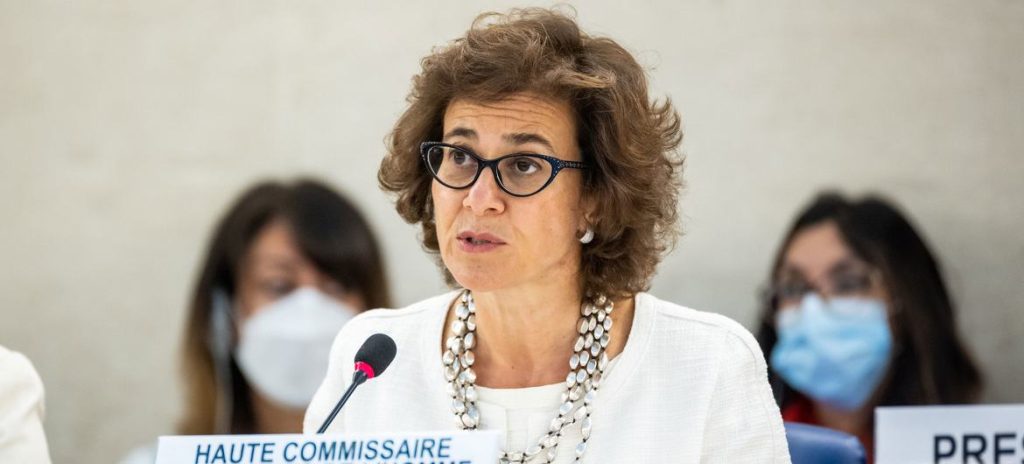
Global leaders are warning that the sharp development assistance funding reduction worldwide could reverse years of progress in poverty alleviation and human rights. Speaking in Geneva, UN Deputy High Commissioner for Human Rights, Nada Al Nashif, said the world is facing “declining respect for human rights and multilateralism,” with conflicts, debt, and shrinking aid budgets threatening long-term stability.
Global Aid Cuts and Rising Military Spending
According to the OECD, international aid could fall between nine and 17 percent next year, and by as much as 25 percent for the least-developed nations. Meanwhile, global military expenditure continues to climb to record levels. Al Nashif warned that poverty reduction has stalled and that nearly all Sustainable Development Goals (SDGs) are off track, echoing the World Bank’s concern about a potential “lost decade for development.”
Despite the challenges, she emphasized that the right to development remains a viable path forward — calling for governments to reshape fiscal policies, strengthen social protection, and align global finance with human rights. She cited the Sevilla Commitment and renewed solidarity at the UN General Assembly as key steps in reviving the international development agenda.
Belarus Political Situation and Human Rights
At the UN General Assembly, independent expert Nils Muižnieks presented a report shedding light on the Belarus political situation human rights concerns. He said, “Belarus is not the worker’s paradise authorities claim it to be,” pointing to widespread political discrimination and harassment in public and private sectors.
The report documented human rights violations Belarus continues to face — including the use of forced labour as punishment for those detained on political grounds. Over 1,100 people remain arbitrarily imprisoned, with some deported or stripped of their passports, leaving them vulnerable to statelessness and unable to return home safely.
The International Labour Organization (ILO) has placed Belarus under enhanced scrutiny for violating trade union rights, reinforcing international pressure to address these abuses.
Health Emergencies in Africa: Ebola and Mpox Preparedness
Meanwhile, the International Organization for Migration (IOM) has scaled up its health response in Africa, following an Ebola outbreak in the Democratic Republic of the Congo (DRC) and rising mpox cases across the continent.
Frantz Celestin, IOM’s Regional Director for East, Horn, and Southern Africa, said, “Our focus is on keeping travellers and border communities safe.” So far, more than 169,000 screenings have been completed at key entry points, reducing the spread of infectious diseases.
Countries including Uganda, Ethiopia, Malawi, and South Sudan are benefiting from IOM’s mobility data to strengthen public health systems, improve outbreak surveillance, and expand vaccination access at border regions.
A Call for Global Cooperation
The continuing development assistance funding reduction underscores the need for renewed multilateral cooperation. Without sustained support, economic and humanitarian setbacks could worsen across developing regions, while the Belarus political situation human rights crisis highlights the importance of international accountability.
This story was first reported by UN News. Read the full article here.