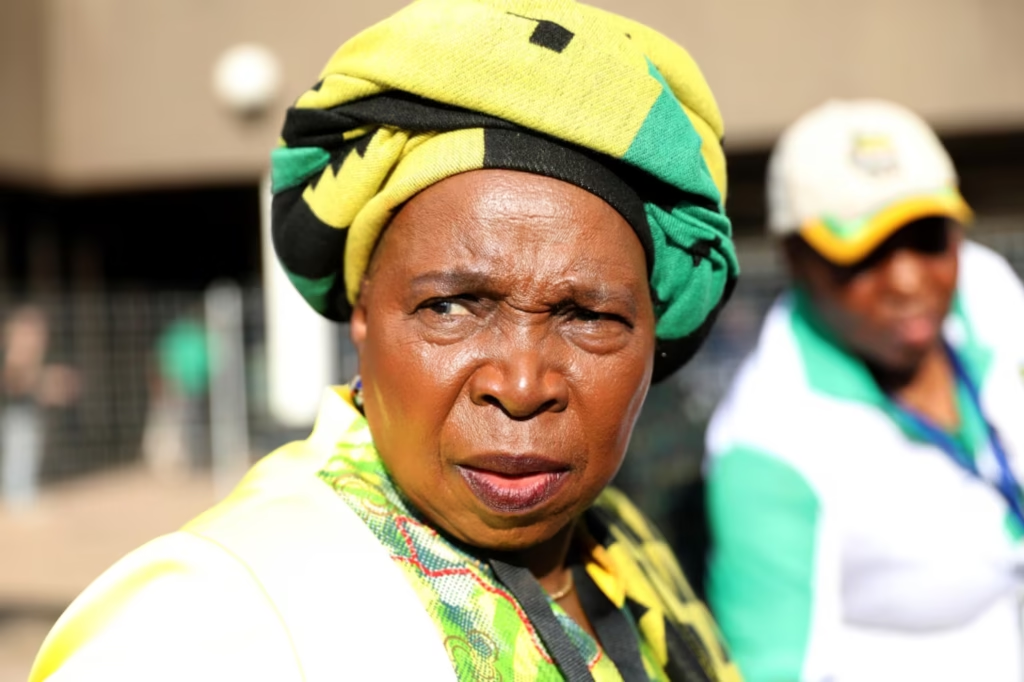
The escalating dlamini-zuma south africa immigration debate has laid bare a profound governance crisis as officials warn against scapegoating undocumented African workers. Former minister Nkosazana Dlamini-Zuma has publicly cautioned that executing mass deportations will never cure the nation’s crippling economic paralysis. Afrikeye understands her timely intervention serves as a direct challenge to the rising tide of anti-foreigner sentiment spreading across the continent’s major economic hub.
Dlamini-Zuma delivered her blunt assessment this week, aggressively challenging the widespread political narrative that removing foreign nationals will suddenly create new jobs for locals. According to Independent Online, the veteran politician argued that deep-seated structural failures and stagnant growth are the true drivers of domestic poverty. She emphasised that chasing away African migrants merely offers a false, temporary solution to highly complex domestic governance failures.
The situation on the ground remains exceptionally volatile as vulnerable migrant communities find themselves routinely targeted by frustrated residents. Recent reports from Eyewitness News reveal that many foreign nationals genuinely fear for their lives amidst the escalating and unpredictable township hostilities. Security ministers have already convened emergency cluster meetings in Pretoria to actively prevent these localized protests from erupting into deadly nationwide violence.
However, local grassroots organisers strongly reject labels that frame their severe economic desperation as purely xenophobic hatred or bigotry. In a fiery opinion piece published by The Citizen, community leaders argued they are normal citizens demanding functional services rather than acting as lawless fascists. They continuously point to collapsing municipal infrastructure and fierce daily competition for basic resources as the primary catalysts for their mounting anger.
This intense, survival-driven competition has rapidly transformed the informal business sector into a fiercely contested urban battleground. Undocumented migrants and impoverished citizens are constantly clashing over control of lucrative street vending operations and small retail corners. Whenever state service delivery completely stalls, these daily economic struggles inevitably spiral into violent, devastating neighborhood confrontations.
A catastrophic failure to restore public order could permanently damage the fragile township supply chains that millions rely upon for basic survival. Beyond the retail sector, essential public infrastructure is buckling under the pressure, with local health clinics and schools increasingly becoming dangerous flashpoints for community frustration. Lawmakers face immense political pressure to adequately address these localized grievances without resorting to severe human rights violations.

The immediate stakes extend far beyond South Africa’s porous borders, carrying severe implications for overall regional economic stability and diplomatic trust. A forced mass exodus of migrants would drastically sever crucial financial remittance pipelines to struggling neighbouring countries like Zimbabwe and Mozambique. Furthermore, increased border volatility actively disrupts essential cross-border travel, choking vital trade and logistics corridors across the Southern African region.
Dlamini-Zuma Challenges the Narrative of Mass Deportation
Dlamini-Zuma’s firm public stance aligns very closely with the long-term strategic vision driving the African Continental Free Trade Area. True, sustainable continental integration relies fundamentally on the safe, unimpeded, and legal movement of regional labour forces across sovereign borders. Widespread hostility towards African workers in South Africa directly jeopardises the broader economic blueprint vigorously championed by the African Union.
The rapidly unfolding dlamini-zuma south africa immigration crisis reflects a much broader, deeply troubling trend currently emerging across the African continent. Prominent politicians in other major economic hubs, including Kenya and Ivory Coast, are actively grappling with similar waves of intense domestic pressure to expel migrant populations. African governments are repeatedly failing to successfully balance urgent local politics against their binding, long-term commitments to regional integration treaties.
State authorities must now quickly establish concrete mechanisms to safely defuse the public anger before looming end-of-June protest deadlines arrive. Security officials are increasingly exploring advanced tech platforms and predictive AI monitoring systems to rapidly dismantle the dangerous misinformation networks that coordinate vigilante attacks. Simultaneously, structured community AMA sessions and grassroots dialogues are being urgently deployed to systematically rebuild fractured social trust.
Continental diplomatic relations will face exceptionally severe tests in the coming weeks as regional partners rightfully demand better physical protection for their citizens. Upcoming high-profile intra-African sports tournaments and continental cultural summits could face damaging boycotts if the domestic security situation deteriorates any further. Pretoria must immediately demonstrate that it can firmly secure its sovereign borders while consistently honoring its profound historical obligations to the wider African community.