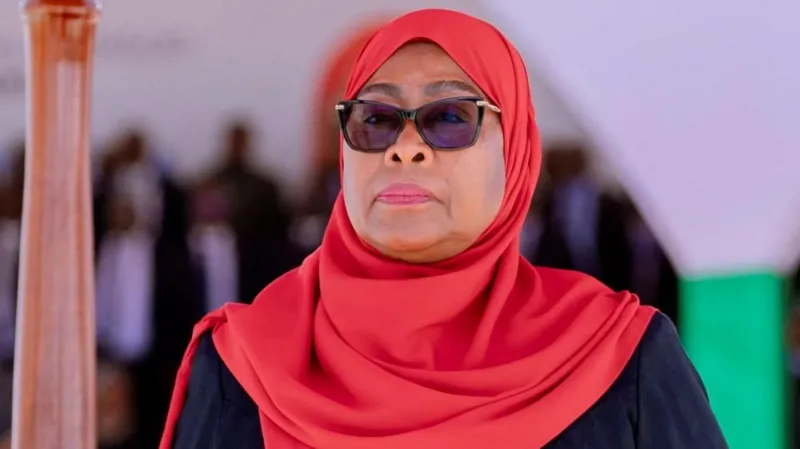
Tanzania is facing growing political unrest and government instability, with President Samia Suluhu Hassan under fire for her handling of post-election violence that has eroded the nation’s long-standing image of stability in East Africa.
Once praised as a beacon of peace, the country now struggles with decision-making difficulties in Tanzania, reflecting deeper governance issues that have shocked both citizens and regional observers.
Tanzania’s Political Calm Turns Into Crisis
The nation’s latest election turmoil, which left an unclear death toll, has led families to mourn lost relatives while questioning the fairness of a poll President Samia won with 98% of the vote. In her inauguration speech, she defended the election as fair but blamed foreign actors for the deadly protests.
Political analyst Prof Peter Kagwanja described the situation as “Tanzania’s thick winter of protests, instability, and uncertainty,” warning that governance problems in East Africa are deepening as public frustration grows.
The protests, largely youth-led, mirror global Gen Z movements demanding accountability from entrenched leadership. According to experts, these demonstrations were years in the making, following stalled reforms, ruling party power struggles, and the persecution of opposition leaders.
Mounting Pressure on President Samia
Veteran journalist Jenerali Ulimwengu noted that the crisis is “the boiling point reached by societal soups that have been cooking for decades,” suggesting the current government instability in Tanzania is rooted in long-term neglect.
Political cartoonist Godfrey Mwampembwa, known as Gado, accused the ruling Chama Cha Mapinduzi (CCM) party of ignoring the people’s demands for reform. Similarly, commentator Charles Onyango-Obbo argued that CCM mistook silence for peace, not realizing it was “the quiet of exhaustion.”
Analysts add that the CCM, which emerged from the Tanganyika African National Union, has for decades held an unbroken grip on Tanzania’s political system and public life.
Growing Governance Challenges
Observers believe this election exposed a side of Tanzania long hidden from view. The government barred opposition figures like Tundu Lissu and Luhaga Mpina from running, heightening concerns about decision-making difficulties in Tanzania.
Professor Kagwanja criticized the move, saying, “You don’t jail your opponents — you seek to get support from people against them.”
President Samia, once seen as a reformer, now faces criticism for leading a repressive administration accused of silencing dissent. Her earlier “4R” doctrine — reconciliation, resilience, rebuilding, and reform — had offered hope but appears overshadowed by her recent centralization of power.
Eroding Trust and Regional Implications
As Samia reshuffles cabinet members and military chiefs to consolidate control, observers warn of worsening governance problems in East Africa. Her growing reliance on loyalists has intensified accusations of authoritarianism.
Recent reports of abductions, arrests, and political killings have further fueled government instability in Tanzania, with many calling the violence the worst in decades. The African Union and Southern African Development Community have condemned the elections as failing democratic standards, citing ballot tampering and systemic repression.
A Tarnished Legacy
Political experts argue that Samia’s true challenge lies not in winning votes but in restoring public trust. “Samia’s challenge was not winning the election but winning the hearts and minds of Tanzanians,” said Prof Kagwanja.
The myth of Tanzanian stability — once celebrated across Africa — now lies shattered, raising fears that the nation’s ongoing decision-making difficulties in Tanzania may ripple across the region.
For readers interested in exploring East African destinations beyond politics, visit Travel Afrikeye.
This story was first reported by [BBC News]. Read the full article here.