




Julius Malema Facing Prison: A Defining Moment in South African Politics
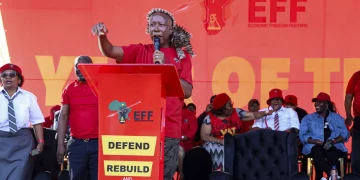
In a landmark ruling that has sent shockwaves across the continent, Julius Malema, the firebrand leader of the Economic Freedom Fighters (EFF), has been sentenced to an effective five years in prison. The decision, handed down by the KuGompo City Magistrate’s Court on Thursday, April 16, 2026, marks a pivotal turn in the legal battles that have dogged the politician for years. This Africa News Update 2026 examines the implications of the sentencing, which stems from a 2018 incident involving the discharge of a firearm at a political rally.
The court’s decision concludes a high-profile trial that scrutinized the actions of one of South Africa’s most polarizing figures. Magistrate Twanet Olivier rejected the defense’s argument that the weapon used was a toy, describing the act as a “dangerous” violation of safety laws that could not be dismissed as mere celebration.
The Firearm Case: Why the Court Jailed Julius Malema
The charges against the EFF leader were rooted in a viral video from 2018 during the party’s fifth-anniversary celebrations in Mdantsane. In the footage, Julius Malema was seen discharging what appeared to be an automatic rifle into the air. Despite years of legal maneuvering, the court found the evidence overwhelming, leading to convictions for the unlawful possession of a firearm and ammunition, as well as reckless endangerment.
A Breakdown of the Sentences
Magistrate Olivier delivered a multifaceted sentence that reflects the severity of the offenses:
- Count 1 (Firearm Possession): Five years’ imprisonment.
- Count 2 (Ammunition): Two years’ imprisonment.
- Additional Counts: Fines of R20,000 or six months’ imprisonment for endangerment.
Crucially, the court ruled that the primary sentences will run concurrently. This means Julius Malema faces a total of five years behind bars if the judgment stands, a duration that carries significant constitutional weight regarding his future as a lawmaker.
Political Fallout: Impact on the EFF and Africa News Update 2026
The timing of this ruling is critical for South African democracy. Under the country’s constitution, any individual sentenced to more than 12 months in prison without the option of a fine is disqualified from serving in the National Assembly. As the EFF remains a powerful force in the local political landscape, the potential absence of Julius Malema from Parliament could trigger a massive shift in opposition strategy.
Across the region, analysts are closely watching the situation as part of a broader Africa News Update 2026 trend regarding the rule of law and political accountability. While the EFF has already signaled its intent to appeal, the immediate future of the party’s leadership remains in question.
Regional Context and Continental Stability
The legal pressure on high-profile leaders is not unique to South Africa. As noted in recent Africa News Update 2026 reports, several nations are grappling with the balance between political expression and judicial oversight. The outcome of Malema’s appeal will likely set a precedent for how “celebratory” actions by public figures are treated by the courts.
What Happens Next? The Appeal Process
Immediately following the sentencing, the legal team representing Julius Malema applied for leave to appeal. Advocate Lawrence Hodes (SC) argued that the court erred in its findings, maintaining the stance that the firearm was not a lethal weapon.
While the appeal process is expected to take months—or even years—to reach a final resolution, the political damage may already be done. Supporters of the EFF gathered outside the court, echoing claims of political victimization, while critics hailed the verdict as a victory for the principle that no one is above the law.
Economic and Social Implications
The instability surrounding such a prominent figure often affects market sentiment. Investors tracking the business climate in Southern Africa are keeping a close eye on whether this ruling leads to civil unrest or a more fragmented political environment ahead of upcoming local elections.
Navigating the Changing Landscape of South African Law
As South Africa moves deeper into the 2026 political cycle, the judiciary remains under intense scrutiny. The conviction of Julius Malema highlights a rigorous approach to firearm control and public safety. For many, the ruling serves as a reminder of the 2018 rally’s chaotic nature and the risks associated with populist rhetoric.
For those looking for deeper insights into how technology and modern reporting influence these cases, visit our AI section for analysis on digital evidence in courtrooms. Additionally, the stress of high-stakes litigation on public figures is a growing topic in health and wellness circles across the continent.
Conclusion: A Turning Point for the EFF
The sentencing of Julius Malema to five years in prison represents more than just a legal defeat; it is a moment of reckoning for the Economic Freedom Fighters. Whether this results in a galvanized base or a leadership crisis depends on the success of their legal appeals in the coming months.
As we continue our coverage in this Africa News Update 2026, stay tuned for updates on the tech used in forensic investigations and the sports events that continue to bring the nation together during times of political tension. For those planning to visit the region amidst these developments, check our travel guides for the latest safety information.