Morocco is rapidly deploying foreign investment and regional tourism to solidify its territorial claims and dominate North African industrial markets. This dual approach integrates the disputed Western Sahara into the national economy while simultaneously establishing the kingdom as a primary manufacturing gateway for the continent. The strategy highlights how African governments are increasingly using commercial alliances to bypass stalled diplomatic negotiations.
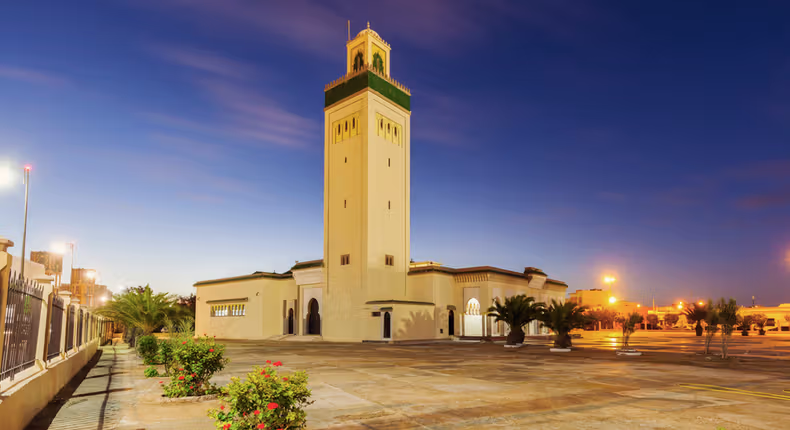
According to data reported by Business Insider Africa, Moroccan authorities are weaponising their booming travel sector to strengthen their administrative grip on the Western Sahara. The Moroccan Ministry of Tourism recorded a 50 percent surge in arrivals to the Moroccan-administered territory over the past seven years. Total visitor numbers climbed past 743,000 last year, driven by heavy state investment in coastal infrastructure.
This influx of European visitors deliberately normalises Rabat’s authority over a region claimed by the Algerian-backed Polisario Front. As the BBC noted, major international airlines including Ryanair and Binter Canarias now operate direct flights from Europe straight into the coastal city of Dakhla. Global booking platforms subsequently list these destinations as Moroccan territory, quietly shifting international opinion without a formal United Nations resolution.
Geopolitical Impacts of Morocco Western Sahara Tourism
While securing its southern frontiers through hospitality, Rabat is simultaneously drawing critical business investments to its northern tech hubs. Chinese healthcare manufacturer Jiangsu Aishelun has just launched its first African factory at Morocco’s Tanger Tech. This facility will produce advanced medical equipment, reducing the continent’s reliance on imported health supplies.
The Tanger Tech project aligns directly with the African Continental Free Trade Area by positioning Morocco as a crucial supply chain anchor for medical goods. Industrial zones like this provide high-skill jobs and demonstrate how North African states can capture foreign capital shifting away from traditional Western markets. Economists across the region suggest this model offers a blueprint for other African nations seeking to leverage their geographic proximity to Europe.
Algeria continues to heavily contest Morocco’s expanding influence, demanding direct negotiations to protect Sahrawi self-determination. This unresolved politics creates ongoing friction within the African Union, where the two nations frequently clash over continental policy. Despite these diplomatic tensions, foreign corporations are increasingly treating the current borders as permanent operational realities.
The success of the new medical facility will likely trigger a wave of competing Chinese investments across North Africa’s developing tech sectors. Morocco will continue using these commercial partnerships to project stability and isolate its regional rivals. Future diplomatic efforts to resolve the Western Sahara dispute must now confront an economy that is deeply integrated into global supply chains.