The murder of Bishop Osório Citora Afonso inside his episcopal residence in Quelimane has triggered profound shock and continental outrage, demanding an immediate, independent state investigation. The violent assassination of the 54-year-old Catholic leader exposes the deepening physical vulnerability of religious figures across Southern Africa. This tragedy strikes directly at the core of interreligious stability, threatening to unravel years of fragile peace-building efforts in Mozambique.
Unidentified assailants fatally shot the prelate in the chest during the early hours of June 6 at his official home. The National Criminal Investigation Service (SERNIC) immediately launched a preliminary inquiry into the targeted killing. Spokesperson Maximino Amílcar confirmed that an unspecified number of individuals broke into the bishop’s residence and opened fire, leaving his body in a corridor. Law enforcement officials have yet to apprehend any suspects or release a definitive motive for the execution, leaving the nation searching for answers.
Bishop Afonso, a professed member of the Consolata Missionaries, had only served as the Bishop of Quelimane since 2025, recently taking on additional duties as Apostolic Administrator of Beira. He was widely respected across the continent for his unwavering commitment to interfaith dialogue and community reconciliation. Just one day before his assassination, he visited local Muslim leaders, removing his sandals to sit in dialogue and publicly affirming that Mozambicans of different faiths have historically lived together in harmony.
Impact of the Murder of Bishop Osório Citora Afonso
Prior to his death, the bishop consistently warned against the weaponisation of faith by extremist factions seeking to divide local communities. He actively countered the rising tide of radicalisation that has historically destabilised northern regions like Cabo Delgado, where insurgents have routinely targeted both state infrastructure and vulnerable Christian settlements. His courageous public stances made him a vital voice for peace, but also potentially marked him as a target for those profiting from regional instability.
The Symposium of Episcopal Conferences of Africa and Madagascar (SECAM) issued a forceful and unequivocal condemnation of the barbaric crime. Cardinal Fridolin Ambongo, Archbishop of Kinshasa and President of SECAM, demanded that the Mozambican government prosecute the masterminds without delay. He stressed that the people of Mozambique and the global Catholic community deserve total transparency, noting that religious leaders should never become the targets of violence.
Religious freedom and the physical security of pastoral workers remain foundational to the democratic health of any modern African state. This targeted assassination reflects a broader, troubling continental trend where armed groups attack religious institutions to erode local cohesion. When non-state actors operate with impunity, it severely undermines the political stability required for long-term national development and economic sovereignty.
The African Union’s Agenda 2063 relies heavily on secure, peaceful societies to foster cross-border business and continental integration. When community leaders are violently silenced, the resulting instability directly hampers localized economic growth and deters regional investment. Furthermore, the disruption of missionary activities severely limits civilian access to essential health services, rural clinics, and educational facilities that the Church historically sustains.
Mozambican President Daniel Chapo publicly mourned the bishop, characterising his sudden death as an irreparable loss for the entire nation and the Christian community. The President emphasized Afonso’s lifelong witness to humility, pastoral dedication, and his relentless pursuit of national reconciliation. Despite these official condolences from the state and the Vatican, regional opinion leaders argue that statements must be backed by concrete, systemic security reforms to protect civil society.
Religious networks often act as the primary social safety net in areas where formal state infrastructure remains dangerously weak. When diocesan administrators face targeted killings, it paralyses the humanitarian supply chains that sustain the most marginalised populations. These faith-based organizations also provide critical jobs in education, social work, and agriculture, which are now jeopardized by the pervasive threat of militant violence.

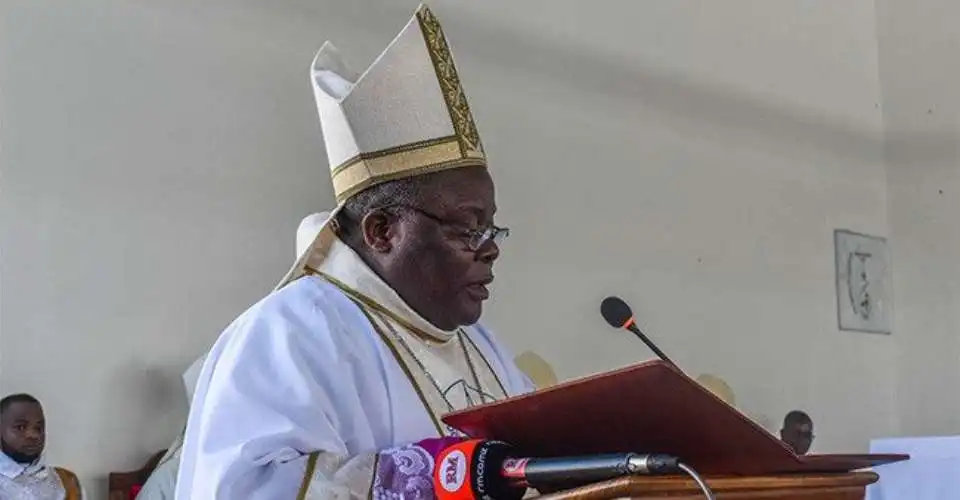
The Catholic Bishops’ Conference of Mozambique, led by Archbishop Inácio Saúre, is coordinating mourning protocols while relentlessly pressing the national government for rapid judicial action. The Diocese of Quelimane quickly organised memorial services at the Cathedral of Our Lady of Liberation to honor the late bishop’s enduring legacy. International monitoring organizations continue to scrutinise the state’s capacity to deliver justice and protect its citizens from organized criminal elements.
The continent’s religious leaders frequently step in to mediate conflicts when traditional diplomatic channels collapse under partisan pressure or institutional corruption. Bishop Afonso epitomised this proactive approach, dedicating his life to personally negotiating truces between warring factions and divided communities. His permanent absence leaves a significant diplomatic void in a region desperate for credible, non-partisan mediators who can bridge the gap between the state and the grassroots.
The ongoing violence in Mozambique has already displaced thousands, creating complex logistical hurdles for regional travel and internal migration, particularly in the northern provinces. State authorities are increasingly relying on new tech platforms to track insurgent movements, but these tools have yet to secure urban centers and residential compounds effectively. Advanced surveillance and digital intelligence must be strategically deployed to protect vulnerable public figures from premeditated attacks and home invasions.
In parallel, policymakers must explore how emerging AI systems can predict and map localized violence before it escalates into high-profile assassinations. Predictive analytics could allow state security forces to proactively reinforce protections around places of worship and humanitarian compounds in high-risk zones. However, technology alone cannot replace the fundamental political will required to dismantle the criminal networks orchestrating these executions.
SECAM has strongly reminded the Mozambican state of its sovereign duty to guarantee the protection of all citizens engaging in pastoral service. The symposium reiterated that religious leaders, regardless of their denomination, should never become the targets of systemic persecution or political violence. The continent now watches closely to see if Maputo can decisively enforce the rule of law and prevent further deterioration of its civic spaces.
Moving forward, the Mozambican judicial system faces a critical test of its operational independence and investigative rigor. The successful prosecution of Bishop Afonso’s killers would send a definitive message that the state will not tolerate the assassination of civil society pillars. Failure to secure convictions will only embolden armed factions and accelerate the tragic cycle of violence across the region.