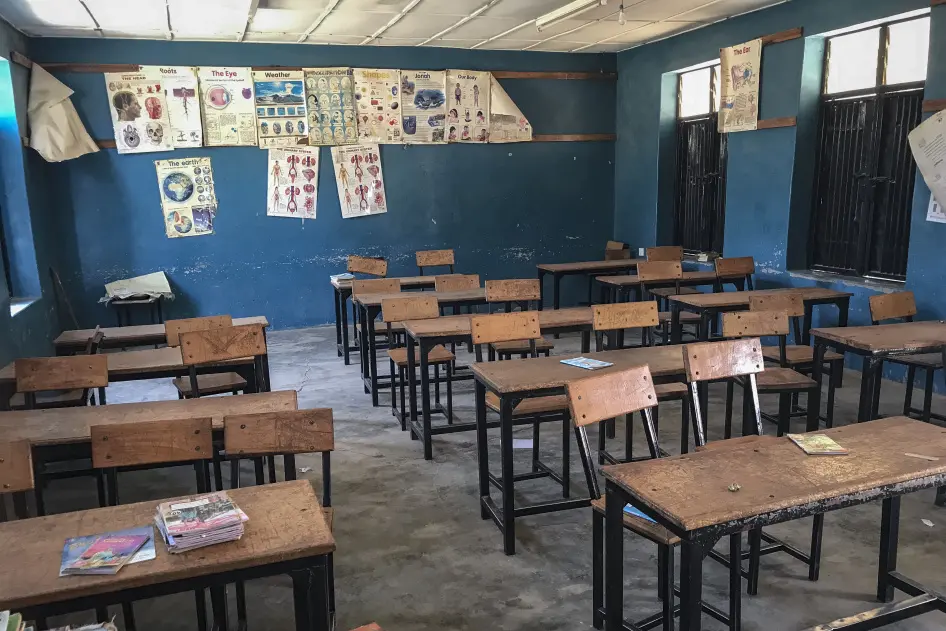
Nigerian authorities are under urgent pressure to secure the safe release of students and teachers recently kidnapped in the country’s northwest and take concrete steps toward preventing school kidnappings in Nigeria, Human Rights Watch said. The armed groups behind these abductions should immediately release the captives (Human Rights Watch).
“These mass kidnappings reveal the deliberate targeting of students, teachers, and schools in Nigeria’s deteriorating security environment,” said Anietie Ewang, Nigeria researcher at Human Rights Watch. “The deepening crisis highlights the government’s failure to protect vulnerable communities.”
Recent Attacks in Northwest Nigeria
On November 18, 2025, 25 schoolgirls were kidnapped from the Government Girls Comprehensive Secondary School in Maga, Kebbi state. Three days later, 303 students and 12 teachers were abducted at St. Mary’s Catholic Primary and Secondary School in Papiri, Niger state (Al Jazeera).
Parents shared harrowing accounts. Isa Nazifi, whose 13-year-old daughter Khadija was abducted, said: “I immediately rushed to the school. My wife is in tears. I will stay here until my daughter returns. If I go home without her, what will I tell my family?” (Al Jazeera).
No group has claimed responsibility for these attacks. However, Nigerian gangs, commonly known as “bandits,” are frequently involved in kidnappings for ransom in the northwest and central states. The Al-Qaeda-linked Jama’at Nusrat al-Islam wa al-Muslimeen (JNIM) also claimed a recent attack on a military patrol in Kwara state (HRW).
Historical Context of School Kidnappings in Nigeria
The 2014 Chibok schoolgirls’ abduction by Boko Haram drew global outrage. Since then, numerous abductions across northern Nigeria have traumatized families and disrupted communities. Human Rights Watch reports that in 2016, over 300 children were kidnapped from Zanna Mobarti Primary School in Borno state (HRW).
Malam Sani Zimri, whose daughter Salima was abducted, noted security lapses: “We saw military operatives surveilling the area, only to realize there were no security forces on the premises for three hours during the incident.”
Repeated Patterns and Security Gaps
Earlier mass kidnappings include:
-
December 2020: over 300 boys abducted from a Kankara boarding school, Katsina (HRW)
-
Early 2021: Kagara, Niger state, and Jangebe, Zamfara state
-
2024: Kuriga, Kaduna state, and Gidan Bakuso, Sokoto state
Authorities have shut 47 federal secondary schools (Federal Unity Colleges) and restricted operations in states like Katsina, Taraba, and Niger. While protective, these measures disrupt learning for thousands, affecting their academic and psychological development (Pulse Nigeria).
Government Response and Ongoing Challenges
President Bola Tinubu directed security agencies to act swiftly to rescue the kidnapped students and urged communities to share intelligence (Al Jazeera).
“Children have the right to attend school without fear,” Ewang said. Nigerian authorities must prioritize safe release and prosecute perpetrators (HRW).
Nigeria is a signatory to the Safe Schools Declaration, committing to protecting education during conflict. Yet kidnappings continue. On November 19, the Senate ordered an investigation into the Safe School Fund to understand why resources have not prevented recurring attacks.
Moving Forward: Preventing School Kidnappings in Nigeria
The ongoing crisis emphasizes the urgent need for:
-
Strengthening early warning and rapid response systems
-
Investing in school security infrastructure
-
Enhancing coordination between federal and state authorities
-
Engaging local communities in preventive measures (The Guardian)
With these measures, Nigeria can begin reducing school kidnapping consequences and improving the security situation in northwest Nigeria. Protecting children’s education remains vital for resilient communities (Travel Booking ).
Source: This story was first reported by Human Rights Watch. Read the full article here.