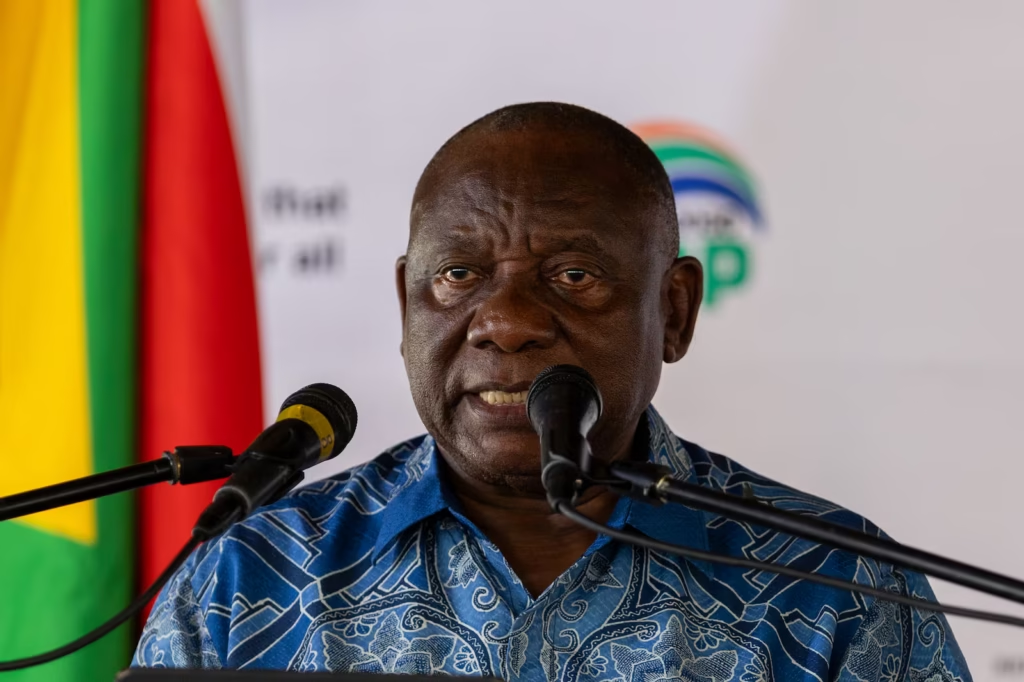
South Africa’s parliament blocked attempts to impeach President Cyril Ramaphosa after lawmakers voted against motions linked to allegations surrounding the Phala Phala farm scandal. The move reinforced Ramaphosa’s political position while also highlighting divisions within the country’s opposition parties.
The issue attracted international attention because it raised concerns about accountability, constitutional procedures, and political stability in South Africa. Parliament’s decision followed extensive legal and political debate over whether sufficient evidence existed to proceed with impeachment proceedings.
Did Parliament Blocked Ramaphosa Impeachment Efforts?
Yes, parliament blocked Ramaphosa impeachment efforts after the National Assembly rejected recommendations that could have led to impeachment proceedings. Lawmakers from the ruling African National Congress (ANC) largely voted against the motion, arguing that evidence presented against President Cyril Ramaphosa was insufficient to justify removing him from office.
Background to the Ramaphosa Impeachment Debate
The impeachment debate emerged after allegations connected to foreign currency theft at Ramaphosa’s Phala Phala farm became public. Opposition parties accused the president of misconduct and possible violations of constitutional obligations.
The controversy centered on claims that:
- Large amounts of foreign currency were hidden at the farm
- The theft was allegedly not properly reported
- Questions existed about the source of the funds
- Security officials may have acted improperly after the incident
These allegations prompted calls for an independent investigation and possible impeachment proceedings.
What Triggered the Parliamentary Vote?
A parliamentary panel reviewed evidence related to the allegations and released findings that opposition parties argued justified further action.
The report intensified pressure on the president and led to debates inside the National Assembly. Opposition lawmakers pushed for impeachment proceedings, while ANC members defended Ramaphosa and criticized the findings.
According to reports by eNCA, Ramaphosa later reacted publicly to court developments linked to the Phala Phala matter.
How South Africa’s Impeachment Process Works
South Africa’s constitution outlines a formal impeachment procedure for removing a president from office.
Key Steps in the Process
| Step | Description |
|---|---|
| Motion Introduced | Lawmakers submit an impeachment motion |
| Independent Review | A panel may examine evidence |
| Parliamentary Debate | National Assembly discusses findings |
| Voting Stage | Members vote on whether proceedings continue |
| Final Removal Vote | Two-thirds majority required to remove president |
The process requires substantial political support, making impeachment difficult without backing from the governing party.
Why Parliament Rejected the Impeachment Motion
The ANC’s parliamentary majority played a major role in blocking the effort. Most ANC lawmakers voted against adopting the panel report that could have advanced impeachment proceedings.
Main Reasons Given by ANC Lawmakers
- Evidence was considered incomplete
- Legal investigations were still ongoing
- Opposition parties were accused of politicizing the issue
- Constitutional standards for impeachment were viewed as unmet
Supporters of Ramaphosa argued that allegations alone were not enough to justify removing a sitting president.
Opposition Reaction
Opposition parties strongly criticized the parliamentary outcome.
Several groups claimed the decision weakened accountability and damaged public trust in democratic institutions. Some opposition leaders argued parliament failed to properly exercise oversight responsibilities.
However, others noted that impeachment standards are intentionally strict to avoid politically motivated removals.
A detailed legal analysis of the Constitutional Court ruling was also published by BusinessDay.
Political Impact on Cyril Ramaphosa
The parliamentary vote was widely seen as a political victory for Ramaphosa.
At the time of the impeachment debate, the president was also facing internal pressure within the ANC ahead of leadership contests. Surviving the impeachment attempt strengthened his standing inside the party and reduced immediate uncertainty over his presidency.
Effects on the ANC
The issue also revealed divisions within the ruling party.
Some ANC members privately expressed concerns about the allegations, while others emphasized party unity and institutional stability. Despite internal disagreements, the party ultimately rallied behind Ramaphosa during the vote.
For more African political and governance coverage, readers can explore AfrikEye and the platform’s AI news section.
Public and International Response
The case received widespread media coverage both inside and outside South Africa.
International observers monitored developments because South Africa remains one of Africa’s largest economies and an influential regional political actor.
Concerns Raised by Analysts
Political analysts highlighted several broader concerns:
- Public confidence in institutions
- Transparency in government
- Rule of law
- Stability within the ANC
- Investor perceptions of governance
Some experts argued that parliament blocking impeachment may help short-term political stability, while others warned that unresolved questions could continue affecting public trust.
Readers interested in broader African travel and regional stories can also visit Travel AfrikEye.
Ramaphosa’s Response to the Allegations
President Ramaphosa denied wrongdoing and maintained that the money found at the farm came from legitimate business activities related to wildlife sales.
He also stated that he cooperated with legal processes and respected constitutional mechanisms. Ramaphosa repeatedly said he would not resign over the controversy.
Ongoing Investigations
Although parliament blocked impeachment proceedings, several investigations and legal reviews connected to the matter continued afterward.
These inquiries focused on:
- Financial compliance
- Law enforcement conduct
- Possible constitutional issues
- Security procedures following the theft
The continuation of investigations meant political scrutiny did not completely disappear after the parliamentary vote.
Comparison Between Impeachment and Parliamentary Inquiry
| Factor | Impeachment Process | Parliamentary Inquiry |
|---|---|---|
| Purpose | Remove president from office | Examine allegations |
| Voting Threshold | Two-thirds majority | Simple majority in some cases |
| Constitutional Impact | President removed if successful | Findings may guide future action |
| Political Consequences | Major national leadership change | Oversight and accountability focus |
| Frequency | Rare | More common |
Frequently Asked Questions
Why did parliament block Ramaphosa impeachment efforts?
Parliament rejected motions that could have advanced impeachment proceedings because most ANC lawmakers argued the evidence was insufficient. The ruling party maintained that constitutional standards for removing a president had not been met and that ongoing investigations should continue independently.
What was the Phala Phala scandal?
The Phala Phala scandal involved allegations related to the theft of foreign currency from President Cyril Ramaphosa’s private farm. Questions emerged about how the money was stored, reported, and handled after the theft occurred, leading to political and legal scrutiny.
Can Ramaphosa still face legal action after the impeachment vote?
Yes. Parliament blocking impeachment did not automatically end investigations or legal reviews. Various authorities could still examine financial, constitutional, or procedural issues linked to the allegations and determine whether further action is necessary.
How many votes are needed to impeach a South African president?
South Africa’s constitution requires a two-thirds majority in the National Assembly to remove a president through impeachment. This high threshold makes impeachment difficult without significant support from the governing party or a broad parliamentary coalition.
Did the impeachment debate affect South African politics?
Yes. The debate intensified political tensions, increased scrutiny of the ANC leadership, and raised broader discussions about accountability and institutional oversight. It also influenced internal party dynamics and public debate about governance standards.
Conclusion
The decision in which parliament blocked Ramaphosa impeachment efforts marked a significant moment in South African politics. While supporters viewed the outcome as a defense of constitutional procedure and political stability, critics argued it reflected weaknesses in parliamentary oversight.
The controversy surrounding the Phala Phala allegations continued to shape political debate, even after lawmakers rejected impeachment-related motions.