Sudan’s Ongoing Crisis
Sudan has been engulfed in civil war since April 2023, following a violent power struggle between the national army and the paramilitary Rapid Support Forces (RSF). The conflict has caused famine, mass displacement, and accusations of genocide, particularly in Darfur, with recent RSF control of el-Fasher raising fears for tens of thousands of residents. Over 150,000 lives have been lost, and roughly 12 million people have fled their homes, marking one of the world’s largest humanitarian crises according to the UN.
Origins of the Civil War
The unrest traces back to the 2019 ousting of long-serving President Omar al-Bashir. Pro-democracy protests led to a joint military-civilian government, which was overthrown in an October 2021 coup. The two central figures in today’s conflict, Gen Abdel Fattah al-Burhan (army chief) and RSF leader Gen Mohamed Hamdan Dagalo (“Hemedti”), disagreed on civilian governance and the integration of RSF forces into the army. Hostilities escalated on April 15, 2023, after tensions over troop movements, triggering widespread battles across Khartoum and other key regions.
RSF Fighters and Territorial Control
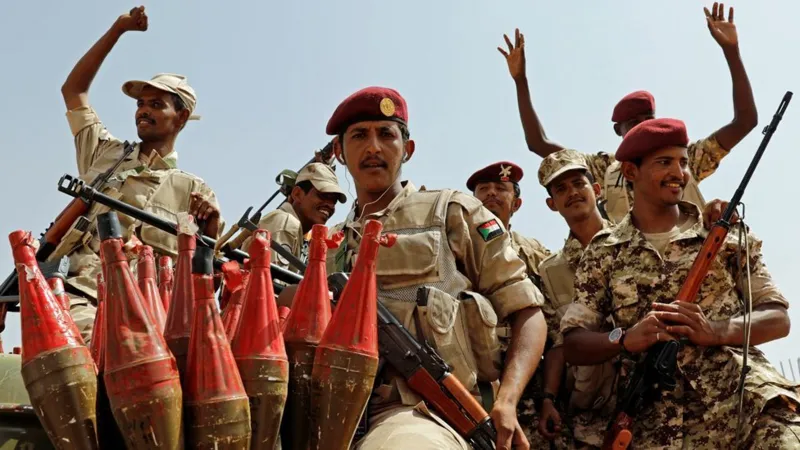
The RSF, originating from the Janjaweed militias, has been implicated in human rights abuses in Darfur and has fought in Libya and Yemen. Led by Gen Dagalo, the RSF controls significant territory in Darfur and Kordofan and has established a rival government. Meanwhile, the army maintains control of northern and eastern Sudan, with Egypt as a principal supporter. Port Sudan serves as the army’s operational hub, though RSF drone attacks continue to pose threats.
Atrocities and Genocide Allegations
Numerous reports indicate systematic killings, sexual violence, and ethnic targeting in Darfur. While UN investigations confirmed war crimes by both sides, the U.S. has officially designated RSF and allied militias’ actions as genocide, citing deliberate attacks on specific ethnic groups and civilians. International sanctions have followed, and Sudan has filed cases against alleged external supporters, including the UAE, though legal avenues remain limited.
Humanitarian Crisis and Aid Distribution
The ongoing conflict has disrupted humanitarian aid distribution, leaving over 24 million people at risk of food insecurity. Aid organizations face challenges due to destroyed infrastructure, limited access, and reduced funding. Recent truce proposals by international actors such as the US, UAE, Saudi Arabia, and Egypt aim to ease civilian suffering, though skepticism remains about compliance from both parties.

Global Response and Peace Efforts
Efforts to mediate peace in Sudan, including talks in Saudi Arabia and Bahrain, have largely failed. International organizations and experts have criticized global attention and response as insufficient. Meanwhile, millions of civilians continue to face famine, displacement, and violence, with urgent humanitarian intervention strategies required.
Sudan’s Strategic and Socioeconomic Context
Sudan, located in northeast Africa, covers 1.9 million sq km, bordering seven countries and the Red Sea, with the Nile flowing through it. Predominantly Muslim, the population relies heavily on limited natural resources, including gold. Even prior to the conflict, Sudan ranked among the world’s poorest nations, and state revenue has reportedly declined by 80% since the war began.
For ongoing updates, visit Travel Afrikeye for related humanitarian and regional coverage.
This story was first reported by BBC. Read the full article here.