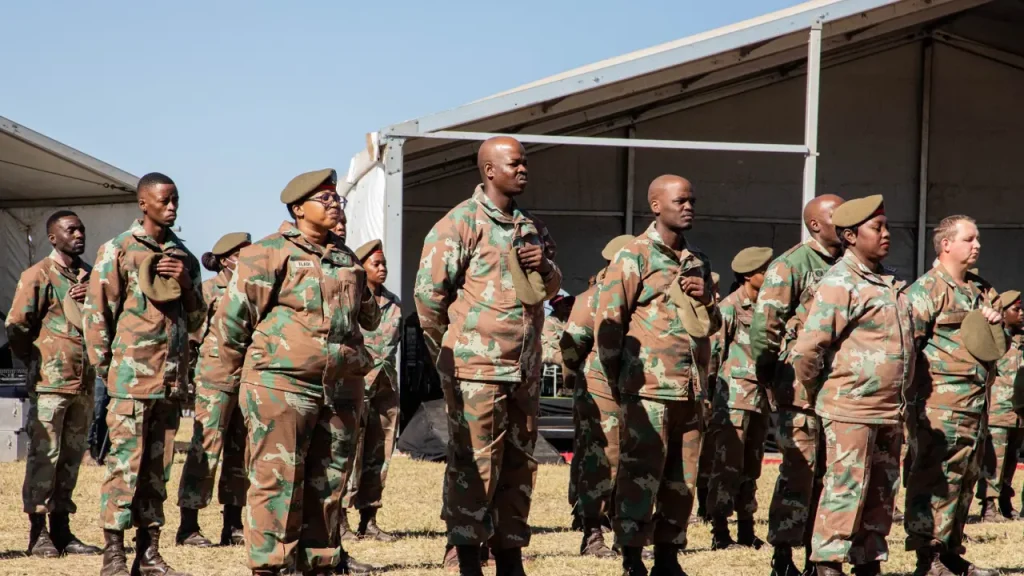
Military Intervention: SANDF Joins the Fight Against Organised Crime
The South African government has taken a decisive step to curb the escalating violence and lawlessness gripping major provinces. In a move aimed at restoring public order, President Cyril Ramaphosa confirmed that the SANDF will be deployed to support the South African Police Service (SAPS). This intervention specifically targets the ruthless criminal gangs and illegal mining syndicates that have increasingly threatened the nation’s internal security.
During his annual State of the Nation Address, the President characterized organized crime as the primary danger to the country’s democratic foundation and economic growth. By mobilizing the SANDF, the administration hopes to provide a “force multiplier” in regions where local law enforcement has struggled to maintain control. This Africa News Update 2026 highlights a significant shift in domestic policy as the military moves from barracks to the streets.
Focus Areas: Western Cape and Gauteng Under Watch
The initial phase of the deployment focuses on the Western Cape and Gauteng. These provinces have become epicenters for two distinct but equally deadly forms of criminality. In the Western Cape, particularly within the Cape Flats, communities are regularly terrorized by gang warfare, leaving innocent civilians and children caught in the crossfire.
In Gauteng, the focus shifts to the “zama zamas” or illegal miners. These groups, often heavily armed and operating within sophisticated syndicates, have been linked to a surge in violent crimes and territorial disputes. The presence of the SANDF is intended to secure these zones and allow police to conduct deep-rooted investigations without the immediate threat of heavy-caliber resistance.
The “No Nonsense” Approach
Deputy Defence Minister Bantu Holomisa has been vocal about the military’s stance during this operation. He promised a “no nonsense” approach, emphasizing that while the SANDF will operate within constitutional boundaries, there will be zero tolerance for those who challenge security forces.
“If you are stopped at a roadblock, you must cooperate,” Holomisa stated, making it clear that the military’s role is to protect the police and the public. He noted that the lessons learned from previous deployments, such as the COVID-19 lockdowns, would be used to ensure that troops follow strict rules of engagement and respect human rights.
Concerns Over Regional Oversight and Budgeting
While the deployment has been welcomed by many in Johannesburg and Cape Town, other regions feel neglected. Residents in the Eastern Cape, specifically the northern areas of Nelson Mandela Bay, have raised concerns that they are being overlooked despite facing similar levels of gang-related violence.
Financing such a large-scale operation also remains a topic of debate. The SANDF intends to utilize its current budget allocation to kickstart the mission. However, should the operation extend long-term, the National Treasury will need to facilitate additional funding to maintain the strength of South African military deployable soldiers.
A Critical Turning Point for South Africa
The decision to bring in the SANDF underscores a moment of crisis. Statistics show that between April and September of the previous year, South Africa saw an average of 63 murders per day. This staggering figure has put immense pressure on the South African government to act beyond traditional policing methods.
The scope of the military’s mandate may also expand. Holomisa suggested that the army could eventually assist in tackling cross-border vehicle hijacking and the policing of undocumented foreign nationals involved in criminal activities. This broader vision suggests that the SANDF may become a more permanent fixture in South Africa’s domestic safety strategy.
Modernizing the Force for 2026
As the Africa News Update 2026 continues to unfold, the integration of technology and intelligence gathering will be vital. The President has announced the recruitment of 5,500 new police officers to work alongside the military, aiming to create a more robust security business model for the nation.
For those tracking the tech advancements in regional defense, the coordination between the army and police will rely heavily on improved AI-driven surveillance and data analysis to track syndicate movements. This holistic approach is seen as the only way to dismantle the “ruthless” gold mining syndicates and drug cartels that have entrenched themselves in the economy.
Maintaining National Stability
The deployment of the SANDF is not just about firepower; it is about visibility and deterrence. By placing boots on the ground in hotspots, the government aims to reclaim spaces currently governed by fear. Whether this will lead to a long-term reduction in the health and safety risks faced by citizens remains to be seen.
As the BRICS warships arrive in Cape Town for scheduled drills, the internal focus remains squarely on domestic peace. Many tourists planning to travel to the region are keeping a close eye on these security developments to ensure their safety while visiting South Africa’s iconic landmarks.
Conclusion: A Necessary Risk?
The use of the SANDF in civilian areas is always a sensitive issue. However, with the police admitting they are currently unable to defeat these gangs alone, many South Africans see this as a necessary measure. The success of this mission will depend on the military’s ability to act as a protector rather than an aggressor.
For more updates on politics and sports, stay tuned to our latest reports.