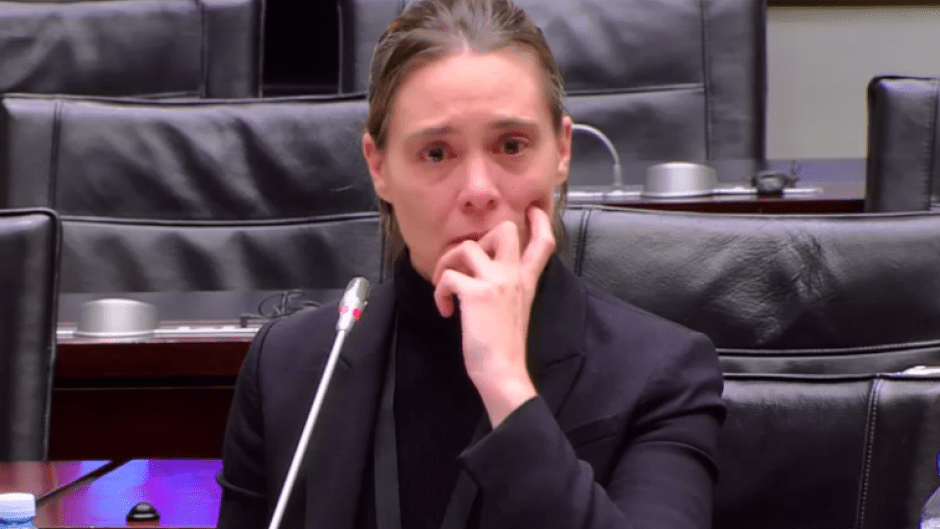
Emotional Testimony: Sarah Jane Trent Details “Abduction” in Police Corruption Probe
In a dramatic turn of events at the South African Parliament, forensic investigator Sarah Jane Trent delivered a tearful testimony regarding her 2017 arrest, which she describes as a state-sponsored “abduction.” As part of this Africa News Update 2026, the hearing marks a pivotal moment in the ongoing scrutiny of the Independent Police Investigative Directorate (IPID) and the alleged “capture” of law enforcement agencies by private interests.
Trent, a former associate of the well-known forensic investigator Paul O’Sullivan, became visibly overwhelmed while addressing the ad hoc committee investigating police corruption on Thursday, March 5, 2026. She alleged that her arrest was not a standard legal procedure but a calculated kidnapping intended to silence those probing high-level business irregularities and police misconduct.
The 2017 Arrest: Legal Procedure or Kidnapping?
According to Trent’s evidence, the 2017 incident at the offices of Paul O’Sullivan & Associates involved a “massive group” of armed officers and multiple vehicles. She contends that the warrant used by the Cullinan Magistrates Court was fraudulently obtained to facilitate her removal from active investigations.
“I was abducted under the auspices of arrest,” Trent told the committee. She maintained that the primary accusation against her—impersonating an IPID official—was a fabrication used to justify her unlawful detention. For those following tech advancements in surveillance, Trent noted that CCTV footage of the event exists and requested it be played as evidence of the heavy-handed tactics used by the police.
Infiltration Allegations and the IPID Act
The hearing took a sharp turn when committee members, including EFF leader Julius Malema and ANC MP Xola Nqola, questioned the legality of private investigators assisting the police watchdog. The crux of the tension lies in whether Sarah Jane Trent and O’Sullivan “infiltrated” the Africa justice system or were merely providing necessary research support.
The committee pressed for specific sections of the IPID Act that allow private entities to conduct investigations on behalf of the state. While Sarah Jane Trent argued that the law allows for external assistance, she struggled to cite the exact regulations under intense cross-examination. This lack of immediate legal clarity led to a brief recess after she broke down in tears, stating she was too nervous to continue.
A Pattern of Corruption in the Criminal Justice System
This testimony follows earlier statements from Paul O’Sullivan, who has long claimed that his team was targeted for exposing former acting national police commissioner Khomotso Phahlane. Phahlane, who was dismissed in 2020 for dishonest conduct, has characterized himself as a victim of a “cabal” led by O’Sullivan and former IPID head Robert McBride.
Advocate Michael Mashuga, a former NPA prosecutor, previously testified that IPID’s independence was compromised. He alleged that Sarah Jane Trent and O’Sullivan effectively led investigations, a role strictly reserved for state officials. The committee is now tasked with discerning if private investigators overstepped their bounds or if the police used “abduction” tactics to protect corrupt leadership.
The Role of “Forensics for Justice”
Sarah Jane Trent explained her professional journey, starting as a pro bono volunteer before becoming a director at Forensics for Justice. She emphasized that her role was initially restricted to research and that her meetings with IPID officials were transparent and authorized.
However, the Africa News Update 2026 highlights a growing concern among lawmakers regarding the “militarization” of private security and its influence over state organs. MPs expressed worry that if private individuals can influence who is investigated, the integrity of the entire justice system is at risk.
Political Interference and State Capture
The inquiry, often referred to as the Mkhwanazi Inquiry, has exposed deep fractures within the South African Police Service (SAPS). While Sarah Jane Trent maintains her innocence, critics argue that her close ties to IPID officials created a “shadow” investigative unit.
- Key Allegation: Trent claims her 2017 arrest was a “kidnapping” to stop corruption probes.
- The Defense: She asserts that her firm only provided “simple research tasks” and did not manage dockets.
- The Counter-Argument: Former prosecutors claim she and O’Sullivan “infiltrated” the watchdog to sideline specific police generals.
As the health of South Africa’s democracy depends on impartial policing, this committee’s findings will be crucial. The outcome could lead to stricter regulations on how AI and private forensic tools are integrated into state criminal probes.
Next Steps in the Inquiry
The ad hoc committee has reaffirmed its authority, stating it will not be “dictated to” by witnesses. Despite her emotional state, Sarah Jane Trent returned to finish her testimony, insisting she did not want “special treatment.”
The committee will now move to analyze the communications produced by Advocate Mashuga, which reportedly show a high degree of intimacy between private investigators and the police watchdog’s leadership. For more updates on regional developments and governance, visit our main page or explore our travel section for insights into the South African political landscape.