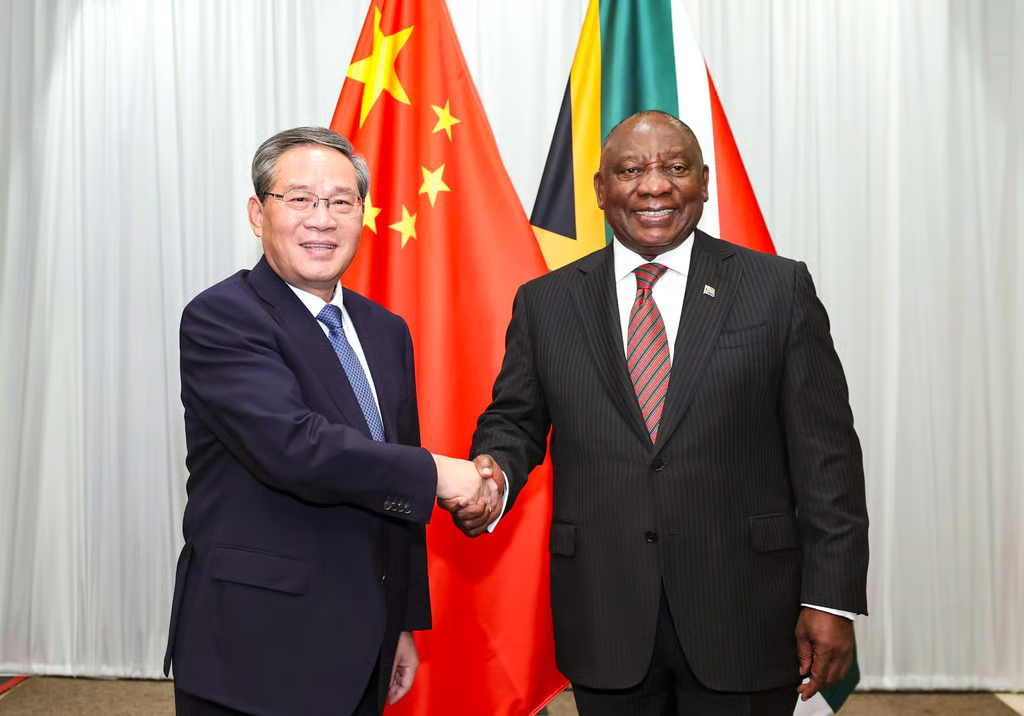
South Africa is accelerating efforts to expand export opportunities in Asia and Europe as tensions with the United States escalate. The shift is strengthening south africa china trade relations, with Beijing emerging as the biggest beneficiary of Pretoria’s diversification strategy.
South Africa’s move follows Washington’s boycott of last weekend’s G20 summit in Johannesburg after accusing Pretoria of persecuting Afrikaner farmers – claims South Africa has strongly rejected as “misinformation”. The dispute intensified when US President Donald Trump announced that South Africa would not be invited to the 2025 G20 meeting in Miami.
Growing Distance from the US Accelerates Market Pivot
The end of the African Growth and Opportunity Act (AGOA) – which previously allowed duty-free exports to the US – and a harsh 30 per cent tariff on South African goods have severely affected farms, vehicle and parts manufacturers, and mining companies.
To counter the blow, Pretoria is actively exploring new export destinations in Asia and Europe. Analysts say this realignment is driving stronger trade balance Africa China dynamics, especially as China increases market access for African products.
China Set to Gain as South Africa Rebuilds Partnerships
South Africa’s diplomatic outreach over the past months underscores a clear pivot: delegations have visited China, Vietnam and Indonesia, while President Cyril Ramaphosa engaged European partners at the EU’s Global Gateway Forum and during recent trips to Ireland and Switzerland.
Tim Zajontz of the University of Freiburg noted that Pretoria is now redirecting manufactured goods, agricultural exports and car-parts markets through subsidies, trade facilitation and intensified economic diplomacy.
“The estrangement from the US will further intensify economic and political cooperation between South Africa and China,” he said.
Investment Momentum Favors China
During meetings at the G20 summit, Chinese Premier Li Qiang signaled readiness to:
- expand zero-tariff measures
- boost cooperation in mining, infrastructure, new energy and automotive sectors
- deepen political trust and strengthen Brics & G20 collaboration
Analysts say this will likely translate into more chinese investments in africa, particularly in South Africa’s auto manufacturing, digital infrastructure, energy and transport sectors.
Europe Also Plays a Strategic Role
The Clean Trade and Investment Partnership with Europe is another major pillar of South Africa’s diversification. The agreement opens new markets for electric vehicles and supports green-economy initiatives, including battery manufacturing.
According to experts like John Calabrese, Washington’s absence at the G20 created an opportunity for Beijing to project itself as a reliable partner while the US risks losing influence in Africa.
Professor John Kirton of the University of Toronto added that China’s continued investment in African infrastructure—especially ports and railways—further strengthens its long-term advantage.
This story was first reported by South China Morning Post. Read the full article here.