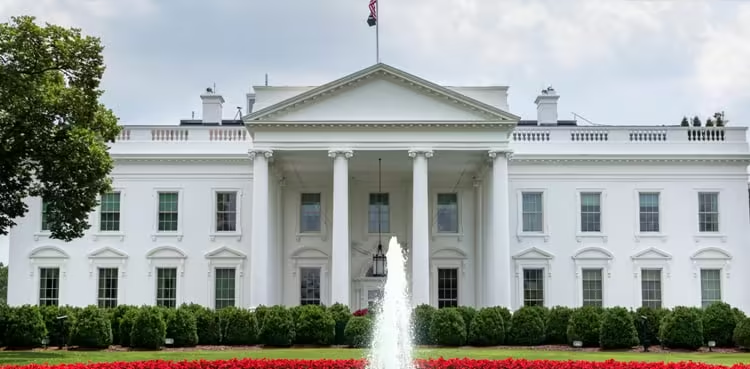
The United States has officially confirmed that it will not attend the G20 summit in South Africa, reinforcing its earlier decision to skip the high-level meeting in Johannesburg this weekend. The announcement counters statements by South African President Cyril Ramaphosa, who had suggested that Washington might participate in a limited capacity.
Political Statement Boycott Sparks Debate
White House Press Secretary Karoline Leavitt clarified that the US will not take part in official discussions at the summit, describing Ramaphosa’s comments as “not appreciated” by President Biden or his team. The US initially decided to boycott the November 22-23 summit due to disagreements over South Africa’s priorities for the rotating G20 presidency.
Ramaphosa emphasized that while dialogue with Washington continues to clarify any potential participation, the late notice complicates arrangements. The move has been interpreted by analysts as a political statement boycott, signaling discontent with the summit’s agenda and priorities.
Implications for Global Cooperation
The G20 summit, which brings together leaders from the world’s largest economies, aims to foster global cooperation on economic, social, and environmental issues. However, the US absence casts uncertainty over the summit’s outcomes and may impact trade agreements and multilateral initiatives. Economists warn that missing such key discussions could have long-term consequences on international partnerships and negotiations.
“While the US focus remains on strategic priorities at home, skipping the summit limits opportunities for dialogue that shape global economic policy,” said a trade analyst. This could slow progress on pressing issues like sustainable growth, climate commitments, and cross-border trade agreements.
Looking Ahead
China’s Premier, along with leaders from other G20 nations, will still attend the summit, emphasizing their commitment to maintaining momentum on global economic coordination despite the US boycott. The absence of Washington underscores tensions and raises questions about the effectiveness of multilateral forums when major powers disengage.
For policymakers, diplomats, and business leaders traveling to Johannesburg, planning logistics efficiently is crucial. Tools like Afrikeye Travel can help arrange meetings, transport, and accommodations during the summit.
Further reading and sources:
- The Guardian — US in talks to attend G20 summit after initial boycott The Guardian
- Business Day (South Africa) — US attempts to block SA from making a G20 declaration Business Day
- Bloomberg — Trump says US plans to skip G‑20 summit in South Africa Bloomberg
This story was first reported by The Guardian. Read the full article here.