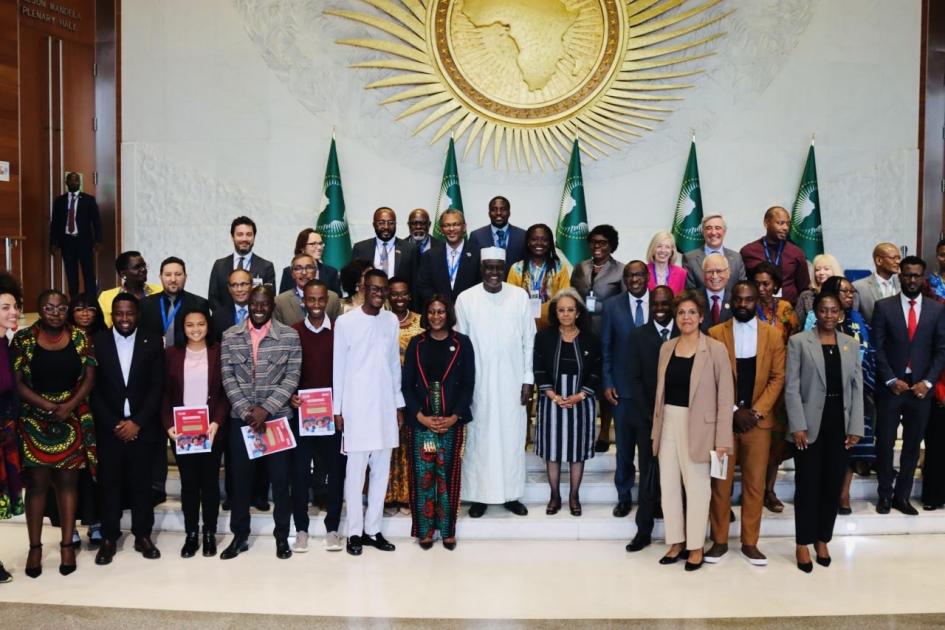
African youth are increasingly seen as a critical force for democratic renewal and accountability across the continent. This message resonated strongly during the Afrobarometer (www.Afrobarometer.org) and Youth Democracy Cohort (YDC) side event at the 5th African Peer Review Mechanism (APRM) Youth Symposium, held at the Pan-African Parliament in Midrand.
Gen Z Shaping Governance and Civic Engagement
The event explored the growing influence of youth leadership development and how young activists are reshaping civic and political participation in Africa. Stakeholders emphasized that governance reforms must respond effectively to citizens’ expectations to avoid deepening youth frustration and disengagement. The discussions also highlighted the importance of digital communication in promoting transparency, accountability, and citizen participation.
Held under the theme “Youth in governance: From promise to prosperity,” the two-day symposium brought together young leaders, policymakers, diplomats, private-sector representatives, and media professionals for intergenerational dialogue aimed at building a united future for African democracies.
Data-Driven Insights on Youth Participation
Afrobarometer data, presented by Southern Africa Communications Coordinator Asafika Mpako, revealed that African youth are less likely than older generations to engage in political activities, except for protests. While supporting democratic governance, many young Africans distrust elected leaders and perceive corruption, with some open to military rule if leaders abuse power. Unemployment and limited economic opportunities also drive migration desires.
The Afrobarometer/YDC session, “Youth voices in data: Turning insights into action,” emphasized using data to shape responsive policies. The discussion provided insights into youth aspirations, employment, migration, and political participation in Africa.
Mikhail Nyamweya, research consultant for the Global Youth Participation Index (GYPI), stressed the strong desire among youth to influence governance but noted that systemic reforms are slow.
Global Youth Participation Index Highlights Challenges
The GYPI (http://apo-opa.co/4p0XUiR), developed by the European Partnership for Democracy (EPD) and Youth Democracy Cohort, measures youth engagement in over 140 countries across four dimensions: socio-economic context, civic space, political affairs, and elections. The index shows that youth are eager to participate but face challenges including limited access to information, resources, spaces, representation, and real decision-making power.
Dr. Nkosazana Dlamini-Zuma, former African Union Commission chairperson, emphasized: “The youth are active, but the systems are slow to respond. Africa is the world’s youngest region, yet most decision-making structures do not institutionalize youth representation.”
Youth Democracy Cohort Expands Influence
Since its launch in September 2022, the Youth Democracy Cohort has grown to over 550 member organizations advocating for youth involvement in politics worldwide (http://apo-opa.co/3M13a7m). In 2025, the cohort received new funding from the Digital Democracy Initiative to advance digital rights for young people.
Afrobarometer remains a trusted source of high-quality data on African public opinion, conducting over 430,000 interviews in 45 countries. Its data informs global indices and policy decisions, providing a foundation for youth engagement initiatives (http://apo-opa.co/49FcvvA).
Explore more on youth leadership and political participation in Africa via travel.afrikeye.com.
This story was first reported by Afrobarometer. Read the full article here.