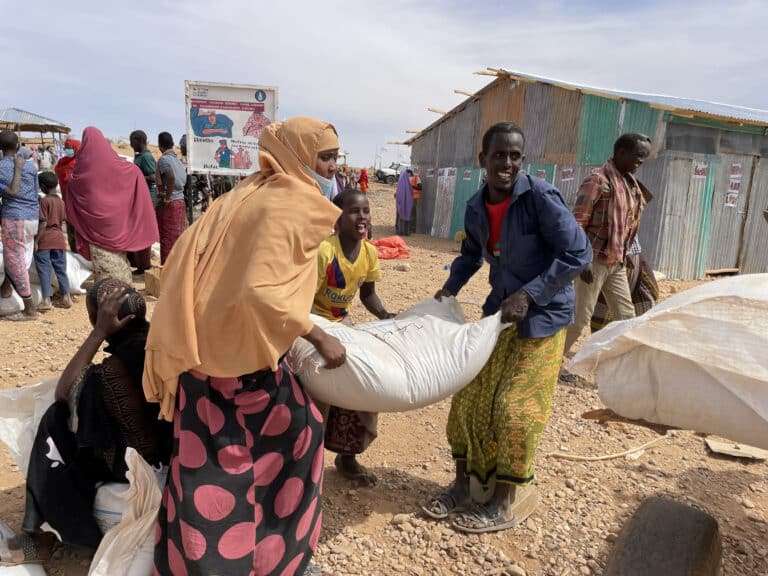
The United Nations World Food Programme (WFP) has issued a chilling alert regarding the West and Central Africa hunger crisis, warning that the region is spiraling toward a humanitarian catastrophe. Without an immediate injection of resources, approximately 55 million people are projected to experience crisis-level food insecurity during the 2026 lean season.
The situation is particularly dire for the youth, with over 13 million children expected to face acute malnutrition this year. Experts warn that the convergence of rising violence and mass displacement is creating a “perfect storm” that threatens to destabilize the entire continent.
Funding Shortfalls Fueling the Hunger Emergency
A significant driver of the current West and Central Africa hunger crisis is the drastic reduction in international aid. Sarah Longford, WFP Deputy Regional Director, noted that the funding slashes seen in 2025 have already left deep scars across vulnerable communities.
“When humanitarian aid is cut, we don’t just see more empty plates; we see a rise in desperation that fuels further conflict and unrest,” Longford explained. She emphasized that aid acts as a stabilizing force in volatile regions, and its absence is pushing millions to the brink.
Data Shows Alarming Rise in Emergency Levels
Recent data from the Cadre Harmonisé indicates a terrifying trend. Over three million people are now facing “emergency” levels of food insecurity. This is more than double the figures recorded in 2020, highlighting the rapid deterioration of the West and Central Africa hunger crisis.
Four nations are currently bearing the brunt of this disaster:
- Nigeria: Specifically Borno State, where 15,000 people face catastrophic hunger.
- Chad: Facing massive pressure from displaced populations.
- Cameroon: Thousands at risk of losing all food assistance.
- Niger: Struggling with economic instability and regional conflict.
The Impact of Reduced Rations in Mali and Nigeria
The consequences of aid cuts are already visible. In Mali, where food rations were slashed, there was a 64% spike in acute hunger. Conversely, areas that received full support saw hunger levels drop by 34%, proving that the West and Central Africa hunger crisis can be mitigated with proper funding.
In Nigeria, WFP was forced to scale down nutrition programs for 300,000 children last year. As a result, many northern states have seen malnutrition levels jump from “serious” to “critical” status.
Breaking the Cycle of Poverty and Starvation
To address the West and Central Africa hunger crisis long-term, the WFP is calling for a “paradigm shift.” While emergency aid is vital, investments in land restoration and resilience are showing high returns. In the Sahel, every dollar spent on land rehabilitation generates $30 in economic value.
Since 2018, over 300,000 hectares of land have been restored, benefiting four million people. These efforts help stabilize local economies and reduce the reliance on external aid, which is often a subject of intense debate in regional policy circles.
Urgent Call for Action
The WFP currently requires $453 million over the next six months to maintain its life-saving operations. Without this, the West and Central Africa hunger crisis will likely result in a historic loss of life.
Governments must prioritize infrastructure and community resilience to ensure that the next generation isn’t born into a cycle of permanent food insecurity.