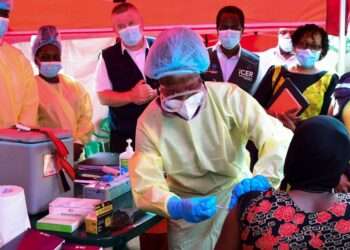





Securing official pandemic fund accreditation marks a triumphant historic milestone for the African continent following a monumental institutional breakthrough. The Governing Board of the Pandemic Fund has formally approved the landmark status of the Africa Centres for Disease Control and Prevention as an authorized Implementing Entity. This critical designation grants the continental public health agency direct access to mobilize, manage, and deploy substantial global resources without relying on external international intermediaries.
The intensive independent evaluation performed by global regulatory panels proves that the institution meets the elite fiduciary standards necessary to manage multi-million-dollar health security portfolios safely. Obtaining this autonomous status represents a massive structural victory that dramatically accelerates the continent’s long-term pursuit of health sovereignty and medical independence. Furthermore, the rigorous auditing process required to secure this pandemic fund accreditation ensures absolute compliance with international best practices.
This historic milestone will significantly reshape regional politics by enabling African leaders to direct financial resources toward locally identified pathogen containment priorities. Historically, complex bureaucratic layers have delayed emergency response distributions during acute infectious outbreaks across various provinces. By establishing direct financial channels, member states can bypass old administrative bottlenecks and strengthen local defensive measures across diverse provincial borders.
Sustaining these robust medical defenses will simultaneously transform the broader continental business environment by stabilizing regional healthcare markets and pharmaceutical manufacturing networks. Outbreak volatility has consistently discouraged long-term foreign direct investments and caused severe structural disruptions across inter-state commercial shipping corridors. By building an independent financial shield against emerging epidemic threats, the region can safeguard its macroeconomic productivity and protect domestic corporate capital allocations from unexpected pandemic shocks.
The direct management of these international funds is expected to stimulate the creation of high-value jobs for young scientists and laboratory technicians across all fifty-five member states. As localized medical centers receive targeted capital infusions, the regional demand for certified epidemiologists, data analysts, and field investigators will rise exponentially. Cultivating this indigenous public health workforce remains essential to build durable regional resilience and fulfill the core objectives of this new development blueprint.
The Strategic Significance of This Historic Pandemic Fund Accreditation
To coordinate large-scale pandemic prevention campaigns with high precision, the agency is aggressively upgrading its technical tracking infrastructure. Public health centers are deploying decentralized surveillance software and synchronized diagnostic tools within the continent’s rapidly growing tech sector. These advanced electronic registries allow border health teams to spot transmission patterns early and share critical epidemiological data across borders without experiencing administrative processing delays.
Furthermore, the real-time parsing of disease outbreak vectors and the tracking of vaccine distribution logistics are being optimized through advanced computational architectures. Health ministries are integrating sophisticated predictive analytics and advanced ai modeling suites to map infection hotspots before they spread into major urban zones. Incorporating this automated digital intelligence under this newly acquired pandemic fund accreditation status ensures that emergency medical stockpiles can be deployed to high-risk corridors with unmatched operational efficiency.
Independent health economists sharing their professional opinion columns emphasize that direct financial access is the ultimate foundation for true medical independence. They note that external financing models often come with restrictive structural strings attached, which can slow down real-time emergency responses during acute crises. Transitioning to a country-led, pooled asset framework ensures that the continent can manage its defensive measures while reinforcing its long-term financial safety.
The institutional transformation reflects far-reaching administrative overhauls executed over recent cycles under the brilliant leadership of Director General H.E. Dr. Jean Kaseya. His transformative “New Deal for Africa CDC” roadmap has systematically focused on strengthening institutional autonomy, expanding internal financial audits, and improving budget execution metrics. These deliberate managerial upgrades have successfully positioned the agency as a highly trusted public entity capable of handling massive resource allocations under the pandemic fund accreditation mandate.
Establishing these resilient local security systems carries direct, positive implications for the continuous enhancement of general community health tracking metrics across vulnerable rural provinces. When local clinics have direct access to automated monitoring tools and steady medical supplies, childhood immunization rates rise while maternal mortality rates drop significantly. Interested observers can explore formal organizational frameworks and read direct institutional announcements by visiting the official Africa CDC platform online.
Ultimately, achieving this historic status marks an absolute victory toward protecting both the economic stability and the human dignity of millions of citizens. When sovereign nations, regional coordinators, and global financial trustees operate in complete harmony, they build an unbreakable defense against unexpected biological crises. By maintaining this robust collective vigilance, the continent will successfully secure its public wellness, accelerate industrial development, and foster permanent prosperity.