




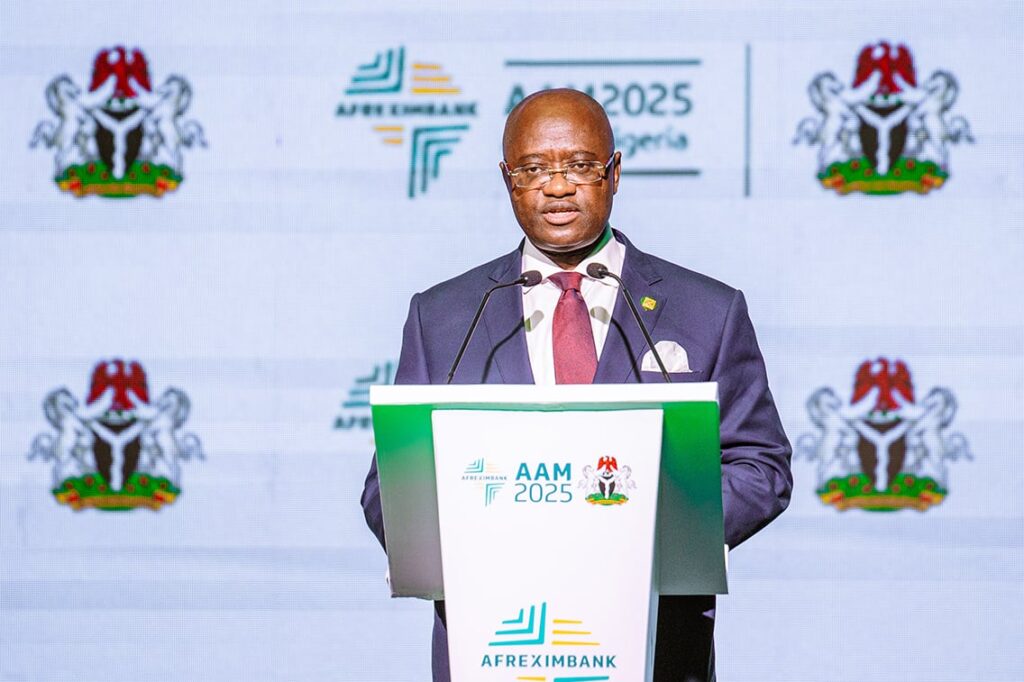
The path to true independence for Africa is no longer just political; it is fundamentally industrial. Speaking at a media briefing in Abuja, Nigeria, Dr. George Elombi, President and Chairman of the Board of Directors of the African Export-Import Bank (Afreximbank), delivered a decisive message: African economic sovereignty will only become a reality when the continent industrialises at scale, processes its own vast resources, and secures fair access to global capital.
According to Dr. Elombi, the historical economic model of exporting raw materials while importing finished, value-added goods is obsolete and detrimental to long-term fiscal stability. “Africa’s sovereignty will not be secured by exporting more of what we do not process. It will be secured when we build the industries that turn African resources into African value,” he stated. Achieving this vision, he emphasized, requires capital that is accessible on terms reflective of Africa’s true potential and built on fair, evidence-based credit assessments.
Afreximbank is actively directing its mandate toward facilitating this monumental shift. The institution is working to transition the continent away from external vulnerability and fragmented markets toward integrated trade and greater resilience. Through direct debt financing and equity investments via the Fund for Export Development in Africa (FEDA), the bank is aggressively funding the development of special economic zones and multipurpose industrial parks across the region. These strategic investments are designed to support critical sectors, including agro-processing, textiles, automotive manufacturing, and strategic minerals processing.
However, Dr. Elombi was quick to point out that scaling these business operations depends heavily on the cost of capital, which is directly influenced by international credit ratings. He argued that biased or contextual misunderstandings by rating agencies inflate the cost of funding for African institutions. “When African institutions are assessed properly, they can raise capital more competitively. When they raise capital more competitively, they can finance Africa’s industrial growth, and accelerate African trade and job creation,” he noted. The recent BBB+ long-term credit rating awarded to Afreximbank by S&P Global Ratings—backed by a robust Q1 2026 performance with assets rising to US$49.4 billion—demonstrates the sheer financial strength of properly assessed African multilateral institutions.
Industrialisation alone cannot deliver sovereignty if goods cannot move seamlessly across borders. To remedy this, Afreximbank is heavily backing trade-enabling logistics, payment systems like the Pan-African Payment and Settlement System (PAPSS), and the full implementation of the African Continental Free Trade Area (AfCFTA). By reducing border friction, African manufacturers can finally leverage economies of scale within their own continent.
As the global economic environment grows increasingly complex, Dr. Elombi’s call for a New African Financial Architecture (NAFA) underscores the urgency for domestic resource mobilisation. “Capital, industry, and trade must work together,” he concluded. “Africa must finance its production, process its resources, and move its goods across its own markets. That is how we create value, retain value in Africa, and build sovereignty that is practical, not theoretical.”