




The recent announcement regarding Western Cape school closures has sent ripples across communities as a deadly storm continues to lash Cape Town and surrounding areas.
With extreme weather patterns intensifying, local authorities have taken swift action to prioritize the safety of students, educators, and residents.
Severe weather events often bring unforeseen challenges, and this latest storm is no exception. Officials have confirmed widespread flooding, damaging winds, and dangerous coastal conditions across the province.
Consequently, the provincial education department had to make a tough but necessary decision to halt academic activities temporarily.
In this comprehensive update for Afrikeye readers, we will explore the factors leading to the province-wide shutdown, the impact of the storm on local infrastructure, and crucial safety measures for navigating these hazards.
Reasons Behind the Western Cape School Closures
The primary catalyst for the widespread Western Cape school closures is the severe weather system currently battering the region.
Following intense consultations with the Provincial Disaster Management Centre and the South African Weather Service, authorities determined that keeping educational institutions open posed a significant risk.
Western Cape education MEC David Maynier confirmed that all public ordinary and special schools would close on Tuesday. The safety of learners and teachers remains the absolute top priority.
Several school buildings have already sustained storm-related damage. Evaluation teams are currently assessing these sites to determine the full extent of the structural impacts.
This proactive approach aims to prevent further tragedies. Tragically, the severe weather has already claimed at least one life after a tree collapsed onto a vehicle in Kenilworth.
In a separate incident, another motorist suffered injuries, highlighting the unpredictable dangers present on the roads.
Understanding the Level 8 Weather Warning
Meteorological experts have issued a stringent level 8 weather warning for various parts of the Western Cape.
This high-level alert cautions residents about multiple overlapping threats that make daily commutes highly dangerous and unpredictable.
When a level 8 warning is activated, it signifies a high probability of severe, disruptive weather. Authorities urge citizens to remain vigilant.
The region faces an onslaught of disruptive rainfall, gale-force winds, and extremely volatile coastal conditions. Such weather makes it essential to stay indoors.
To stay updated on changing weather patterns, residents are advised to monitor official channels. Adhering strictly to safety protocols can save lives during these critical hours.
The Impact of Severe Flooding in Cape Town
Beyond the educational sector, the storm has unleashed chaos across the broader Cape Town metropolitan area.
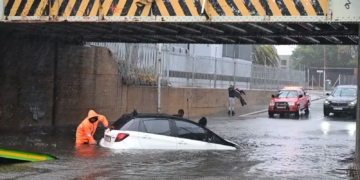
Widespread flooding was reported shortly after 11 am, severely affecting both formal neighborhoods and numerous informal settlements.
Emergency response teams are working tirelessly across multiple low-lying areas. Communities such as Khayelitsha, Gugulethu, Delft, and Mitchells Plain are experiencing significant waterlogging.
The rapid accumulation of rainwater has overwhelmed local drainage systems, causing the Vygieskraal Canal in Belgravia to overflow and flood surrounding streets.
- Property Damage: Strong winds have blown roofs off houses in areas like Lavender Hill and Wynberg.
- Infrastructure Strain: Flooded roads and overflowing canals have disrupted major transport routes.
- Displaced Residents: Many families have been forced out of their homes due to rising water levels.
Emergency Response and Relief Efforts
The City of Cape Town’s Disaster Risk Management teams are stretched thin but continue to respond to multiple emergency calls.
Personnel are currently deployed across the metro to clear fallen trees, assist stranded motorists, and assess damaged infrastructure.
Humanitarian organizations have also mobilized rapidly to assist affected communities. Volunteers are distributing hot meals, dry clothing, and essential blankets.
Community solidarity remains strong during this crisis. Local leaders encourage residents to report blocked stormwater drains and structural damages to municipal hotlines immediately.
Safety Tips During Extreme Weather Events
While the Western Cape school closures ensure that children remain safe at home, households must still practice caution during this period of extreme weather.
Preparing for sudden power outages and localized flooding is crucial for minimizing daily risks. Here are some essential safety guidelines:
- Stay Indoors: Avoid traveling unless absolutely necessary, as roads may be washed out or blocked by debris.
- Secure Loose Items: Ensure that outdoor furniture and loose structures are properly secured against high winds.
- Emergency Kits: Keep flashlights, spare batteries, and a basic first aid kit readily accessible.
- Avoid Floodwaters: Never attempt to drive or walk through fast-moving floodwaters, as currents can be deceptively strong.
By staying informed and taking these preventive steps, families can navigate the worst of the storm safely while awaiting further updates from the education department.
Frequently Asked Questions (FAQs)
Why were schools closed in the Western Cape?
Authorities implemented the Western Cape school closures due to a severe storm bringing disruptive rainfall and damaging winds. The decision prioritizes the safety of students and teachers following a level 8 weather warning issued by meteorological experts.
When will schools reopen after the storm?
Schools will remain closed until the education department and disaster management teams assess the damage and confirm it is safe. Parents should monitor official government communications and local news channels for the latest reopening announcements.
What areas are most affected by the flooding?
The severe flooding has heavily impacted low-lying areas and informal settlements across Cape Town, including Khayelitsha, Gugulethu, Delft, and Mitchells Plain. Emergency teams are actively assisting displaced residents in these severely affected communities.