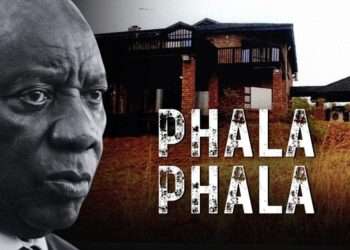





South Africa’s political landscape faces a defining constitutional test as the National Assembly races to finalize a 31-member impeachment committee investigating President Cyril Ramaphosa. Speaker Thoko Didiza imposed a firm deadline for political parties to name their representatives to probe the 2020 theft of foreign currency at the president’s Phala Phala farm. For the continent’s most industrialised economy, the unprecedented move deeply tests the resilience of its democratic institutions and the true boundaries of executive accountability.
The rapid mobilization of the Section 89 committee directly follows a landmark Constitutional Court ruling that completely invalidated Parliament’s previous attempt to shield the president from scrutiny. EWN reported that parties face a tight deadline to name their committee members as lawmakers frantically navigate uncharted procedural territory. Didiza confirmed she engaged the National Assembly Chief Whips Forum extensively to ensure the high-stakes process respects both traditional proportional representation and necessary political inclusivity.
The ruling African National Congress will hold nine seats on the panel, with the remaining 22 distributed widely among the opposition, accurately reflecting a deeply fractured legislature. The Democratic Alliance has already deployed its most experienced legal minds to the committee, clearly signaling their intent to aggressively cross-examine the evidence. Other opposition groups, including the radical Economic Freedom Fighters and the insurgent uMkhonto weSizwe Party, are strategically positioning themselves to extract maximum political leverage from the highly publicized upcoming hearings.
The immediate crisis traces back to the controversial December 2022 parliamentary vote where the ANC majority effectively blocked an independent panel’s recommendation to formally investigate Ramaphosa. That defensive partisan manoeuvre has now been decisively undone by the apex court, forcing the national legislature to completely reboot its oversight mechanisms from scratch. As eNCA highlighted in their comprehensive coverage of MPs discussing the judgment’s implications on parliament rules, the dense legal complexities are forcing lawmakers to quickly rewrite their internal rulebook.
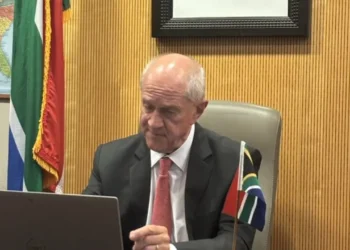
Parliament’s dedicated legal team continues to intensely analyze differing interpretations of the court order to definitively guide the committee’s operational framework over the coming months. The president himself has maintained a calculated, stoic distance from the immediate, frantic legislative scrambling currently consuming Cape Town. According to News24, Ramaphosa merely informed parliament he was heading to court but requested no special interventions from Didiza.
The volatile domestic politics surrounding the Phala Phala saga are deeply entwined with the country’s broader economic stability and international diplomatic standing. An active, highly publicized impeachment inquiry introduces severe political volatility precisely when Pretoria is absolutely desperate to attract crucial foreign direct investment. Global credit rating agencies and international investors fundamentally loathe political uncertainty, and a distracted executive branch inevitably struggles to implement crucial structural economic reforms.
This institutional instability directly threatens domestic jobs in critical, labour-intensive sectors ranging from deep-level mining to advanced automotive manufacturing. The immediate economic consequences could quickly spill over into the wider business environment across the entire Southern African Development Community. Capital flight from the Johannesburg Stock Exchange inevitably raises the cost of sovereign borrowing for neighbouring states that rely heavily on South African financial markets for regional liquidity.
Why South Africa’s Parliament is Setting a Continental Benchmark for Accountability
The unfolding constitutional drama offers a powerful, real-time case study in supreme executive accountability for the rest of the African continent. South Africa is actively demonstrating that constitutional supremacy can forcefully compel a dominant ruling party to subject its sitting head of state to rigorous legislative scrutiny. This high level of institutional independence stands in sharp, highly visible contrast to several other African jurisdictions where parliaments function merely as compliant rubber-stamp extensions of the presidency.
Political observers in Kenya, Nigeria, and Senegal will closely monitor whether the South African legislature can actually conduct a fair, evidence-based inquiry without devolving into a chaotic partisan spectacle. A transparent, rigorous impeachment process ultimately strengthens the democratic credentials of the entire region, proving conclusively that no individual is entirely above the law. Furthermore, South Africa’s domestic institutional stability is absolutely essential for the successful, long-term implementation of the massive African Continental Free Trade Area.
When the continent’s major economic anchor is entirely consumed by internal political crises, critical pan-African trade negotiations inevitably lose their desperately required momentum. African diplomats rely heavily on Pretoria to project regional economic strength during complex multilateral negotiations in Geneva and New York. A South African president politically weakened by a looming parliamentary trial inherently lacks the required political capital necessary to successfully champion vital continental integration agendas.
Modern parliamentary oversight increasingly relies on advanced digital tools to manage complex, multi-jurisdictional legal investigations involving vast amounts of data. Lawmakers will highly likely utilize specialised tech platforms to meticulously sift through the voluminous financial records and security agency reports intrinsically linked to the farm theft. Legal analysts predict the committee could even employ sophisticated AI software to rapidly cross-reference contradictory witness testimonies and accurately track illicit currency movements across regional borders.
The sheer volume of evidentiary data practically demands these modern technological solutions to prevent the parliamentary inquiry from dragging on indefinitely. A swift, highly transparent investigation is absolutely crucial to rapidly restoring fragile public trust in key state institutions. Prolonged political paralysis within the legislature only serves to strongly embolden populist factions seeking to aggressively undermine the established constitutional order.
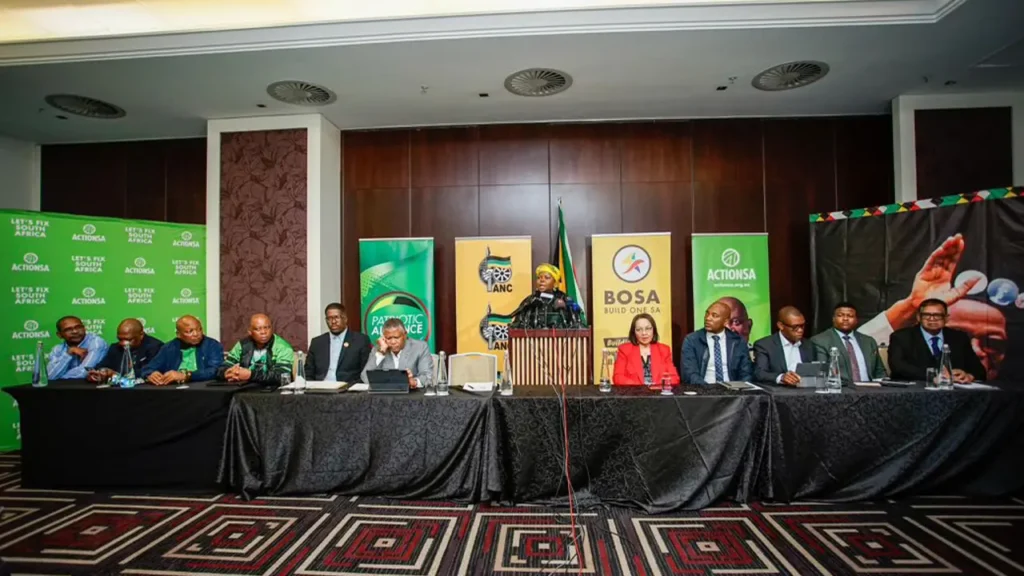
The deafening political noise surrounding the impeachment process heavily risks overshadowing urgent legislative priorities in other critically important government sectors. Parliament is simultaneously grappling with massive, highly contentious structural reforms to the national health system following recent, highly disruptive court judgments on medical certification. Lawmakers simply cannot afford to let the Phala Phala investigation completely paralyse the daily, essential business of national governance and service delivery.
Key economic industries, including the highly lucrative travel and tourism sector, require continuous, focused legislative support to fully recover from recent regional economic shocks. Even the domestic sports industry, which relies heavily on state-backed infrastructure investments and complex broadcasting regulations, could suffer immensely if parliamentary committees actively neglect their routine oversight duties. A functioning modern state must possess the institutional capacity to simultaneously investigate the executive while continuously delivering basic public services.
Thoko Didiza’s deliberate move to heavily dilute the ANC’s dominant presence on the committee represents a significant procedural victory for the opposition parliamentary benches. By ensuring that smaller fringe parties gain crucial seats, the Speaker has effectively guaranteed that the upcoming hearings will be highly adversarial and intensely publicized. The Democratic Alliance has explicitly stated they will utilize their top legal minds to relentlessly pursue full public disclosure regarding the origin of the stolen foreign currency.
The immediate institutional focus now shifts entirely to the National Assembly Secretariat as it formally processes the final, officially approved list of committee members. Once formally constituted, the high-stakes panel will possess sweeping statutory powers to aggressively subpoena reluctant witnesses, demand highly classified state documents, and publicly interrogate senior intelligence officials. The committee’s eventual formal findings will either definitively clear the president of wrongdoing or trigger a devastating formal impeachment vote on the floor of the assembly.
Financial markets will immediately price in a significant sovereign risk premium until the heavy legislative cloud hanging over the presidency is definitively lifted. The ultimate credibility of South Africa’s entire anti-corruption framework is effectively on trial alongside the president’s personal political future. For continuous, in-depth analysis of these fast-moving constitutional developments, visit the Afrikeye homepage directly, or join our live AMA sessions to voice your personal opinion on the unfolding crisis.