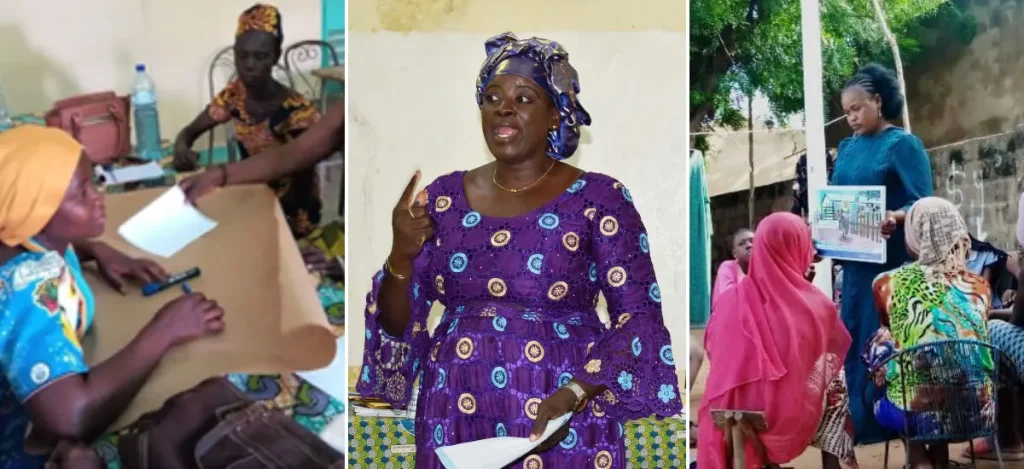
The United Nations Office for West Africa and the Sahel (UNOWAS) and UN Women, in collaboration with the Economic Community of West African States (ECOWAS) – EPSG, the European Union (EU), GIZ GmbH, Expertise France (EF)-FIAP, Partners West Africa – Senegal, and the United Nations Country Team in Cabo Verde, convened the 2025 Annual Meeting of the Working Group on Women, Youth, Peace and Security in West Africa and the Sahel (WGWYPS-WAS) from 3–7 November 2025 in Praia, Cabo Verde.
Advancing Women’s Empowerment Program and Gender Mainstreaming Efforts
The meeting gathered around 70 participants from 16 countries, including government officials, civil society representatives, youth and women’s groups, academics, research institutions, and regional organizations.
Held under the theme “25 Years of Implementing UN Security Council Resolution 1325 (2000) in West Africa and the Sahel: Perspectives from Women and Youth,” the event provided a platform to assess progress and set strategic priorities for advancing women’s empowerment programs, gender mainstreaming efforts, and female leadership development opportunities in the region.
Key Discussions and Strategic Priorities
Over five days, participants:
-
Reviewed and validated national and regional assessments on Resolution 1325 implementation.
-
Explored strategies to enhance coordination, visibility, and effectiveness of female leadership initiatives.
-
Finalized the 2026 national and regional work plans and adopted the 2026–2030 Strategic Plan.
-
Identified priority themes for thematic exchanges, selected focus countries for advocacy and support missions, and prepared for the 2026 Annual Meeting.
The discussions highlighted achievements, persistent challenges, and opportunities for scaling up female leadership initiatives. Emphasis was placed on strengthening state ownership, ensuring sustainable financing for National Action Plans (NAPs), and improving monitoring and evaluation frameworks to enhance gender mainstreaming efforts.
Capacity Building and Local Initiatives
The meeting concluded with:
-
A capacity-building session on the Continental Results Framework (CRF) led by ECOWAS Commission through the GIZ-EPSG Project.
-
An in-depth discussion on the Youth, Peace and Security agenda.
-
A field visit showcasing innovative local programs promoting peace, gender equality, and social cohesion.
Participants reaffirmed their commitment to advancing the WPS and YPS agendas, fostering inclusive peace, and expanding female leadership development opportunities across West Africa and the Sahel.
Travel bookings in West Africa
This story was first reported by United Nations Office for West Africa and the Sahel (UNOWAS). Read the full article here.