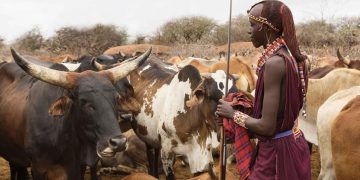





Foot-and-mouth disease (FMD) continues to pose a major threat to livestock production, food security, and trade across Eastern Africa. Despite being ranked among the top three priority diseases by governments and livestock keepers, the region experiences frequent outbreaks, economic losses, and limited market access due to fragmented control measures. Pastoral herd mobility, porous borders, and restricted surveillance and laboratory capacities further challenge containment. Without a collaborative livestock health strategy, national efforts alone cannot adequately manage FMD or its impacts on livelihoods and national economies.
A Timely Regional Response
To address this urgent challenge, stakeholders gathered in Nairobi for the Consultation and Validation Workshop of the Strategic Framework for the Control of Foot-and-Mouth Disease (FMD) in Eastern Africa 2026–2035. Held at the Trademark Hotel, the two-day workshop brought together representatives from AU-IBAR, IGAD, EAC, FAO, WOAH, UNEP, GALVmed, national Chief Veterinary Officers, FMD focal points, wildlife authorities, and technical experts from across the Eastern Africa FMD Roadmap countries.
Dr. Huyam Salih, Director of AU-IBAR, emphasized that the new collaborative livestock health strategy aligns national priorities with regional objectives, operationalizes shared protocols, and leverages collective capacities. The Framework supports commitments under Agenda 2063, CAADP (2026–2035), LiDeSA, and the Animal Health Strategy for Africa.
“Livestock are crucial for food and nutrition security and sustain millions of people. Transboundary diseases like FMD drain billions annually. No single country can manage this independently,” said Dr. Salih. She called for stronger regional coordination, harmonization, and joint action to close surveillance gaps, improve early detection, and enable rapid response.
Strategy Development Based on Regional Realities
The Strategic Framework was shaped through extensive consultation, including the Eastern Africa FMD Roadmap Meeting in Dar es Salaam in 2024. Challenges identified include insufficient vaccination coverage, limited laboratory capabilities for serotyping and vaccine matching, fragmented movement controls, and inadequate political commitment and financing for sustained FMD control. These inputs guided the development of a disease control framework that complements the collaborative livestock health strategy.
Pillars of the Collaborative Livestock Health Strategy
- Knowledge and Evidence – Developing regional information-sharing platforms, conducting research, and improving tools for risk assessment, economic analysis, and epidemiology.
- Capacity Building – Delivering targeted trainings, providing equipment for surveillance, vaccination, diagnostics, and promoting public–private partnerships.
- Coordination and Cooperation – Harmonizing protocols, strengthening early warning systems, enhancing rapid response, and improving vaccine access through bulk procurement and laboratory networks.
These pillars aim to support countries along the Progressive Control Pathway for FMD (PCP-FMD), promoting efficient livestock systems with better trade outcomes and improved livestock management practices.
Validation and Implementation
Delegates refined the draft Framework through plenary discussions and structured group work. Key recommendations included:
- Strengthening regional strain monitoring
- Developing cross-border agreements for sample shipment
- Institutionalizing biosecurity in markets and abattoirs
- Reinforcing communication to maintain political will
AU-IBAR confirmed its commitment to support Member States and Regional Economic Communities in translating the Framework into actionable steps. The rollout of ARIS3 will improve disease reporting and situational awareness, a core part of the collaborative livestock health strategy.
Looking Ahead
With a unified regional approach, Eastern Africa strengthens prospects for higher livestock productivity, food and nutrition security, resilient livelihoods, and expanded domestic and export trade. The validation of the Strategic Framework marks a decisive move toward a structured, evidence-driven, and collaborative livestock health strategy that will guide FMD control between 2026 and 2035.
For more related insights, explore Travel Booking.
This story was first reported by African Union – Interafrican Bureau for Animal Resources (AU-IBAR). Read the full article here.