




Ghana is seeking to overhaul its farming sector through a new technical partnership with Belarus. President John Dramani Mahama toured advanced agro-processing facilities in Brest this week to secure dairy production technology. This move signals a deliberate shift to reduce Africa‘s heavy reliance on imported agricultural goods.
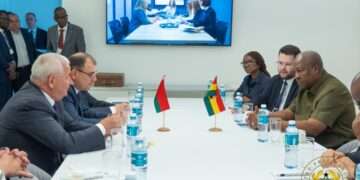
The delegation visited one of Belarus’ largest dairy plants on the second day of the state visit. According to official dispatches from the Ghanaian Presidency, Governor Piotr Alexsandrovich Parkhomchik and senior foreign ministry officials hosted the Ghanaian leader. President Mahama examined automated production lines manufacturing milk powder, cheese, and baby food.
Belarus is a dominant global exporter of processed dairy and agricultural machinery. The Eastern European nation has built its economy on large-scale commercial farming systems. Ghana, conversely, relies heavily on smallholder farmers who lack the industrial infrastructure to process raw produce, making the transition critical for protecting local jobs and sustaining economic growth.
Addressing Post-Harvest Losses for Long-Term Food Security
Post-harvest loss remains a severe structural weakness across West Africa. Farmers frequently lose up to a third of their yield before it reaches the market due to inadequate storage. Upgrading this supply chain infrastructure is essential for the long-term health of the population and reducing food inflation, an issue frequently debated in regional politics.
President Mahama stated the visit aims to identify direct technical solutions. “We are here to tap into Belarus’ vast experience as we work to make Ghana self-dependent in food production,” he said. Aleksandr Savchits, managing director of the Brest facility, told Belarusian state media BelTA that his firm recently began exporting to Ghana after generating $1.4 billion in profit last year.
This bilateral outreach reflects a wider continental trend of African nations bypassing traditional Western partners for direct technical expertise. Upgrading processing capacity aligns seamlessly with the African Continental Free Trade Area (AfCFTA) mandate to boost value-added exports, accelerating cross-border business and regional commercial travel. Ghana’s push to transition from raw output to finished goods offers a replicable model for neighbouring ECOWAS states looking to integrate new tech into their agricultural sectors.
Ghanaian business associations are now tasked with formalising joint ventures with Belarusian investors. Financial regulators and public officials, who frequently address public concerns in open AMA sessions, will scrutinise whether these high-level agreements actually deliver affordable processing machinery to local cooperatives. The speed of this technology transfer, potentially aided by new AI logistics platforms, will dictate how quickly Ghana can cut its import bill before the next harvest cycle, a matter of strong public opinion.