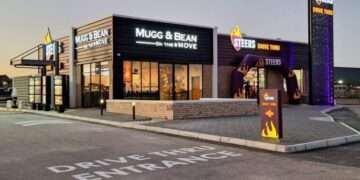





Famous Brands increased its total annual dividend by 11% to 458 cents per share, demonstrating structural resilience in Africa’s quick-service restaurant sector despite severe consumer disposable income constraints. The Johannesburg Stock Exchange-listed hospitality group capitalised on a regional shift toward affordable takeaway luxuries, insulating its headline earnings from broader macroeconomic volatility. This financial performance underscores how entry-level premium dining options continue to capture consumer spend even as household budgets across sub-Saharan markets face intense inflationary pressures.
The Core Story of the Quick-Service Restaurant Sector
According to Famous Brands financial reports published on Moneyweb, the corporate operator of pan-African franchises including Steers, Debonairs Pizza, and Wimpy achieved a 14% increase in headline earnings per share for the financial year. Total revenue expanded significantly, driven by a combination of strategic menu pricing, defensive consumer spending, and footprint expansion across targeted regional hubs. Chief Executive Officer Darren Hele confirmed that the company’s vertically integrated supply chain mitigated input cost pressures, allowing the group to maintain robust profit margins across the quick-service restaurant sector.
Concurrently, the corporate board approved an escalated executive remuneration package, reflecting the company’s strong financial metrics. Reported executive remuneration records on BusinessTech indicate that CEO Darren Hele received a total compensation package of approximately R14 million for the financial year, translating to an estimated daily earnings rate of R38,200. This reward structure directly aligns with the group’s sustained delivery of double-digit dividend growth to institutional and retail shareholders during an economically fraught reporting cycle.
Background & Context
The operational triumph of the quick-service restaurant sector unfolds against a backdrop of structural economic friction within its primary market, South Africa. High unemployment, persistent core inflation, and elevated real interest rates have systematically eroded middle-class purchasing power over the preceding twenty-four months. Consumers have aggressively scaled back on big-ticket discretionary items, high-end sit-down dining, and premium retail products to protect baseline household liquidity.
Historically, prolonged economic downturns have triggered widespread contractions across the hospitality and retail landscapes. However, the current downturn has instead accelerated operational evolution within the fast-food ecosystem. Rather than abandoning outside food entirely, households have structurally adjusted their consumption patterns, turning toward affordable, single-serving luxuries to replace traditional dining experiences.
Significance & Stakes
This financial outperformance proves that the modern quick-service restaurant sector functions as a counter-cyclical economic hedge within emerging markets. Market data confirms that system-wide sales across the group’s leading portfolios grew substantially, demonstrating that fast food remains insulated from the steep traffic declines observed in formal sit-down restaurants. By repositioning menu items to capture value-seeking consumers, the group successfully converted a macroeconomic downturn into a market-share acquisition strategy.
However, the operational survival of the industry demands radical structural adjustments to physical retail infrastructure. An analysis of the changing marketplace by Daily Investor on fast-food transformation demonstrates that traditional, large-format suburban restaurants are becoming financially unviable due to high fixed rental overheads and shifting consumer foot traffic. Major operators are aggressively transitioning toward smaller, digitally optimized footprints, delivery-only dark kitchens, and drive-thru formats designed to minimize overhead and maximize transaction velocity.

Voices & Perspectives
“The modern African fast-food consumer is hyper-rational and value-driven, meaning that market dominance belongs strictly to brands that master price-point engineering,” stated Wandile Sihlobo, an independent consumer markets analyst based in Johannesburg. Sihlobo noted that the double-digit dividend expansion proves that convenience and affordability remain non-negotiable household line items, even during an extended cost-of-living crisis. He emphasized that companies with integrated supply chains can absorb shocks far better than independent operators inside the competitive quick-service restaurant sector.
Offering a corporate perspective, Famous Brands Chief Executive Officer Darren Hele stated in the company’s investor presentation that meticulous cost containment and strategic menu adjustments kept the brands highly competitive. Hele clarified that while the operating environment remained intensely challenging, the group’s focus on supporting franchise partners and optimizing logistics networks preserved operational agility. He defended the company’s capital allocation strategy, noting that returning cash to investors reflects deep structural health across their brand portfolio.
The Pan-African Angle
The resilience observed in South Africa mirrors a broader, structural consumption shift across major sub-Saharan metropolitan areas. In Nairobi, Lagos, and Accra, formal corporate models are rapidly displacing informal food retail as urban middle classes expand and demand standardized food safety and convenience. This trend aligns directly with the urbanization goals outlined in the African Union’s Agenda 2063, which envisions modernized domestic markets driving internal economic growth.
Furthermore, the cross-border expansion of brands like Debonairs Pizza and Steers highlights the immense commercial potential of the African Continental Free Trade Area (AfCFTA) in harmonizing agricultural supply chains. By establishing localized agro-processing hubs to supply regional franchises, corporate food networks are reducing dependence on volatile external commodity imports. This regional integration model provides a scalable blueprint for other African hospitality entities seeking to build cross-border resilience against global supply shocks within the continental quick-service restaurant sector.
What Happens Next
The central question confronting operators is whether double-digit dividend growth can be sustained if core inflation spikes again. Corporate executives must navigate the delicate balance between maintaining aggressive promotional pricing for consumers and protecting the profit margins of individual franchise owners. Additionally, organized labor unions are expected to intensify scrutiny on executive remuneration policies, using the CEO’s R38,200 daily pay metric to demand higher baseline wages for frontline workers across the quick-service restaurant sector.
Looking ahead, the primary operational focus will center on the rapid rollout of digitized, low-overhead retail formats. Competitors across the continent are watching closely to see how effectively major groups can phase out expensive, legacy sit-down real estate without alienating traditional brand loyalists. The long-term winners will be determined by who can deploy technology fastest to squeeze inefficiencies out of the last mile of delivery.
Strategic Insight
The capacity of the quick-service restaurant sector to generate superior investor returns during an economic contraction redefines our understanding of consumer defensive stocks in Africa. True corporate resilience relies on the aggressive reconfiguration of physical overheads and menus to meet the precise financial boundaries of an embattled middle class. Executive teams that fail to transition from legacy, space-heavy real estate to agile, transactional formats will inevitably surrender market dominance to nimbler, digitally integrated competitors.