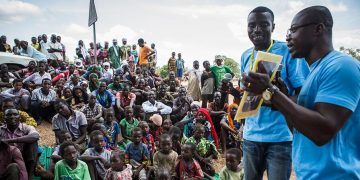





The World Health Organization (WHO) and The Carter Center have signed a US$300,000 cooperation agreement to advance guinea worm eradication programs in Angola’s Cunene Province. This renewed partnership strengthens efforts to eliminate the Neglected Tropical Disease (NTD) by 2030 through intensified surveillance, education, and sustainable interventions.
Strengthening the Fight Against Guinea Worm Transmission
The Carter Center has been a long-standing partner in supporting Angola’s mission to eliminate Guinea Worm Disease. Through technical support, community mobilization, and essential tools such as larvicides and water filters, the organization plays a vital role in guinea worm transmission prevention. The new funding ensures six months of continued operations, including training local volunteers, monitoring cases, and running awareness campaigns in vulnerable communities.
Dr. Indrajit Hazarika, WHO Representative in Angola, emphasized, “This agreement proves that open and inclusive dialogue can lead to real action. The Health Circle initiative helped consolidate this partnership, turning advocacy into tangible progress toward a dracunculiasis-free Angola.”
Promoting Sustainable Solutions for NTDs
Since 2018, Angola has reported 204 Guinea Worm cases — three in humans and 201 in animals, primarily dogs. Though rare, the disease still threatens rural populations dependent on unsafe water sources. Addressing these environmental factors requires a multisectoral strategy involving health, environment, education, and infrastructure — aligning with broader sustainable solutions for NTDs.
The WHO-Carter Center collaboration showcases how community-led efforts, backed by strong partnerships, can accelerate guinea worm eradication programs while fostering resilience and socioeconomic stability in affected regions.
As part of their shared mission, both organizations remain committed to Angola’s leadership in achieving total eradication and promoting healthier, more self-sufficient communities across Africa.
For more stories on Africa’s development and innovation, visit Afrikeye Travel.
Source acknowledgment:
This story was first reported by the World Health Organization (WHO) – Angola. Read the full article here.