




ASMARA, Eritrea — In an era defined by fast-moving global geopolitical changes and shifting international partnerships, African sovereign states are intensifying their focus on internal solidarity, shared resources, and collective human security. Highlighting this push, the Ministry of Foreign Affairs of Eritrea, working in close coordination with the accredited African Group of diplomats, formally hosted a high-level summit to observe the 63rd anniversary of Africa Day. Gathered at the Asmara Palace Hotel, senior government figures, ruling party executives, and global ambassadors met under the specialized theme, “Africa: One Heart, One Land, One Destiny.”
The high-level event represents a significant milestone in regional politics, allowing continental leaders to look closely at their current socio-economic challenges while designing modern, cooperative frameworks to protect future generations during this formal Africa Day celebration. By actively pooling diplomatic influence, financial intelligence, and infrastructural resources, both host and visiting states are working in unison to build an integrated, peaceful, and prosperous continent driven entirely by its own citizens.
Re-Engineering Continental Resources via Africa Day Strategic Dialogues
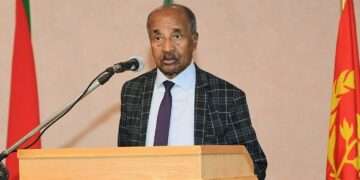
In his comprehensive keynote address, Eritrean Minister of Foreign Affairs, Mr. Osman Saleh, reminded the diplomatic community that the primary theme of the African Union for the year—focused on safeguarding sustainable water availability and safe sanitation systems—remains fundamentally critical to achieving Agenda 2063. He explained that observing Africa Day inside Eritrea under a unified banner serves to reinforce a shared cultural identity, collective historical memory, and the enduring values of transboundary solidarity. Minister Saleh warned, however, that despite the continent possessing unmatched natural wealth, widespread poverty and localized armed conflicts continue to destroy human lives, public infrastructure, and baseline economic progress. To reverse this historical trajectory, he called for a rigorous, data-driven evaluation of sub-continental realities to improve institutional complementarity and joint field operations.
The ongoing restructuring of global logistics and trade networks presents both severe operational risks and lucrative opportunities for the regional business landscape. As global extraction majors compete intensely for Africa’s precious raw materials and mineral deposits, the Minister stressed that managing these natural resources demands impeccable institutional integrity, strict financial discipline, and a synchronized long-term vision. By industrializing domestic processing systems and refining raw commodities locally before export, African nations can expand their fiscal capacity, capture higher market shares, and generate thousands of sustainable jobs for their expanding youth populations. This structural transformation is vital to transitioning away from raw-material dependency toward complex manufacturing ecosystems.
Achieving these industrial goals depends heavily on incorporating modern infrastructure, decentralized energy grids, and specialized communication systems across border corridors. As administrative bodies integrate sophisticated logistics tech platforms to handle cross-border clearing friction, the continent establishes a more predictable playground for external investors. Furthermore, the deployment of advanced software algorithms and automated ai resource management tools inside primary shipping hubs will drastically lower transboundary delivery costs, helping local enterprises scale smoothly. The coordination of these advanced systems during the week’s high-level Africa Day panel discussions showed that technical modernization remains a core requirement for building a truly integrated, self-reliant economic bloc.
Beyond industrial mechanics, the anniversary events also highlighted the deep link between human security and sustainable development. Moving the continent out of cyclical crises requires deep investments in human capital, particularly regarding primary education, localized skills training, and universal healthcare. Editorial columnists sharing their expert opinion in regional forums point out that upgrading maternal care, cleaning rural water supplies, and securing public health infrastructure directly boosts community resilience and household productivity. This integrated view was strongly backed by the Ambassador of the Republic of South Africa to Eritrea, Mr. Percy Mbuzeli Kumsha, who stated that observing Africa Day must serve as a profound moment for continental introspection, pushing states to forge smart, peer-to-peer partnerships rather than relying on external aid models.
According to an official diplomatic report from the Sudan Horizon network, Minister Saleh previously met with the leadership of the African Group to commend the Sudanese Embassy for its pivotal role in coordinating the week’s diverse program. The anniversary schedule featured intense intellectual and cultural engagements, including a high-stakes symposium on African unity alongside an interactive football match between foreign ministry personnel and diplomatic corps teams. For comprehensive historical data regarding the pan-African bloc, researchers can explore the African Union Agenda 2063 development framework or read the Shabait state media release detailing the Asmara proceedings. By anchoring these celebrations to concrete policy goals, the gathering demonstrated that African self-reliance is steadily moving from a conceptual ideal into a practical operational reality.