The Nama community descendants in South Africa are renewing calls for the restitution of their ancestral lands, long exploited by diamond mining companies south africa. Despite decades of wealth extracted from their territory, the community has seen minimal benefit, raising questions about land expropriation without compensation south africa and corporate accountability.
A Landscape Scarred by Diamonds
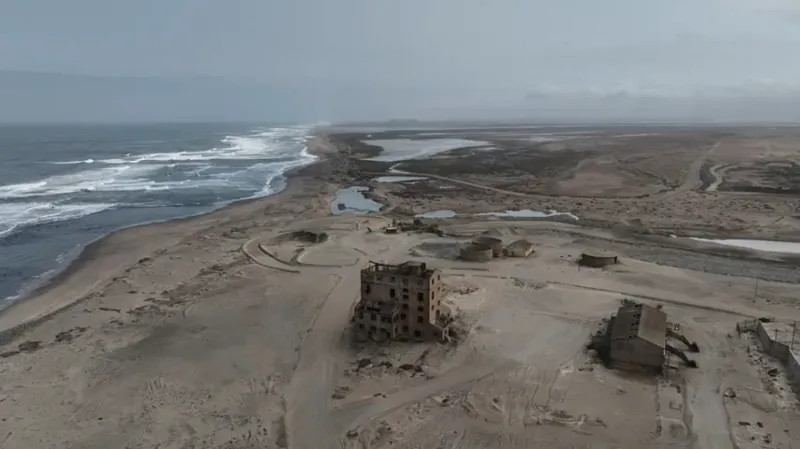
Traveling along South Africa’s remote west coast, the beauty of the landscape quickly gives way to areas transformed by mining. Namaqualand, spanning the northern border region, bears the marks of decades of diamond extraction. While some wealth contributed to national development, the local Nama people, who straddle South Africa and Namibia, have received little direct benefit.
The Nama, descendants of the indigenous Khoi and San peoples, are determined to reclaim their heritage. “In our family, they used to teach children to count with diamonds,” says Martinus Fredericks, a 60-year-old Nama elder appointed as community leader in 2012.
Economic Decline and Community Struggles
Andries Joseph, a former worker in Richtersveld’s diamond industry, describes the current situation: “There’s no work. The people have stagnated, buildings have collapsed, and unemployment is sky-high.” Many diamond mining companies south africa have moved on, leaving derelict mines and infrastructure in need of repair.
Local hospitals, churches, and residential areas provide only basic services, while water, electricity, and roads are dilapidated, affecting access to healthcare and education. The environmental and economic damage from past mining continues to affect the Nama community descendants.
Historical Context of Land Loss
The Nama were once herders and traders until colonial powers annexed their lands in the 19th century. Diamonds discovered south of the Orange River in the 1920s intensified displacement. Even after South Africa transitioned to democracy in 1994, decisions by the African National Congress maintained the distribution of diamond wealth for broader national use, leaving the Nama without significant local benefit.
Martinus Fredericks emphasizes the need for equitable development: “I’m not against development, but the community must benefit as a partner.”
Legal Battles and Partial Victories
After a five-year legal struggle with the state and mining companies, South Africa’s Constitutional Court ruled in 2003 that the Nama had inalienable rights to their land and mineral resources. Subsequent agreements with the Richtersveld Communal Property Association (CPA) and mining entities, however, gave 51% of mineral rights to Alexkor and 49% to the community. Fredericks asserts the CPA did not properly represent the wider Nama population, leaving them without meaningful benefit, echoing concerns raised in communities claiming their right to consent on mining projects.
Alexkor disputes this but acknowledges that past management failures, including issues from the state capture investigation, have affected outcomes. Parliamentary hearings revealed that over 300m rand was paid to the CPA without adequate benefit reaching the community.

Environmental Damage and Mining Accountability
The Nama have also raised concerns about environmental degradation. Mining operations have left land scarred and unrehabilitated. Previous operators, including Trans Hex and De Beers, have divested from many sites, leaving communities to manage post-mining landscapes. While De Beers contributed 50m rand toward rehabilitation, long-term responsibility remains uncertain, as highlighted in De Beers accountability reports.
Moving Forward: Reclaiming Heritage
Fredericks has initiated legal action against the CPA to regain proper control of Nama lands, reflecting ongoing efforts by communities to get their land back. He emphasizes the intrinsic link between the Nama people and their land: “A Nama person cannot be separated from Nama land because of the intrinsic link between the person and the land.”
As debates over land expropriation without compensation south africa continue, the community seeks justice and sustainable solutions that respect Nama culture traditions south africa while providing equitable access to the wealth generated from their territories.
Visitors and researchers interested in the rich cultural and historical heritage of Namaqualand can explore the region further through Afrikeye Travel.
This story was first reported by BBC. Read the full article here.