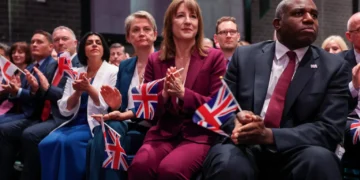





Sir Keir Starmer delivered one of his most forceful political speeches to date at the Labour Party Conference Liverpool, launching verbal attacks against Nigel Farage and what he called the “politics of grievance.” The prime minister accused the Reform UK leader of undermining Britain’s national confidence and spreading division, framing the confrontation as a test of the country’s values and its future direction.
Starmer’s Verbal Attacks Target Farage’s Vision for Britain
During his keynote address, Starmer accused Nigel Farage of offering no positive vision for the country, challenging his rival’s influence in shaping British politics.
“When was the last time you heard Nigel Farage say anything positive about Britain’s future?” Starmer asked, to strong applause from delegates.
He warned that Farage’s constant negativity and “pot-stirring” politics were eroding trust in the nation, adding, “He doesn’t like Britain, doesn’t believe in Britain, and wants you to doubt it too.”
Starmer’s verbal attacks highlighted his determination to reclaim patriotism from populist movements while reinforcing Labour’s message of hope and renewal.
Political Speeches Focused on Renewal and National Security Strategy
As part of his broader national security strategy, Starmer outlined plans to rebuild key industries, strengthen border security, and promote a balanced foreign policy. He pledged investments in advanced technology, energy independence, and domestic manufacturing — core elements of what he described as a “national renewal mission.”
He also stressed the importance of “free speech as a British value,” while firmly condemning racist rhetoric. “Calling out hate isn’t silencing anyone — it’s defending decency,” he declared, drawing a standing ovation.
Starmer admitted Labour had “placed too much faith in globalisation” in the past but now aims to put British workers and local businesses at the center of economic growth.
Competing Political Visions: Starmer vs. Farage
In contrast to Farage’s nationalist approach, Starmer’s political speeches have emphasized unity and forward-looking policies. He introduced education reforms that would move away from Tony Blair’s 50% university target, replacing it with an ambition for two-thirds of students to attend university or pursue “gold-standard apprenticeships.”
The prime minister also reaffirmed Chancellor Rachel Reeves’ fiscal discipline, ruling out a wealth tax and committing to balanced budgets. On foreign affairs, he promised stronger global partnerships and confirmed support for recognizing Palestinian statehood — a stance he framed as part of a “values-driven foreign policy.”
Patriotism and National Security at the Heart of Starmer’s Message
Starmer’s patriotic tone resonated throughout the conference. “I’m proud of the Union Jack, the cross of St George, the Saltire, and the Red Dragon,” he said, stressing that national pride should be about unity, not division.
He linked this message directly to his national security strategy, saying a stronger, fairer Britain must also be a safer Britain.
Farage responded swiftly, claiming he was “shocked” by Starmer’s remarks and accusing the prime minister of “endangering the safety of Reform officials.” Their clash underscored the deepening rivalry between Labour and Reform UK as both leaders vie for influence ahead of the next election.
For those interested in exploring Britain’s vibrant political culture or visiting Liverpool, check out Afrikeye Travel for the best travel and accommodation options.
This story was first reported by BBC News. Read the full article here.