




US President Donald Trump has announced that no American officials will attend this year’s Group of 20 (G20) summit in South Africa, citing concerns over land ownership disputes South Africa and alleged mistreatment of white farmers. Writing on his Truth Social platform, Trump called it a “total disgrace that the G20 will be held in South Africa” and reiterated claims of a “genocide” against Afrikaners, a narrative widely rejected by South African authorities.
Trump Criticizes South Africa’s Land Reforms
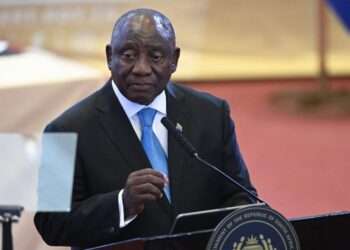
Tensions escalated after President Cyril Ramaphosa introduced new legislation in January aimed at addressing historical land imbalances. The law allows the state to expropriate land in exceptional circumstances without compensation, such as abandoned or underutilized properties, as part of a broader effort to achieve equitable redistribution. Trump described the policy as “confiscating land, and treating certain classes of people VERY BADLY,” reinforcing his claims about South Africa white farmer claims.
US Resettlement and Diplomatic Fallout
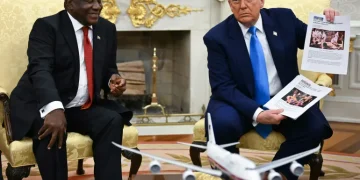
In May 2025, Trump granted asylum to 59 white South Africans under a US resettlement program, citing racial discrimination. During a White House meeting with Ramaphosa, he presented evidence alleging a “genocide” of white Afrikaners, which Ramaphosa strongly denied. Independent experts, including historian Saul Dubow of Cambridge University, have dismissed these claims as unfounded.
The US administration has confirmed that most new refugees admitted under Executive Order 14204 will be white South Africans, while the total number of annual admissions has been reduced to 7,500.
G20 Summit and Broader Implications
The G20 summit in Johannesburg on November 22–23 will convene leaders from the world’s leading and emerging economies. Trump has also suggested hosting the 2026 G20 summit in Miami, Florida, in response to the current dispute. US Vice President JD Vance, who was expected to attend in the president’s place, will no longer travel to South Africa.
While the Trump administration frames the boycott around human rights and economic development goals summit concerns, the situation highlights ongoing debates about land ownership disputes South Africa, historical inequality, and the complex intersection of agriculture, policy, and international relations in post-apartheid South Africa.
For related travel arrangements, visit AfrikEye Travel.
This story was first reported by Alastair McCready and news agencies. Read the full article here.