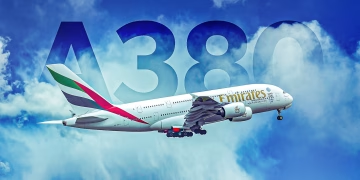




An Emirates Airbus A380 landing gear issue forced one of the world’s largest passenger aircraft to return to London Heathrow shortly after departure on December 31, 2025. The Dubai-bound flight circled over the city for nearly two hours as pilots followed safety procedures to manage the technical fault. The dramatic event quickly drew global attention and featured widely across international aviation reports and Africa news platforms.
What Happened To Emirates Flight EK2
Emirates flight EK2 departed London Heathrow Airport (LHR) for Dubai International Airport (DXB) at 2:32 pm local time, almost an hour later than scheduled. Shortly after take-off, the flight crew detected a malfunction linked to the aircraft’s landing gear system.
Eyewitnesses across southeast London reported seeing the Airbus A380 flying unusually low with its landing gear doors still open. Due to the Emirates Airbus A380 landing gear issue, pilots stopped the climb and entered a holding pattern to assess the situation safely.
Why The Aircraft Circled London
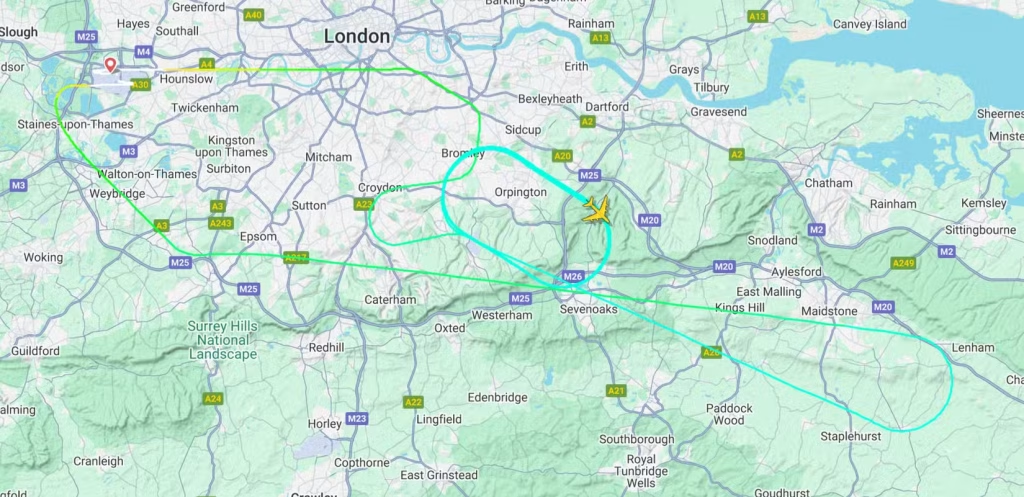
The A380 did not immediately return to Heathrow because it was carrying fuel for a seven-hour intercontinental flight. Aircraft are required to land below a certified Maximum Landing Weight (MLW) to prevent structural damage.
To meet safety limits, the crew kept the aircraft circling over London for approximately 90 minutes, allowing excess fuel to burn off. This standard aviation practice reduces stress on the airframe and landing gear, ensuring a safer landing after incidents like an Emirates Airbus A380 landing gear issue. Experts often share their opinion that such protocols are the backbone of passenger safety.
Flight Details And Technical Data
- Date: December 31, 2025
- Airline: Emirates
- Flight Number: EK2
- Aircraft Type: Airbus A380-800
- Registration: A6-EUF
- Route: London Heathrow to Dubai
- Outcome: Returned to LHR following landing gear malfunction
According to Flightradar24, the aircraft became the most-tracked flight worldwide during the incident, attracting thousands of live viewers. While some were distracted by Premier League predictions or other sports updates, the aviation world remained glued to the radar.
Emirates Official Statement
Emirates later confirmed the event, stating that the aircraft returned shortly after take-off due to a technical fault. The airline emphasized that all passengers and crew were safely disembarked and that affected travelers would be rebooked on upcoming flights.
The calm and controlled handling of the Emirates Airbus A380 landing gear issue was praised by aviation analysts and highlighted across Africa news outlets covering global transport safety. For many, travel stability is as vital as financial security, much like the old age grant in January 2026 or SME financing initiatives.
Aircraft History And Current Status
The aircraft involved is a nine-year-old Airbus A380 delivered to Emirates in October 2016. It has logged more than 34,000 flight hours and over 4,000 flight cycles during its service life.
At the time of publication, the jet remained grounded at London Heathrow for inspection and maintenance checks. Experts note that landing gear faults are often resolved quickly, meaning the aircraft is unlikely to face long-term grounding. Maintenance of such complex machinery requires highly skilled labor, highlighting the importance of the employment sector and specialized jobs in the industry.
Why Landing Gear Issues Are Taken Seriously
Landing gear systems are critical for aircraft safety, supporting enormous weight during take-off and landing. Even minor faults require immediate attention to avoid further mechanical stress or damage.
Aviation authorities enforce strict rules on landing weights and emergency procedures. The response to this Emirates Airbus A380 landing gear issue demonstrates how these safety protocols work effectively in real-world situations, providing a learning case for those in a researchers skills enhancement program.
Emirates And The Airbus A380 Fleet
Emirates is the world’s largest operator of the Airbus A380, flying more than half of the active global fleet. Despite some airlines retiring the superjumbo, Emirates continues to invest in the aircraft and plans to operate up to 110 A380s by the end of 2026.
Incidents like this highlight the complexity of operating large aircraft but also underline the airline’s commitment to safety and maintenance standards. The story has resonated globally, including among Africa news audiences following international aviation developments.
For more aviation and travel updates, visit Travel Afrikeye. This story was first reported by Simple Flying. Read the full article here.