





From Gatekeepers to Partners: Nigeria’s Economic reforms Devolution Tests a New Blueprint for Growth
Nigeria is fundamentally altering its economic architecture, shifting away from decades of centralized control to empower its subnational governments. Speaking at the Jigawa Investment Summit 2026 in Dutse, Vice President Kashim Shettima outlined a structural pivot that replaces federal bottlenecks with strategic state-level partnerships. For Africa’s most populous nation, this decentralization of economic power is more than a policy shift; it is a critical test of whether empowering local governments can finally unlock the continent’s vast, dormant potential in agriculture, energy, and industry.
At the core of this transformation are painful but necessary macroeconomic adjustments. The Tinubu administration has prioritized transparency by unifying the foreign exchange market—a move that ended years of distortions that previously frightened away serious foreign direct investment. Complementing this fiscal honesty, the Presidential Enabling Business Environment Council (PEBEC) has systematically dismantled bureaucratic hurdles, simplifying corporate registrations and reducing the cost of starting a business. These bold reforms are already bearing fruit, stabilizing currency markets, firming up national reserves, and prompting leading global rating agencies to upgrade Nigeria’s sovereign credit standing for the first time in over a decade.
However, the federal government recognizes that central policy adjustments mean little if they do not translate into localized prosperity. “From power to agriculture, from solid minerals to the digital economy, we have replaced gatekeeping with partnership,” Shettima noted. By redirecting savings from these hard reforms into infrastructure and human capital, the administration aims to ensure “that growth, when it comes, is felt in the household and not only in the headline.”
The legislative cornerstone of this decentralized approach is the Electricity Act 2023. By devolving the power to license, generate, and distribute electricity to the states, Abuja is inviting private capital to bypass federal gridlocks and build customized power infrastructure. This is particularly relevant for states like Jigawa, which already boasts a three-megawatt independent power project in its capital, accompanied by 16 kilometers of transmission lines. Reliable, localized energy generation remains the undisputed prerequisite for attracting any meaningful industrial investment across the continent.
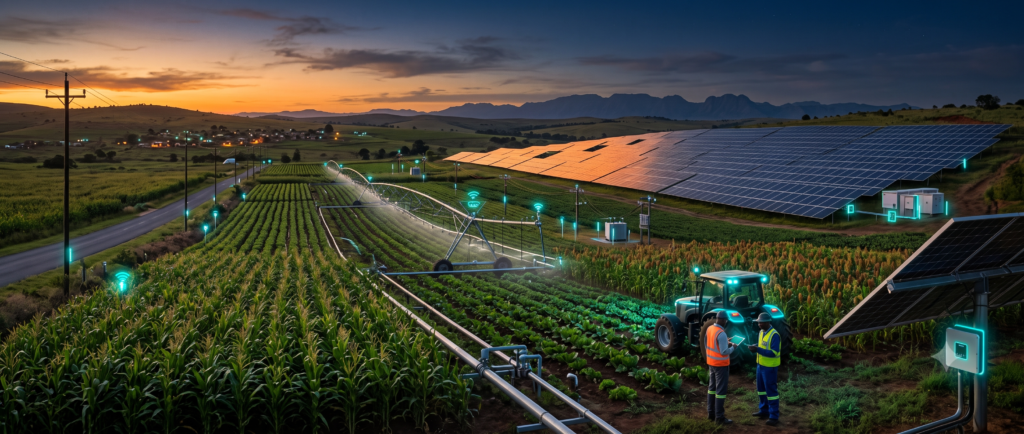
Jigawa State itself serves as a prime laboratory for this devolved economic model. Governor Umar Namadi is positioning the state—historically an agricultural stronghold—as a highly competitive investment destination. Strategically located as a gateway between Nigeria’s North West and North East, and sharing a vital trans-Saharan trade corridor with the neighboring Niger Republic, Jigawa offers structural advantages that extend beyond national borders.
The state’s pitch is anchored heavily on resource abundance and food security, issues of paramount importance to African trade. Jigawa brings to the table over 411,000 hectares of fadama suitable for year-round farming and an expansive livestock economy featuring over 15 million combined cattle, sheep, and goats. With political will aligning with natural endowments, federal and state leaders are urging international investors to capitalize on a market that is not only ready but explicitly supported by an accommodating business climate.
Looking ahead, the success of Jigawa’s investment drive will serve as a crucial barometer for Nigeria’s broader economic strategy. If state-level initiatives can successfully leverage federal macroeconomic stability to attract genuine capital into agriculture and decentralized energy, it will validate the administration’s localized growth model. For the rest of Africa, watching Nigeria’s Economic Reforms states transition from federal dependents into competitive economic hubs could provide a replicable roadmap for subnational wealth creation, proving that the continent’s economic future lies in the strength of its local partnerships.