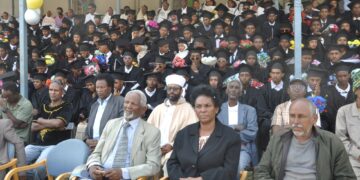





The Mai-Habar Technical School has officially graduated 143 highly skilled students, including 55 female professionals, from its comprehensive certificate programs. The graduation ceremony highlights the nation’s ongoing investments in specialized vocational education. By equipping young citizens with intense theoretical and practical skills, the state expands access to technical training in Eritrea, directly addressing the regional demand for qualified industrial practitioners capable of driving long-term infrastructure progress.
The rigorous two-year curriculum combines classroom analysis with hands-on mechanical testing to prepare students for immediate deployment across critical development tracks. According to Mr. Tesfazgi Abraha, the director of the institution, the 2026 graduating batch includes 24 specialists in auto mechanics, 23 in modern construction, 25 in electrical engineering, 23 in electronics, 24 in plumbing, and 24 in precision woodwork. This diverse array of technical outputs helps stabilize the domestic business landscape by providing local contractors with a predictable supply of skilled operators.
Upgrading Technical Training in Eritrea to Address Skilled Labor Deficits
A primary structural barrier to comprehensive industrial development across the sub-region has been a persistent shortage of certified technical experts. Mr. Measho Gebretensae, head of follow-up and educational capacity assurance at the Ministry of Education, underlined that skilled labor remains the most critical foundation for national economic development. To resolve this bottleneck, the ministry is actively expanding localized vocational centers, encouraging the new graduates to apply their specialized knowledge directly to the nation-building process.
| Vocational Discipline | Graduating Student Count (2026) | Primary Industrial Destination |
|---|---|---|
| Electrical Engineering | 25 Certified Technicians | Municipal power grids and solar grid installations |
| Auto Mechanics | 24 Certified Specialists | Commercial transit fleets and heavy machinery hubs |
| Plumbing & Piping | 24 Certified Engineers | Regional sanitation builds and clean water networks |
| Precision Woodwork | 24 Certified Craftspeople | Domestic furniture manufacturing and civil carpentry |
| Electronics Assembly | 23 Certified Analysts | Telecommunication systems and digital repair nodes |
| Civil Construction | 23 Certified Operators | Village school structures and road transit networks |
The systematic entry of these qualified cohorts into the local market is expanding the availability of specialized jobs for youth across the country. Outstanding performers received awards from Ms. Tekea Tesfamicael, President of the National Union of Eritrean Women, emphasizing the growing representation of women inside heavy industrial fields. Since its inception in 1997, the academy has successfully graduated 5,321 technicians, helping reshape local politics by centering municipal planning around domestic talent pools rather than external consulting firms.
To monitor student performance records and match upcoming graduates with open enterprise roles, school administrators are integrating secure tracking platforms within the country’s growing tech sector. These digital tools allow corporate employers to review certified competencies, verify graduation credentials, and share workforce requirements instantly with vocational boards. This administrative optimization eliminates employment matching delays, aligning with the electronic data verification frameworks managed by the Africa CDC emergency registry to handle cross-border administrative hurdles.
Independent macroeconomists sharing their professional opinion columns emphasize that long-term social stability requires an uncompromised commitment to vocational skill building. They note that protecting structural literacy directly stabilizes community health indexes and builds absolute economic independence. Incorporating advanced predictive data models and specialized ai resource mapping ensures that educational tools reach remote training campuses efficiently, solidifying a resilient foundation for future industrial expansion.