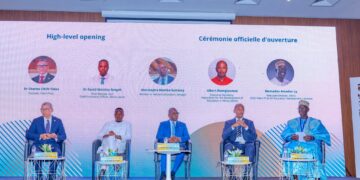





The 2026 Yidan Prize Conference—hosted in Dakar under the theme “Unleashing Africa’s potential: the role of education in a new era of development”—has concluded with a landmark joint commitment. Senegal’s Ministry of National Education and the Associates in Research and Education for Development (ARED) announced sweeping new initiatives designed to embed indigenous languages directly into the early childhood education system.
Co-convened alongside the Association for the Development of Education in Africa (ADEA), the Dakar summit marked the first time the prestigious global education conference was held on the African continent. The gathering drew over 280 delegates from 35 countries, transforming the Senegalese capital into a hub for philanthropic partners, researchers, and intergovernmental leaders seeking to redesign sustainable development through education.
The Strategic Impact of Multilingual Foundation Learning
At the core of the conference was the imperative of multilingual foundation learning. This pedagogical approach recognizes indigenous language not merely as a cultural artifact, but as a critical vehicle for cognitive development, identity, and dignity. Educational data consistently shows that teaching children in a language they already speak at home helps them grasp foundational mathematics and reading skills much faster than immediate immersion into foreign languages like French or English.
To operationalize this, ARED utilized its Yidan Prize project funds to launch the Amélioration des Apprentissages par la Remédiation (AAR), a new remedial education program aimed at supporting students struggling in traditional classrooms. “We hope that, with the resources we have from the Yidan Prize and in partnership with the Ministry of National Education, we will reach 150,000 children struggling academically over the next three years, covering three regions and six school districts in Senegal,” stated Mamadou Amadou Ly, Executive Director of ARED.
The initiative is receiving robust international backing. The Gates Foundation used the conference to publicly reaffirm its commitment to Senegal’s harmonized bilingual reform (MOHEBS), partnering directly with ARED to provide the technical assistance required to scale bilingual instruction across the national primary education grid.
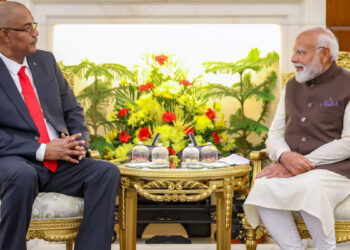
Beyond Senegal’s borders, the conference facilitated critical cross-border dialogue. High-level bilateral meetings, including strategy sessions between Senegal’s Prime Minister, Ahmadou Al Aminou Lo, and Sierra Leone’s Chief Minister, Dr. David Moinina Sengeh, underscored that education reform is no longer isolated to individual states. Dr. Sengeh urged the ecosystem to move from “islands of excellence to connected systems of excellence,” mapping a progressive pipeline from access and skills straight through to economic opportunity and dignity.
Global philanthropic entities, including the Mastercard Foundation and the Global Partnership for Education, led strategic working groups throughout the three-day event. Their focus remained heavily on the intersection of early literacy, teacher professional development, and the transition from secondary education into the formal labor market.
Ultimately, the commitments secured in Dakar signal a profound shift in global development strategy. As Moustapha Mamba Guirassy, Senegal’s Minister of National Education, poignantly noted, Africa no longer attends these global summits as a continent awaiting foreign solutions. Through localized innovations like multilingual instruction, Africa is now actively exporting the pedagogical blueprints required to build resilient, culturally grounded human capital.