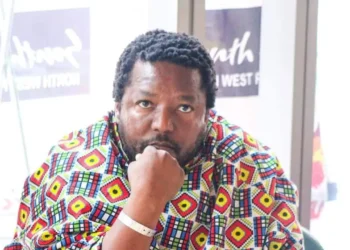





eThekwini Mayor Cyril Xaba has confirmed that only one undocumented person was identified among over 300 foreign nationals processed during a highly publicized police blitz in Durban this week. The surprising finding directly challenges the central narrative driving a recent wave of violent anti-migrant politics and protest action in South Africa’s second-largest economic hub. For a nation aggressively positioning itself as the indisputable anchor of the African business landscape, the misdirected targeting of legal residents signals a severe domestic governance failure.
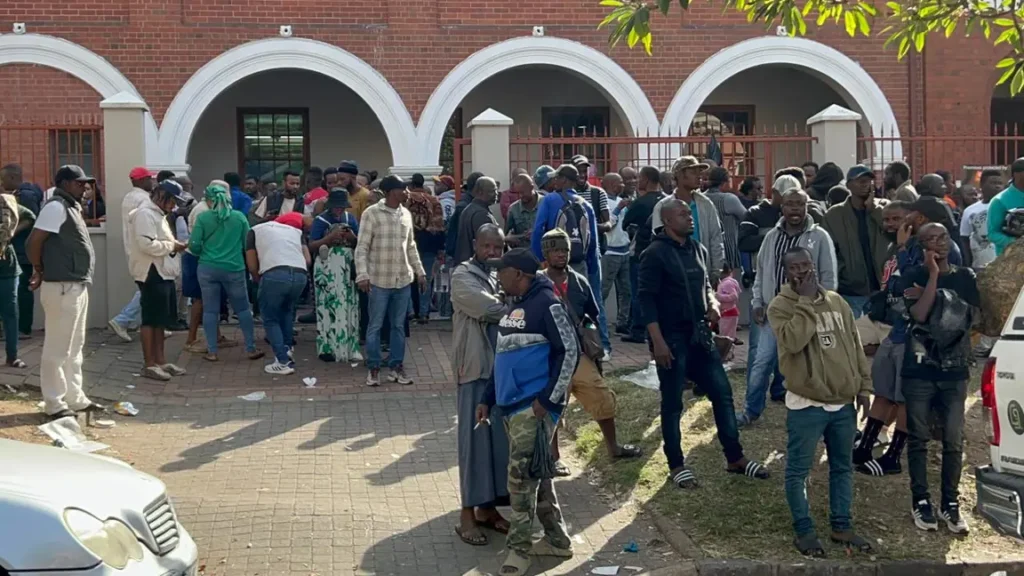
Hundreds of foreign nationals sought desperate refuge at the Diakonia Centre and the Durban Central Police Station following mounting threats from local vigilante groups. Eyewitness News reported that Department of Home Affairs officials and law enforcement personnel rigorously screened the displaced individuals to verify their immigration status. The comprehensive verification process proved conclusively that nearly all those violently targeted by the mobs were legally residing and working within the country.
Tensions in the coastal city escalated sharply earlier this month after a militant anti-migrant group calling itself the “March and March” movement demanded mass deportations of foreign workers. As eNCA noted, the radical protesters issued a strict ultimatum for all undocumented migrants to vacate their homes and business premises by the end of June. The South African Police Service previously deployed rubber bullets to disperse terrified migrants seeking protection at local stations, a move that sparked intense domestic debate over severely skewed law enforcement priorities.
The deliberate misidentification of documented African migrants as illegal aliens severely disrupts the regional workforce and shatters the local business ecosystem. Durban hosts one of the busiest and most strategically vital maritime ports on the entire continent, making it an irreplaceable node for cross-border trade, complex logistics, and regional travel. Continued social instability within the city limits actively deters the highly skilled foreign talent required to support and expand these massive regional industries.
Any prolonged civil disruption at the port of Durban ripples destructively outward across the entire Southern African Development Community. Landlocked nations like Zimbabwe, Zambia, and Malawi rely almost exclusively on this specific coastal infrastructure for their critical imports and commodity exports. When local vigilante groups blockade transport streets and threaten foreign truck drivers with violence, the entire continental supply chain slows down, massively increasing costs for millions of consumers across the region.
Targeting legal expatriate workers also directly threatens domestic jobs and drastically reduces crucial municipal revenue. Many of the violently displaced individuals operate successful small enterprises, pay formal taxes, and directly employ South African citizens in sectors ranging from retail commerce to light manufacturing. Driving these entrepreneurs out of the formal economy shrinks the local tax base precisely when the eThekwini municipality is absolutely desperate for funds to repair its rapidly aging infrastructure.
Mayor Xaba told the assembled media that the definitive screening results completely validate the legal standing of the embattled displaced community. The SABC confirmed that the single undocumented individual was promptly arrested, while the rest of the group was cleared to safely return to their respective communities. Xaba publicly urged hostile residents to immediately accept the foreign nationals back into their neighbourhoods, emphatically reminding citizens that the state has an unshakeable constitutional obligation to protect all lawful residents.
Lumo Hamadou, an outspoken spokesperson for the displaced migrants, accused local police commanders of blatant complicity with anti-immigration groups just before the United Nations was formally asked to intervene. Hamadou argued persuasively that law enforcement officials routinely turn a blind eye to the brutal extortion and intimidation tactics used by vigilante groups against foreign-owned businesses. This deeply ingrained perceived bias fundamentally erodes trust between vulnerable migrant communities and the very state apparatus designed to protect them.
The escalating standoff in Durban closely echoes similar xenophobic flashpoints across South Africa that have historically poisoned diplomatic ties with key neighbouring nations. Pretoria frequently finds itself awkwardly attempting to mend fractured relationships with powerful governments in Abuja, Harare, and Maputo following horrific waves of domestic violence against their respective citizens. This persistent, unaddressed hostility actively undermines the core foundational principles of the African Continental Free Trade Area, an ambitious project which relies fundamentally on the unhindered free movement of labour and goods.
A systemic failure to protect legally documented African workers heavily damages Pretoria’s political standing within the halls of the African Union. South African diplomats struggle immensely to negotiate favourable bilateral trade terms or forcefully push continental integration agendas when their home cities remain fundamentally unsafe for fellow Africans. The irreplaceable political capital lost in these recurring domestic crises severely weakens South Africa’s historical influence in crucial continental decision-making bodies.
This toxic social volatility also directly jeopardises critical cross-border tech partnerships that rely entirely on fluid regional talent mobility. Africa’s booming digital economy absolutely requires software engineers, data scientists, and systems developers to move freely between established innovation hubs in Lagos, Nairobi, Cape Town, and Durban. When highly skilled technical professionals feel physically unsafe, they quickly relocate their operations and venture capital to more welcoming jurisdictions, completely depriving South Africa of essential technological innovation.
The staggering financial cost of these predictable xenophobic flare-ups extends far beyond the immediate metrics of lost productivity and rapid capital flight. The Department of Home Affairs already wastes upwards of R60 million annually on convoluted deportation logistics, dangerously diverting crucial funds from necessary modern border management upgrades. Deploying massive, heavily armed police contingents to constantly manage an anti-migrant protest similarly drains finite resources away from combating the sophisticated organized crime syndicates that genuinely plague the province.
Vital public services face immense, unsustainable pressure during these localized crises as displaced populations urgently require emergency shelter, basic food rations, and temporary sanitation. Overcrowded and underfunded temporary refuges, such as the Diakonia Centre, create significant public health risks if they are prolonged without immediate and adequate municipal medical support. Endlessly managing these preventable humanitarian bottlenecks severely diverts critical attention from the deep, structural health challenges facing the broader, impoverished metropolitan area.
Municipal officials must now delicately manage the safe, permanent reintegration of the displaced individuals into their deeply fractured communities while simultaneously addressing the complex root causes of local anger. The provincial government will urgently need to deploy smarter, intelligence-led enforcement, potentially utilising advanced AI tracking systems, to accurately distinguish between legal migrants and violent criminal networks without ever resorting to chaotic mob justice. Technology-driven border and municipal immigration management offers a far more humane, accurate, and scalable alternative to the blunt instrument of vigilante profiling.
Major regional trading partners will monitor closely whether the overstretched provincial police can actually secure the central business districts ahead of the protesters’ looming June deadline. SADC member states are growing increasingly vocal about the absolute necessity for South Africa to strictly uphold its binding international obligations regarding basic migrant safety. Any further escalation in unchecked street violence will highly likely prompt formal, embarrassing diplomatic rebukes from allied regional parliaments.
Such profound social disruptions fundamentally threaten the daily economic functions of major African cities, halting everything from informal retail trade to lucrative sports broadcasting when violence flares and main arterial roads are barricaded. A modern metropolis cannot successfully market itself as a premier, stable destination for massive international events when its suburban streets are sporadically gripped by unchecked vigilante action. The severe reputational damage inflicted globally by these viral images takes years, and millions of rands in desperate public relations campaigns, to merely reverse.
The deep underlying economic frustrations genuinely driving these volatile protests—specifically soaring youth unemployment and catastrophically failing municipal service delivery—cannot be sustainably solved by violently scapegoating foreign nationals. Pragmatic South African policymakers must finally acknowledge that bold, structural macroeconomic reform is the only durable, long-term solution to crushing township poverty. Cynically blaming documented, hardworking African workers for deeply entrenched, systemic state failures only dangerously delays the urgent fiscal interventions required to stimulate inclusive domestic growth.
Prominent civil society organisations have urgently called for a comprehensive, state-backed civic education campaign to aggressively combat the rampant misinformation spread online by fringe groups like the March and March movement. These targeted public campaigns must unequivocally highlight the massive positive economic contributions consistently made by migrant entrepreneurs operating within marginalised township economies. Changing the toxic prevailing narrative at the granular grassroots level remains absolutely essential to preventing future, inevitably bloody outbreaks of xenophobic violence.
The embattled eThekwini municipality faces a truly critical, defining test of its political authority and its genuine commitment to the constitutional rule of law over the coming turbulent weeks. If the local government cowardly caves to the illegal demands of an unsanctioned, violent protest group, it instantly sets a highly dangerous precedent that essentially legalizes vigilante governance. The successful, peaceful reintegration of these 300 fully cleared individuals will ultimately serve as a vital national bellwether for the coastal city’s broader economic and social stability.
For continuous, in-depth analysis of these critical regional political developments, visit the Afrikeye homepage directly. You can also join our live, interactive AMA sessions with leading continental political analysts to share your personal opinion on the crisis.