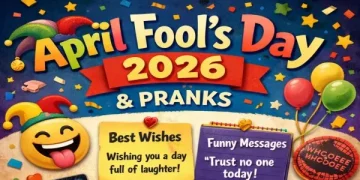





April Fools Day Pranks: Navigating the Fine Line Between Humor and Misinformation in 2026
The tradition of april fools day pranks has undergone a massive transformation in 2026, shifting from simple office jokes to high-tech digital deceptions. As millions across the globe participate in this annual festival of folly, the emergence of advanced generative tools has made it harder than ever to distinguish between a harmless gag and a sophisticated hoax.
As part of our Africa News Update 2026, we are examining how these global traditions are being reshaped by modern connectivity and the ethics of digital play. Within the first 100 words, it is clear that april fools day pranks remain a cornerstone of social interaction, even as they face new challenges in an era of hyper-realistic content.
For our audience in the USA, where corporate “brand pranks” often dominate social media timelines, understanding the history and the Technology behind the trickery is essential for staying one step ahead of the jokers.
The Evolution of the Prank: From Spaghetti Trees to AI
Historically, the most famous april fools day pranks relied on the authority of traditional media. One of the most legendary examples remains the 1957 BBC broadcast showing a “spaghetti harvest” in Switzerland, which fooled thousands into believing pasta grew on trees. According to The Conversation, these “glory days” of centralized hoaxes have largely been replaced by decentralized, AI-driven content that can go viral in seconds.
The AI Frontier in 2026
In 2026, Artificial Intelligence has become the primary tool for pranksters. We have seen:
- Deepfake Celebrity Endorsements: Fake videos of world leaders announcing “mandatory naps” or “free pizza for all.”
- AI-Generated Products: Tech companies launching “smart socks” that change color based on your mood, powered by Neural networks.
- Audio Spoofs: Voice clones used in harmless family calls to pretend a long-lost relative is visiting.
Africa News Update 2026: Cultural Nuances of Foolery
In our Africa News Update 2026, we see that april fools day pranks vary significantly across the continent. In South Africa and Nigeria, the day is often used by major Businesses and Brands to test new marketing concepts under the guise of humor.
Tech and Tradition
Many African Tech startups use April 1st to showcase “ridiculous” features that actually hint at future AI innovations. For example, a Kenyan agritech firm might “prank” users with a drone that translates cow moos into text, while secretly testing Sensory Tech for livestock Health monitoring. This blend of play and progress is a hallmark of the Business environment in the region’s growing tech hubs.
Classic Food Pranks: A Staple for Families
While the world goes digital, the “classic” physical april fools day pranks still hold a special place in American households. According to Reader’s Digest, food-based trickery remains the most popular form of in-person humor.
Safe and Silly Ideas:
- The “Glass of Juice” Illusion: Using orange-colored gelatin (Jell-O) in a juice glass so the “liquid” never pours out.
- Brussels Sprout “Cake Pops”: Dipping sprouts in chocolate and sprinkles for a healthy, albeit disappointing, surprise.
- Mashed Potato “Ice Cream”: Serving savory potatoes with gravy “syrup” to unsuspecting dessert lovers.
These lighthearted jokes focus on the Health and Wellness of a good laugh without the risks associated with digital misinformation.
The Origins of April 1st: Why Do We Do This?
The exact origins of April Fools’ Day remain a mystery, though historians have several theories. As explored by National Geographic, one prevalent theory links the day to the 16th-century switch from the Julian to the Gregorian calendar. Those who were slow to get the news and continued to celebrate the New Year on April 1st were mocked as “April fools.”
The Sociology of Play
From a Political and Social perspective, the day serves as a “safety valve,” allowing society to mock authority and subvert norms in a controlled environment. In Sports culture, it’s the one day where “outrageous trade rumors” are expected, keeping fans on their toes and driving Business engagement for sports news outlets.
Navigating the 2026 Prank Landscape: Tips for Verification
In an age of Advanced Tech, how can you spot april fools day pranks before you fall for them?
- Check the Source: Authentic Business news usually comes from multiple verified outlets.
- Look for the “Too Good to Be True” Factor: If a Tech breakthrough sounds like magic, it probably is.
- Examine the Metadata: Use AI-detection tools to see if an image or video has been digitally manipulated.
- Travel and Logistics: If you see a deal for International Travel that costs only $1, it’s a classic marketing gag.
Conclusion: The Future of Humor
As we conclude our Africa News Update 2026 coverage of the season, it’s clear that april fools day pranks are here to stay, even as they become more complex. Whether it’s a simple food prank or a multi-million dollar AI-generated corporate hoax, the day reminds us to maintain a healthy sense of skepticism and a good sense of humor. In a world of Rapid Technological Change, the ability to laugh at ourselves remains our most human trait.
For the most authentic and verified news across the continent and the world of Technology and Business, stay with AfrikEye.