

Full Moon April 2026: Everything You Need to Know About the “Pink Moon”
Stargazers across the globe are preparing for a celestial masterpiece as the full moon April 2026 approaches its peak illumination. Known traditionally as the “Pink Moon,” this lunar event is set to dominate the night sky, offering a breathtaking view for those in the USA and beyond. This month’s lunar cycle is particularly significant as it coincides with several major cultural festivals and peak spring migration patterns.
As part of our Africa News Update 2026, we are tracking how lunar cycles influence everything from maritime Business logistics to traditional agricultural cycles across the continent. Within the first 100 words, it is clear that the full moon April 2026 is the astronomical highlight of the season.
For our audience in the USA, the Pink Moon provides a perfect opportunity for backyard astronomy, with NASA providing specific tips to ensure you don’t miss a second of the lunar rise.
When and Where to See the Pink Moon
According to data from Forbes, the full moon April 2026 will reach its official peak of illumination on Thursday, April 2, 2026, at 02:12 UTC. For observers in North America, this means the moon will appear at its most brilliant during the evening of Wednesday, April 1, or the early hours of Thursday morning.
The Naming of the Pink Moon
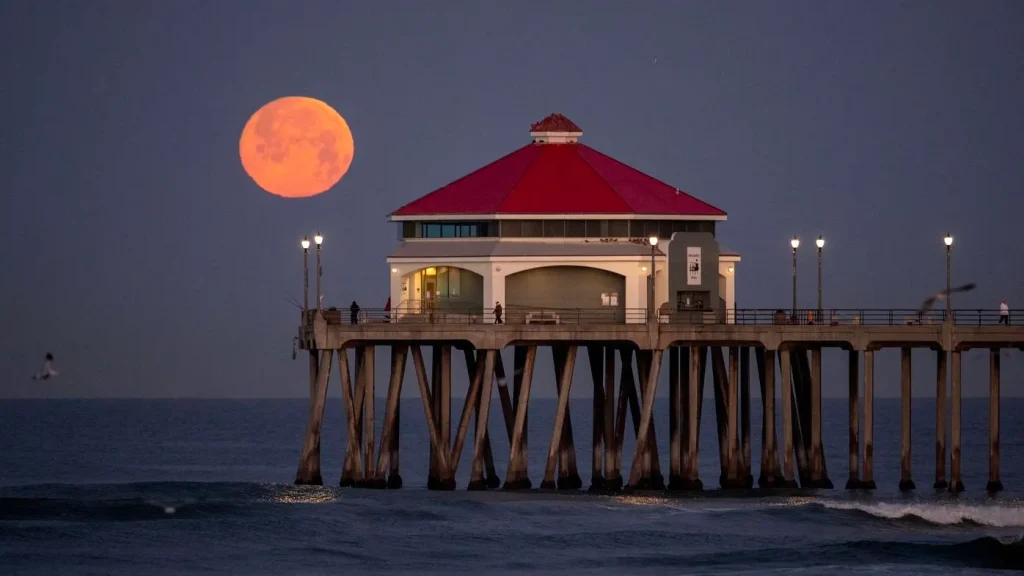
Despite its evocative name, the moon will not actually change color to a bright pink. The title “Pink Moon” originates from Native American traditions, specifically referring to the Phlox subulata (moss pink), one of the earliest widespread flowers of the spring season. While the color remains a brilliant white or pale yellow, the Health of our atmosphere and local pollution levels can sometimes cast a reddish or orange hue during the moonrise due to light scattering.
NASA’s Skywatching Tips for April 2026
NASA’s latest “What’s Up” guide for the month emphasizes that the full moon April 2026 is best viewed at the moment of “moonrise”—the time when the moon emerges over the eastern horizon. This is when the “Moon Illusion” occurs, making the lunar disk appear much larger than it actually is when compared to terrestrial objects like trees or buildings.
Technical Viewing Recommendations:
- Timing: Check local moonrise tables to be in position at least 10 minutes before the scheduled time.
- Equipment: While binoculars can reveal craters and the “seas” of the moon (maria), the Pink Moon is easily visible to the naked eye.
- Environment: Seek out a location with a clear view of the eastern horizon, away from heavy Tech-driven light pollution.
As noted by NASA Science, this full moon will be positioned near the constellation Virgo, passing close to the bright star Spica, which adds an extra layer of brilliance to the celestial display.
Africa News Update 2026: The Lunar Connection to Agriculture
In our Africa News Update 2026, we highlight the enduring connection between the lunar calendar and the Business of agriculture in rural African communities. Many farmers in regions like the Maghreb and the Sahel still utilize the full moon April 2026 to time the planting of specific crops, believing the lunar pull influences soil moisture and seed germination.
Furthermore, the Technology used to monitor these patterns has evolved. Modern African agritech startups are now using AI-driven satellite data to correlate traditional lunar planting cycles with real-time weather forecasts. This blend of ancient wisdom and Advanced Tech is significantly improving crop yields and the Financial Health of small-scale farmers.
| Lunar Event | Date (April 2026) | Impact Area |
| Pink Full Moon | April 2 | High Tides / Agriculture |
| Lyrids Meteor Shower | April 21-22 | Astronomy Tourism |
| New Moon | April 17 | Deep Sky Observation |
The Impact of the Moon on Health and Wildlife
The full moon April 2026 doesn’t just affect the tides; it has documented effects on the Physical and Mental Health of humans and animals. Circadian rhythm disruptions are common during the full moon phase, as increased ambient light can affect sleep quality.
According to reports from the BBC Weather, the increased luminosity during the Pink Moon also triggers specific behaviors in wildlife. Many nocturnal hunters become more active, while migratory birds use the lunar light for navigation. For Sports enthusiasts who enjoy night hiking or moonlight surfing, this period offers the safest conditions for late-night outdoor activities.
Using AI and Technology to Capture the Moon
In 2026, capturing the perfect photo of the moon has become easier thanks to Artificial Intelligence. Modern smartphones now utilize AI-enhanced zoom and computational photography to stack multiple frames, reducing noise and bringing out the fine details of the lunar surface that were previously only visible through high-end telescopes.
For those who want to Travel to darker skies for the best viewing experience, AI-powered weather apps can now predict “cloud-free windows” with 95% accuracy, ensuring your trip isn’t ruined by an unexpected overcast.
The Business of the Moon: Space Tourism and Beyond
The full moon April 2026 serves as a reminder of the rapidly growing Business of Space. With several private lunar missions scheduled for late 2026, the public interest in the moon is at an all-time high. Companies are now offering “Lunar Experience” packages, which include Tech-heavy planetarium shows and virtual reality tours of the moon’s South Pole using AI and VR.
This surge in interest is also reflected in the Sports and Collectibles market, where authentic lunar meteorites and space-themed memorabilia are fetching record prices at international auctions.
Conclusion: A Moment of Global Reflection
The full moon April 2026 is more than just an astronomical event; it is a moment that connects the ancient traditions of the past with the high-tech innovations of our future. Whether you are observing from a skyscraper in the USA or a farm in Africa, the Pink Moon remains a universal symbol of rhythm and renewal. By utilizing Modern Technology to track and view these events, we gain a deeper appreciation for the delicate balance of our solar system.
For the most authentic and verified news across the continent and the world of Science and Business, stay with AfrikEye.